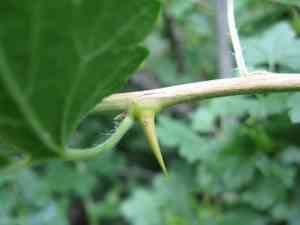
Spreading gooseberry (Ribes divaricatum)
Also known as: Wild gooseberry, Parish's gooseberry
The shrub you're referring to is the Trailing Blackberry (Rubus ursinus), native to the Pacific Northwest. This plant features arching stems armed with sharp spines and has deep green leaves shaped like those of a maple tree. In the spring, it produces clusters of small flowers that attract pollinators. These flowers are followed by edible dark purple berries, which are an important food source for local wildlife. Trailing Blackberry is a hardy plant that can adapt to a range of environments, from damp forests to sunny riverbanks.
In This Article
Attributes of Spreading gooseberry
Lifespan
Perennial
Plant Type
Shrub
Plant Height
91 cm to 2.5 m
Spread
3-6 feet (0.91-1.83 meters)
Leaf Color
Green
Flower Size
0.2-0.4 inches (5-10 mm)
Flower Color
Greenish to reddish
Images of Spreading gooseberry
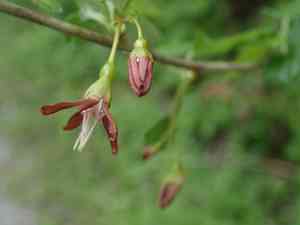
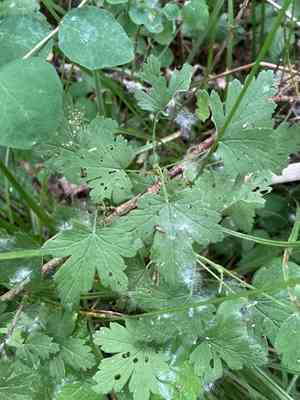
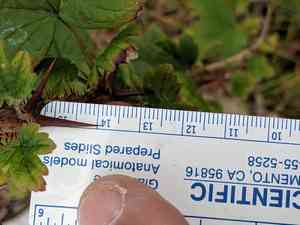
Quickly Identify Spreading gooseberry
1
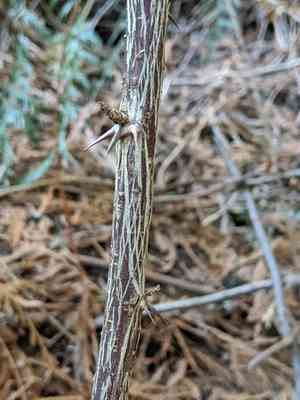
Identify the Ribes divaricatum by its thorny stems, which can bear small, purplish-black berries. The leaves are generally lobed with 3-5 rounded lobes and are arranged alternately on the stems. Its flowers are small and typically a greenish to reddish color.
Scientific Classification of Spreading gooseberry
Phylum
Vascular plants
Class
Dicotyledons
Order
Saxifragales
Family
Currant
Genus
Currants
Species
Spreading gooseberry
Planting and Growing of Spreading gooseberry
Care Difficulty
Easy
Watering Schedule
Every 4 days
Sunlight Requirements
Partial sun
Sunshine Duration
6-10 hours
Ideal Temperature
60-70℉
Soil Type
Potting Mix, Peat Mix
Soil pH
6.5-7.5
Fertilizer Type
Balanced
Pruning Season
Spring, Summer
Pruning Area
Branches, Leaves
Pruning Frequency
2 times a year
Repotting Season
Spring
Pot Type
Plastic, Ceramic
 How to Water Spreading gooseberry?
The water amount for Ribes divaricatum should be about 500 ml, ensuring the soil is moist but not soggy. Water until it starts to drain from the bottom of the pot, ensuring the soil is evenly saturated.
What are the symptoms of an underwatered Spreading gooseberry?
›
What should I do if my Spreading gooseberry is not getting enough water?
›
What are the symptoms of an overwatered Spreading gooseberry?
›
How to save an overwatered Spreading gooseberry?
›
 What Are the Sunlight Requirements for Spreading gooseberry?
The ideal lighting range for Ribes divaricatum is partial to full sunlight, maximizing its growth potential with a steady nutrient synthesis supported by adequate light exposure.
What amount of sunlight does Ribes divaricatum need?
›
How to achieve ideal lighting conditions for Ribes divaricatum?
›
What are the benefits of ideal lighting for Ribes divaricatum?
›
 What Is the Ideal Temperature Range for Spreading gooseberry?
The ideal temperature range for Ribes divaricatum is between 60°F and 70°F. This range promotes optimal growth and development, as it maintains sufficient warmth without risking heat stress.
 What Soil is Best for Spreading gooseberry?
Ribes divaricatum thrives in well-drained soil as it prevents waterlogging, which can lead to root rot. Ensuring good drainage promotes healthy root growth and plant vitality. This species benefits from nutrient-rich soil to support its growth and fruit production. Adding organic matter like compost can enhance soil fertility, boosting plant health and yield. Ribes divaricatum requires soil that retains some moisture without becoming soggy. A balanced moisture level supports continuous growth and prevents stress during dry spells.
 How to Fertilize Spreading gooseberry?
For Ribes divaricatum, it's essential to fertilize with moderation. A balanced 10-10-10 fertilizer should be applied at a rate of approximately 1/2 cup for younger plants and up to 1 cup for mature shrubs. Ensure even distribution around the plant's base.
 How to Prune Spreading gooseberry?
During spring, focus on shaping the plant by removing any crossing or congested branches that may impede growth. This is crucial to establish an open structure that promotes sunlight penetration and airflow. Throughout the growing season, especially in summer, inspect your Ribes divaricatum for any dead or diseased wood. Removing these areas promptly helps prevent the spread of problems to healthy parts of the plant.
More About Pruning Techniques→
 How to Propagate Spreading gooseberry plant?
1
Seeds should be collected from healthy and ripe fruits of Ribes divaricatum. Once collected, allow them to dry in a cool, dark place before planting.
2
Cut healthy stems with several nodes on a mature plant. Remove the leaves from the lower part and dip the cut end in rooting hormone to enhance root growth.
3
For successful layering, gently bend a young branch to the ground. Cover it with soil while leaving the tip exposed. Make a small cut where the branch touches the soil to encourage rooting. Secure with a weight.
 How to Repot Spreading gooseberry plant?
1
It's best to repot Ribes divaricatum when you notice it becoming root-bound or when its growth seems stunted. Look for roots coming out of the drainage holes as a signal it's time for a new pot. Spring and autumn are ideal as the plant is not in an active growth or dormancy phase.
2
Select a pot that is only slightly larger than the current one. Too big a pot can lead to excess soil moisture, which can harm the roots. Ensure the new pot has good drainage holes to prevent water from accumulating, which helps to avoid root rot.
3
Opt for well-draining, organically rich soil. A mix that includes compost or aged manure works well, providing essential nutrients. Such soil ensures proper aeration and drainage, promoting healthy root development and preventing waterlogging.



