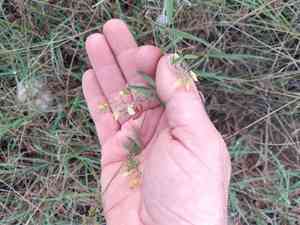
Texas snoutbean (Rhynchosia senna)
Also known as: none
The **partridge pea (Chamaecrista fasciculata)** is a flowering legume noted for its vibrant yellow flowers and compound leaves with narrow leaflets. It prospers in warmer regions, favoring well-drained soils and open woodland environments. This plant's vining nature enables it to either climb on supports or spread across the ground, making the most of available sunlight.
In This Article
Attributes of Texas snoutbean
Lifespan
Perennial
Plant Type
Vine, Herb
Plant Height
1-2 meters
Spread
1-1.5 meters
Leaf Color
Green
Flower Size
1-2 centimeters
Flower Color
Yellow
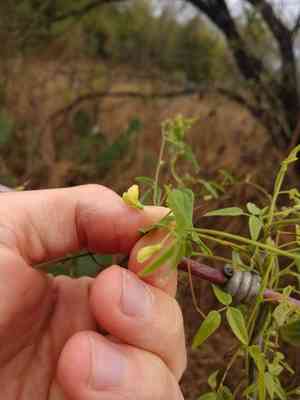
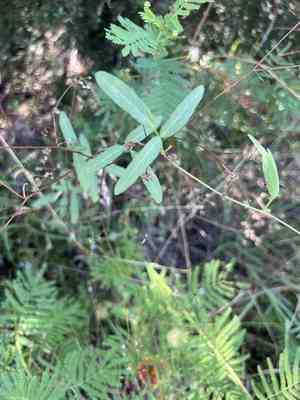
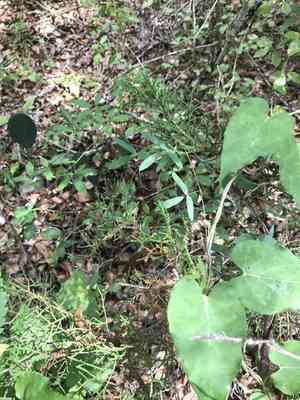
Images of Texas snoutbean
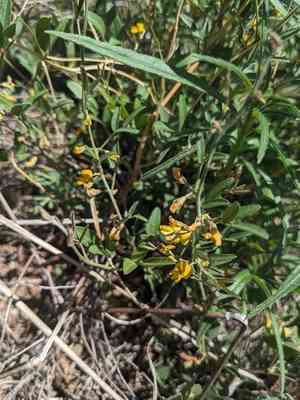
Quickly Identify Texas snoutbean
1
Rhynchosia senna can be identified by its compound leaves, which usually have three leaflets. The plant also produces bright yellow flowers that are typical of the Fabaceae family.
Scientific Classification of Texas snoutbean
Phylum
Vascular plants
Class
Dicotyledons
Order
Fabales
Family
Legume
Genus
Snoutbean
Species
Texas snoutbean
Planting and Growing of Texas snoutbean
Care Difficulty
Moderate
Watering Schedule
Every 3 days
Sunlight Requirements
Full sun
Sunshine Duration
6-10 hours
Ideal Temperature
70-85℉
Soil Type
Potting Mix, Peat Mix
Soil pH
6.5-7.5
Fertilizer Type
Balanced
Pruning Season
Spring, Summer
Pruning Area
Branches, Leaves
Pruning Frequency
2 times a year
Repotting Season
Spring
Pot Type
Plastic, Ceramic
 How to Water Texas snoutbean?
Water Rhynchosia senna with about 250 milliliters per session. This amount provides sufficient moisture without drowning the roots. The soil should feel moist to the touch but not drenched or waterlogged. Moderate watering helps in preventing root rot while ensuring that the plant has enough moisture to thrive.
What are the symptoms of an underwatered Texas snoutbean?
›
What should I do if my Texas snoutbean is not getting enough water?
›
What are the symptoms of an overwatered Texas snoutbean?
›
How to save an overwatered Texas snoutbean?
›
 What Are the Sunlight Requirements for Texas snoutbean?
Rhynchosia senna flourishes in partial to full sunlight settings. Providing ideal lighting boosts robust growth, enhances foliage color, and supports healthy blooming patterns, reflecting the plant's full genetic potential.
How much sunlight does Rhynchosia senna need?
›
What are the solutions to achieve ideal lighting?
›
What benefits does optimal lighting bring?
›
 What Is the Ideal Temperature Range for Texas snoutbean?
Rhynchosia senna thrives best within a temperature range of 70 to 85°F. This range allows the plant to perform its biological functions most efficiently, including photosynthesis and nutrient absorption. Maintaining this temperature range helps the plant grow robustly and establish a healthy root system.
 What Soil is Best for Texas snoutbean?
Rhynchosia senna thrives best in well-drained soil, which prevents waterlogging and root rot. Proper drainage ensures the roots receive adequate oxygen, promoting healthy plant growth and reducing the risk of fungal infections. This plant benefits from a nutrient-rich substrate that provides essential minerals and nutrients required for optimal growth. Fertility in the soil supports vigorous growth, robust foliage, and enhances flowering potential. Rhynchosia senna prefers soil with moderate moisture retention which ensures that the plant's roots always have access to water without remaining overly saturated. This balance helps in maintaining hydration levels critical for its survival in varying climates.
 How to Fertilize Texas snoutbean?
When it comes to the amount of fertilizer needed for Rhynchosia senna, moderation is key. This plant thrives on a balanced diet, so aim for a diluted liquid fertilizer, containing equal parts nitrogen, phosphorus, and potassium. A concentration of approximately 1/4 of the standard recommended dosage will suffice for liquid fertilizers. As for slow-release granules, a sparse sprinkling around the root zone about a tablespoon per plant will be enough to sustain growth without overwhelming it.
 How to Prune Texas snoutbean?
Start by removing any dead or damaged branches. Next, trim back any overgrown areas that disrupt the shape. Focus on cutting just above a node to encourage new growth. Be systematic, working from the top down or outside in, to maintain a balanced structure. Pay attention to where the plant is naturally directing its growth. Prune away any branches that grow inward or cross other branches, as they can cause congestion and impede air circulation.
More About Pruning Techniques→
 How to Propagate Texas snoutbean plant?
1
Soak Rhynchosia senna seeds in water for 24 hours to soften the seed coat, which promotes quicker germination. Sow these in a seed tray filled with a well-draining potting mix.
2
Select a healthy, non-flowering stem from the parent plant and use pruning shears to make a clean cut below a node. Ideally, the cutting should be about 10-15 cm in length.
3
Dip the cut end of the Rhynchosia senna cutting into rooting hormone and place it into a pot filled with a moist, well-draining substrate. Ensure at least one node is buried underground.
 How to Repot Texas snoutbean plant?
1
Rhynchosia senna should be repotted when you notice roots coming out from the bottom drainage holes or when its growth seems to lag. These are indications that the plant has outgrown its current pot and needs more space to thrive, typically every two to three years.
2
Select a pot that is one size larger than the current one, preferably with good drainage holes. A slightly larger pot gives the roots room to spread and prevents root rot. Ensure the material allows for proper airflow, like porous clay.
3
Opt for a well-draining potting mix rich in organic matter. Such soil prevents waterlogging by allowing excess moisture to escape, while still providing essential nutrients for healthy plant growth.
Toxicity
Ingestion
WARNING
The judgment on toxicity and danger is for reference only. We DO NOT GUARANTEE any accuracy of such judgment. Therefore, you SHALL NOT rely on such judgment. It is IMPORTANT TO SEEK PROFESSIONAL ADVICE in advance when necessary.
Learn More About Texas snoutbean Diseases
Anthracnose
Bacterial Leaf Spot
Bacterial Wilt
Crown Gall
Cyst Nematode
Damping-off
Downy Mildew
Drought Stress
Fusarium Wilt
Gray Mold
Leaf Curl
Leaf Spot
Mosaic
Nutrient Deficiency
Nutrient Toxicity
Powdery Mildew
Root Rot
Root-knot Nematode
Rusts
Sooty Mold
Spider Mites
Temperature Stress
Thrips Damage
White Mold
Chemical Injury



