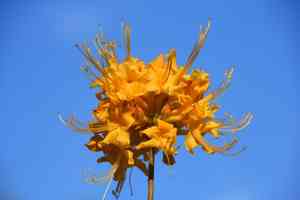
Orange azalea (Rhododendron austrinum)
Also known as: Florida Azalea, Orange Azalea
The azalea, known for its strikingly bright colors, heralds the arrival of spring in the southern United States. First cultivated outdoors on a South Carolina plantation in the 19th century, azaleas come in various hues and are often celebrated with festivals and parades across southern states. Their vivid blooms, appearing almost to float on air, make them a beloved symbol of the season.
In This Article
Attributes of Orange azalea
Lifespan
Perennial
Plant Height
2.5 m to 3 m
Spread
2.5 m to 3 m
Leaf Color
Green
Flower Size
1.5 to 2.5 inches (3.8 to 6.4 cm)
Flower Color
Yellow, Orange
Images of Orange azalea
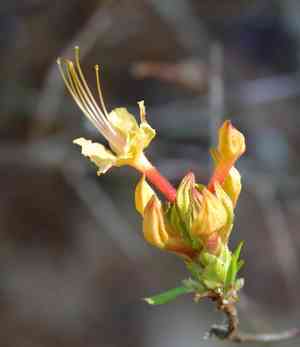
Quickly Identify Orange azalea
1
Deciduous shrub reaching 8-10 feet (2.4-3 meters) in height and width, with woody stature.
2
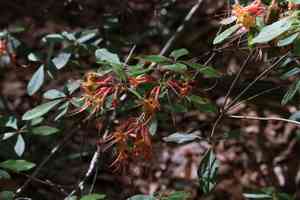
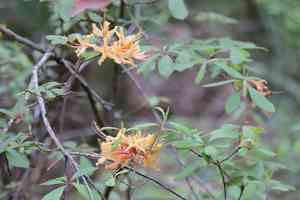
Flowers display diverse colors from yellow to red, measuring 1.5-2 inches (4-5 cm) in diameter.
3
Fruit is elongated, brown capsule up to 0.6 inches (1.5 cm), with woody consistency.
4
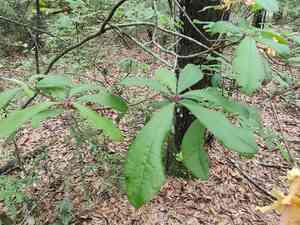
Leaves are dark green, oblong to elliptic, 2.5-4 inches (6-10 cm) long, with pointed tips.
5
Distinctive tubular blossoms with five lobes, attracting pollinators, blooming in vibrant shades.
Scientific Classification of Orange azalea
Phylum
Vascular plants
Class
Dicotyledons
Order
Ericales
Family
Heath
Genus
Azaleas
Species
Orange azalea
Planting and Growing of Orange azalea
Care Difficulty
Moderate
Watering Schedule
Every 8 days
Sunlight Requirements
Partial sun
Sunshine Duration
4-6 hours
Ideal Temperature
65-75℉
Soil Type
Potting Mix, Peat Mix
Soil pH
5-6.5
Fertilizer Type
Balanced
Pruning Season
Spring, Summer
Pruning Area
Branches, Leaves
Pruning Frequency
2 times a year
Repotting Season
Spring
Pot Type
Plastic, Ceramic
 How to Water Orange azalea?
When watering Rhododendron austrinum, you should aim for about 500 milliliters per session, ensuring the soil is evenly moist without becoming waterlogged. The goal is to keep the soil consistently damp but not soggy, resembling the plant's natural habitat.
What are the symptoms of an underwatered Orange azalea?
›
What should I do if my Orange azalea is not getting enough water?
›
What are the symptoms of an overwatered Orange azalea?
›
How to save an overwatered Orange azalea?
›
 What Are the Sunlight Requirements for Orange azalea?
Rhododendron austrinum thrives best in partial sun conditions where it receives dappled light in the morning or late afternoon. Ideal light promotes robust growth and enhances flowering potential.
Where should Rhododendron austrinum be planted for ideal light?
›
What is the best way to protect Rhododendron austrinum from direct sunlight?
›
Why is partial sunlight crucial for Rhododendron austrinum's health?
›
 What Is the Ideal Temperature Range for Orange azalea?
Rhododendron austrinum thrives best when kept in a temperature range between 65°F and 75°F. This range ensures optimal growth and promotes healthy blooms. Temperatures within this bracket provide a balanced environment, preventing stress that could be caused by excessive heat or cold.
 What Soil is Best for Orange azalea?
Rhododendron austrinum thrives in soil that drains well. Excess water can lead to root rot, so ensuring your soil doesn't retain too much moisture is crucial. This requirement reduces waterlogging, facilitating healthy root development. This plant benefits from a soil rich in organic matter. Adding compost or well-decomposed leaf mould can enhance soil fertility, supporting vigorous growth and vibrant blooming. Preferring a slightly acidic soil pH, Rhododendron austrinum is well adapted to environments that avoid alkaline conditions. Maintaining the appropriate soil pH helps optimize nutrient uptake and promotes healthy foliage.
 How to Fertilize Orange azalea?
For Rhododendron austrinum, apply liquid fertilizers at half the recommended strength. This is crucial because these plants are sensitive to over-fertilization, particularly with high nitrogen levels. Slow-release granules should be applied sparingly, about a tablespoon around the base, ensuring they don't touch the plant directly.
 How to Prune Orange azalea?
Begin by sterilizing your pruning tools to prevent disease spread. Start pruning right after the plant has finished blooming in the spring. Remove dead, damaged, or diseased wood first. Next, thin out branches to improve air circulation, focusing on crowded areas. Finally, shape the plant by cutting back to a lateral bud or outward-facing shoot to maintain its natural form.
More About Pruning Techniques→
 How to Propagate Orange azalea plant?
1
Collect seeds from mature Rhododendron austrinum plants. Ensure they are fully ripe by observing a change in seed pod color from green to brown.
2
Select healthy, non-flowering shoots and cut them into 3-4 inch pieces. Remove leaves from the lower half and dip the ends in rooting hormone.
3
Choose a low-growing branch and remove leaves at the contact point with the soil. Bury this section and fix it in place until roots develop.
 How to Repot Orange azalea plant?
1
Repot your Rhododendron austrinum when you notice its roots starting to circle the pot or coming out of drainage holes. Additionally, if the growth seems stunted, or if the soil looks exhausted, these are signs that a fresh start in a new pot is required.
2
Pick a pot with ample drainage holes. This prevents water from making the roots soggy and reduces the risk of root rot. Ideally, choose a pot that is just a couple of inches larger in diameter than the current one to avoid overwatering issues.
3
Opt for a well-draining, acidic potting mix, as Rhododendron austrinum thrives in acidic conditions. The mix should be rich in organic matter to help retain moisture yet porous enough to provide excellent drainage.
Toxicity
ingestion
WARNING
The judgment on toxicity and danger is for reference only. We DO NOT GUARANTEE any accuracy of such judgment. Therefore, you SHALL NOT rely on such judgment. It is IMPORTANT TO SEEK PROFESSIONAL ADVICE in advance when necessary.
Learn More About Orange azalea Diseases
Anthracnose
Bacterial Leaf Spot
Chemical Injury
Crown Gall
Cyst Nematode
Damping-off
Downy Mildew
Drought Stress
Fusarium Wilt
Gray Mold
Leaf Curl
Leaf Spot
Mosaic
Nutrient Deficiency
Nutrient Toxicity
Powdery Mildew
Root Rot
Root-knot Nematode
Rusts
Sooty Mold
Spider Mites
Temperature Stress
Thrips Damage
White Mold


