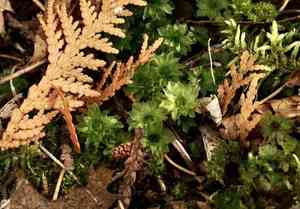
Ontario rhodobryum moss (Rhodobryum ontariense)
Also known as: Ontario moss
Ontario rhodobryum moss is a hardy species known for its vibrant green rosettes that look like miniature rosebuds. It flourishes in cool, damp, and shaded forest environments. This moss commonly grows on decaying logs or moist soil, creating a lush, green carpet on the forest floor. Its ability to retain water helps it adapt to its changing surroundings.
In This Article
Attributes of Ontario rhodobryum moss
Lifespan
Perennial
Plant Height
Up to 5 cm
Spread
Not applicable (mosses do not have a crown)
Leaf Color
Dark green
Flower Size
Not applicable (mosses do not produce traditional flowers)
Flower Color
Not applicable (mosses do not produce traditional flowers)
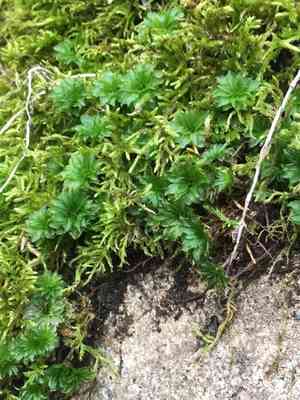
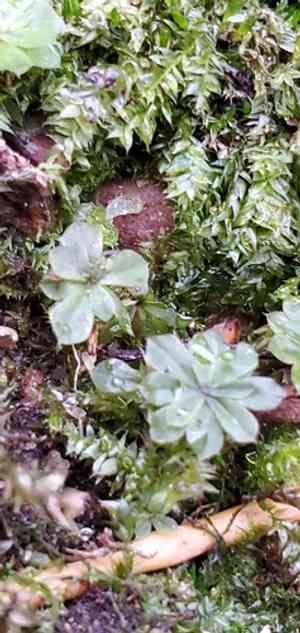
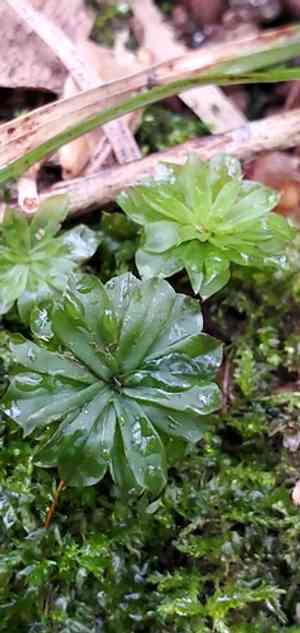
Images of Ontario rhodobryum moss

Quickly Identify Ontario rhodobryum moss
1
This moss can be identified by its dense, cushion-like growth and its small, dark green leaves that spiral around the stem. It often forms compact mats on the forest floor.
Scientific Classification of Ontario rhodobryum moss
Phylum
Bryophyta
Class
Bryopsida
Order
Bryales
Family
Bryaceae
Genus
Rhodobryum
Planting and Growing of Ontario rhodobryum moss
Care Difficulty
Moderate
Watering Schedule
Every 3 days
Sunlight Requirements
Partial sun
Sunshine Duration
4-8 hours
Ideal Temperature
60-75℉
Soil Type
Potting Mix, Peat Mix
Soil pH
5.5-6.5
Fertilizer Type
Balanced
Pruning Season
Spring, Summer
Pruning Area
Branches, Leaves
Pruning Frequency
2 times a year
Repotting Season
Spring
Pot Type
Plastic, Ceramic
 How to Water Ontario rhodobryum moss?
For Rhodobryum ontariense, each watering session should provide approximately 150 milliliters of water, ensuring the medium is evenly moist. The key is to mimic its natural habitat, where it has consistent access to moisture without being waterlogged.
What are the symptoms of an underwatered Ontario rhodobryum moss?
›
What should I do if my Ontario rhodobryum moss is not getting enough water?
›
What are the symptoms of an overwatered Ontario rhodobryum moss?
›
How to save an overwatered Ontario rhodobryum moss?
›
 What Are the Sunlight Requirements for Ontario rhodobryum moss?
Partial sun is perfect for Rhodobryum ontariense, balancing energy intake and reducing the risk of light stress. This setting, particularly with morning sun, supports optimal growth and vibrant foliage.
What type of sunlight does it need?
›
How to achieve ideal lighting for it?
›
Benefits of ideal light conditions
›
 What Is the Ideal Temperature Range for Ontario rhodobryum moss?
For optimal growth, Rhodobryum ontariense thrives within a temperature range of 60°F to 75°F. These temperatures provide the best conditions for nutrient absorption and cellular processes necessary for healthy growth.
 What Soil is Best for Ontario rhodobryum moss?
Rhodobryum ontariense thrives in loamy soil which can retain moisture effectively without becoming waterlogged. This trait supports the plant's need for consistent moisture while preventing root rot. Loamy soil provides a balanced mix of sand, silt, and clay, ensuring essential nutrients are readily available to support healthy growth and vigorous development of Rhodobryum ontariense. Despite its need for moisture, Rhodobryum ontariense benefits from well-draining soil. Loamy soil offers excellent drainage properties, preventing waterlogged conditions that could lead to root diseases.
 How to Fertilize Ontario rhodobryum moss?
For Rhodobryum ontariense, a balanced fertilizer with an NPK ratio of 10-10-10 is preferred. Apply liquid fertilizer at a dilution rate of 1/4 to 1/2 strength to ensure gentle nutritive support. Over-fertilizing can lead to harm rather than benefits.
 How to Prune Ontario rhodobryum moss?
Pruning during spring and autumn can help manage the plant's shape and encourage lush growth. In these seasons, the plant is more resilient to cuts, promoting quicker recovery and vigorous new shoots. Avoid heavy pruning in other seasons as the plant might not recover well. Before pruning, thoroughly inspect the plant for any signs of disease or pest infestation. Remove any damaged or infected sections first to prevent the spread of issues throughout the plant. This proactive health check can safeguard the entire plant’s vitality.
More About Pruning Techniques→
 How to Propagate Ontario rhodobryum moss plant?
1
Begin by carefully extracting the whole plant from its container or ground, ensuring minimal disturbance to the roots. Once uprooted, gently shake off excess soil to expose the root system, which helps identify natural divisions in the rhizome.
2
Use a sharp knife or shears to separate the plant into smaller sections, each with ample roots and a few stems. Make sure each division has enough root volume to sustain the plant, as this ensures better establishment in new locations.
3
Sterilize all tools and containers by using a 70% ethanol solution before proceeding with tissue culture propagation to minimize contamination risks. This step is critical in maintaining a sterile environment for successful culture as bacteria or fungi can hinder plant growth.
 How to Repot Ontario rhodobryum moss plant?
1
Rhodobryum ontariense shows signs for repotting when its growth appears stunted and roots start to emerge from the pot's drainage holes. Additionally, when the soil's acidity diminishes, it's a signal that repotting is overdue. These indicators are central to maintaining the plant’s vibrant health.
2
Select a pot that is slightly larger than the previous one, emphasizing clay or ceramic materials with adequate drainage holes. This ensures stability and optimal drainage, preventing waterlogging which can damage the plant's delicate root system.
3
Opt for a well-draining, acidic soil mix that simulates its natural habitat. A mixture of peat, sand, and pine bark works well, offering good aeration and moisture balance, which is crucial for the moss's healthy growth and nutrient absorption.


