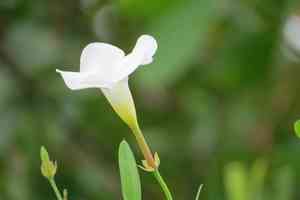
Mangrovevine (Rhabdadenia biflora)
Also known as: Mangrove Vine, Rubber Vine
Mangrovevine (Rhabdadenia biflora) often blooms year-round in the swamps and coastal regions of Florida. Though it's not commonly available for purchase, you can grow this plant in containers or train it to climb a garden trellis.
In This Article
Attributes of Mangrovevine
Lifespan
Perennial
Plant Type
Vine
Plant Height
Up to 10 meters
Spread
N/A (climbing vine)
Leaf Color
Green
Flower Size
5 to 7 centimeters
Flower Color
White to pale pink
Images of Mangrovevine
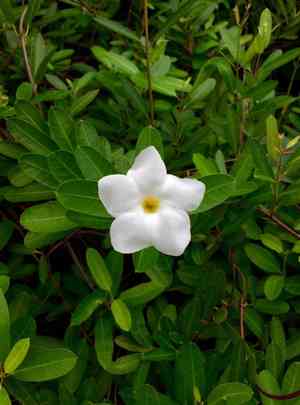
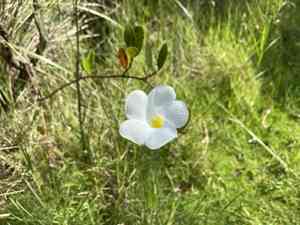
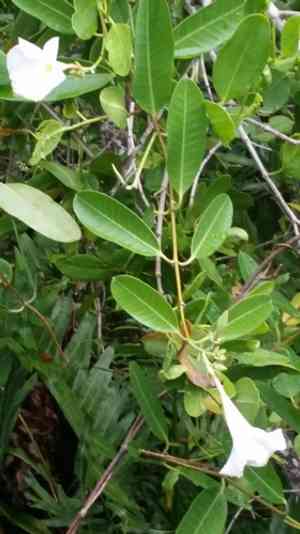
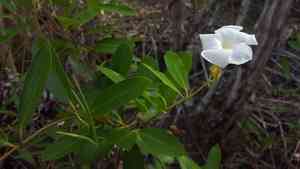
Quickly Identify Mangrovevine
1
Identify Rhabdadenia biflora by its thick, leathery leaves that are opposite and elliptic, and its large, bell-shaped white to pale pink flowers. It produces a milky sap when cut.
Scientific Classification of Mangrovevine
Phylum
Vascular plants
Class
Dicotyledons
Order
Gentianales
Family
Dogbane
Genus
Rhabdadenia
Species
Mangrovevine
Planting and Growing of Mangrovevine
Care Difficulty
Moderate
Watering Schedule
Every 8 days
Sunlight Requirements
Full sun
Sunshine Duration
4-6 hours
Ideal Temperature
68-77℉
Soil Type
Potting Mix, Peat Mix
Soil pH
6.5-7.5
Fertilizer Type
Balanced
Pruning Season
Spring, Summer
Pruning Area
Branches, Leaves
Pruning Frequency
2 times a year
Repotting Season
Spring
Pot Type
Plastic, Ceramic
 How to Water Mangrovevine?
Rhabdadenia biflora thrives best when its soil remains consistently moist, yet not waterlogged. Water deeply until excess moisture begins to escape through the drainage holes. This ensures the root system receives sufficient hydration without exposure to standing water.
What are the symptoms of an underwatered Mangrovevine?
›
What should I do if my Mangrovevine is not getting enough water?
›
What are the symptoms of an overwatered Mangrovevine?
›
How to save an overwatered Mangrovevine?
›
 What Are the Sunlight Requirements for Mangrovevine?
Rhabdadenia biflora prefers conditions akin to partial sun to full sun environments, ideally receiving partial exposure to sunshine. Ideal lighting facilitates abundant blooms and robust growth, enhancing overall vitality.
How much sunlight does Rhabdadenia biflora need?
›
What type of lighting should be avoided?
›
Why is proper lighting important for this plant?
›
 What Is the Ideal Temperature Range for Mangrovevine?
The ideal temperature range for Rhabdadenia biflora cultivation is between 68°F and 77°F. This range provides optimal conditions for growth, promoting healthy leaf development and robust flowering. Keeping the plant in this temperature range helps to avoid stress and maintain its overall vitality.
 What Soil is Best for Mangrovevine?
Rhabdadenia biflora thrives in nutrient-rich soils that support its dense foliage and vibrant blooms. Well-balanced nutrients in the soil ensure robust growth and increased resistance to pests and diseases. Ensuring the soil is well-draining prevents waterlogged conditions that can lead to root rot. This requirement is vital for maintaining the plant's health, encouraging aeration and preventing moisture stress. The inclusion of moderate organic matter in the soil enhances structure and nutrient availability, providing a sustainable environment that supports Rhabdadenia biflora's growth cycles and flowering.
 How to Fertilize Mangrovevine?
When fertilizing Rhabdadenia biflora, it's crucial to be mindful of the amount. A balanced liquid fertilizer at a concentration of 1 tablespoon per gallon of water can be applied. For slow-release fertilizers, use a sparing application of about 1 tablespoon per square foot of soil space. This ensures the plant receives adequate nutrition without risking fertilizer burn.
 How to Prune Mangrovevine?
Look for dead, diseased, or damaged branches. In addition, select branches that overcrowd the plant or grow inwards, crossing other branches, which disrupt airflow and light exposure. Begin by removing the dead and diseased branches first. Next, focus on shaping by cutting back overgrown branches to create a balanced form. Finally, tidy up the overall appearance by snipping any unruly ends.
 How to Propagate Mangrovevine plant?
1
Choose healthy stems that are free of diseases or pest infestations. Ensure the stem has at least two to three leaves and is about 4-6 inches long for optimal growth.
2
Use clean pruning shears to make a clean cut just below a leaf node. Remove leaves from the lower half of the stem to focus energy on root development.
3
Dip the cut end into rooting hormone and plant it in a pot with moist, well-draining soil. Ensure the soil remains humid but not overly wet.
 How to Repot Mangrovevine plant?
1
Look for signs such as roots growing out of the drainage holes, the plant appearing top-heavy, or soil that dries out too quickly. These could indicate it's time to repot your Rhabdadenia biflora.
2
Select a pot that is one size larger than the current one with proper drainage. This ensures efficient watering and reduces the risk of root rot, allowing your plant to grow healthily.
3
Pick a well-draining loamy soil rich in organic matter. This type of soil retains enough moisture while providing nutrients and preventing waterlogging, crucial for Rhabdadenia biflora's optimal growth.
Toxicity
Ingestion, Contact
WARNING
The judgment on toxicity and danger is for reference only. We DO NOT GUARANTEE any accuracy of such judgment. Therefore, you SHALL NOT rely on such judgment. It is IMPORTANT TO SEEK PROFESSIONAL ADVICE in advance when necessary.
Learn More About Mangrovevine Diseases
Anthracnose
Bacterial Leaf Spot
Bacterial Soft Rot
Bacterial Wilt
Black Spot
Chemical Injury
Crown Gall
Cyst Nematode
Damping-off
Downy Mildew
Drought Stress
Fusarium Wilt
Gray Mold
Leaf Curl
Leaf Spot
Mosaic
Nutrient Deficiency
Nutrient Toxicity
Powdery Mildew
Root Rot
Root-knot Nematode
Rusts
Sooty Mold
Spider Mites
Temperature Stress
Thrips Damage
White Mold



