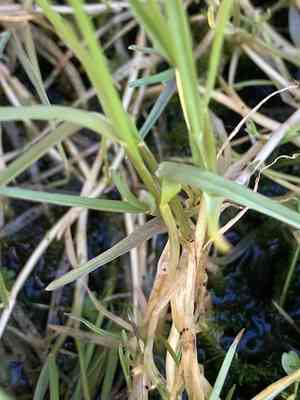
Creeping alkaligrass (Puccinellia phryganodes)
Also known as: Common Saltmarsh Grass
Saltwort is a sturdy plant that excels in saline and alkaline soils, commonly seen in coastal and inland salt marshes. It features fleshy, succulent leaves that are typically bright green and grow in dense clusters. These clusters help reinforce the soil, making saltwort an effective natural barrier against erosion. While its flowers are not particularly striking, its true strength is its remarkable ability to thrive in challenging soil conditions where most other plants cannot survive.
In This Article
Attributes of Creeping alkaligrass
Lifespan
Perennial
Plant Type
Grass
Plant Height
5-30 cm
Spread
Not applicable
Leaf Color
Green
Flower Size
Small, around 0.2-0.5 cm
Flower Color
Greenish or purplish
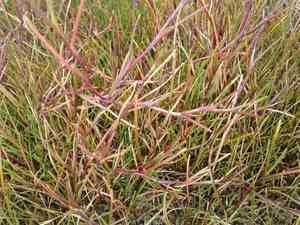
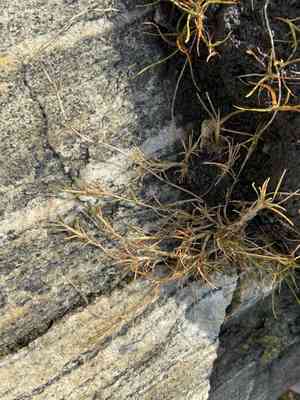
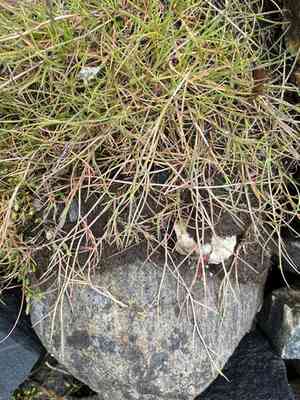
Images of Creeping alkaligrass
Quickly Identify Creeping alkaligrass
1
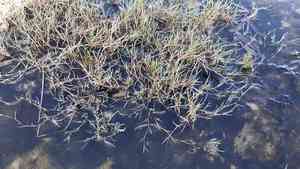
Puccinellia phryganodes can be identified by its dense mat-forming growth habit, narrow leaves, and distinctive salt-tolerant characteristics. Its inflorescences are open panicles with small spikelets.
Scientific Classification of Creeping alkaligrass
Phylum
Vascular plants
Class
Monocotyledons
Order
Poales
Family
Grass
Genus
Alkali grasses
Species
Creeping alkaligrass
Planting and Growing of Creeping alkaligrass
Care Difficulty
Hard
Watering Schedule
Every 2 days
Sunlight Requirements
Partial sun
Sunshine Duration
6-10 hours
Ideal Temperature
50-68℉
Soil Type
Potting Mix, Peat Mix
Soil pH
6.5-7.5
Fertilizer Type
Balanced
Pruning Season
Spring, Summer
Pruning Area
Branches, Leaves
Pruning Frequency
2 times a year
Repotting Season
Spring
Pot Type
Terracotta, Plastic
 How to Water Creeping alkaligrass?
For Puccinellia phryganodes, ensure each watering session provides about 500 milliliters of water. This plant thrives when the soil is evenly moist but not waterlogged. The water should penetrate the root zone, ensuring that all roots have access to moisture without causing standing water.
What are the symptoms of an underwatered Creeping alkaligrass?
›
What should I do if my Creeping alkaligrass is not getting enough water?
›
What are the symptoms of an overwatered Creeping alkaligrass?
›
How to save an overwatered Creeping alkaligrass?
›
 What Are the Sunlight Requirements for Creeping alkaligrass?
Partial sun exposure provides a balance, enabling Puccinellia phryganodes to photosynthesize efficiently, supporting robust growth and lush foliage.
What is the best lighting condition?
›
How to achieve ideal lighting?
›
Benefits of ideal lighting?
›
 What Is the Ideal Temperature Range for Creeping alkaligrass?
The ideal temperature range for Puccinellia phryganodes, a grass species typically found in cool regions, lies between 50°F and 68°F. Within this range, the plant thrives and carries out its physiological processes efficiently. This temperature range supports optimal growth and helps the plant maintain its structural integrity and vibrant green appearance.
 What Soil is Best for Creeping alkaligrass?
Puccinellia phryganodes thrives in well-drained sandy soil because it mimics its natural habitat along coastal areas. This type of soil prevents waterlogging, which is critical for avoiding root rot and promoting healthy root growth. This plant prefers a neutral to slightly alkaline soil pH ranging from 6.5 to 7.5. A pH within this range ensures optimal nutrient availability, supporting robust plant metabolism and growth. Low organic matter is suitable for Puccinellia phryganodes as it generally grows in nutrient-poor environments. Providing this condition can reduce the risk of fungal diseases and mimic its coastal habitat.
 How to Fertilize Creeping alkaligrass?
For Puccinellia phryganodes, balance is key when applying fertilizers. Typically, you should use about half the recommended amount of standard plant fertilizer to avoid over-nourishment, as this plant prefers nutrient-poor conditions. Use a diluted solution for liquid fertilizers and a light sprinkle for granular ones.
 How to Prune Creeping alkaligrass?
Begin by identifying damaged or dead shoots and trim them back to healthy growth. Focus on maintaining a uniform shape and removing any thatch buildup at the base. Regularly check the plant for signs of disease and address them promptly. While regular pruning is beneficial, avoid cutting back more than one-third of the plant at any one time. Excessive pruning can lead to stress and vulnerability to pests and diseases.
More About Pruning Techniques→
 How to Propagate Creeping alkaligrass plant?
1
Start by preparing the soil mix with adequate nutrients. The soil should be well-draining to prevent waterlogging, which could adversely affect seed germination and root division.
2
Sow the seeds evenly on the soil surface. Maintain proper spacing to avoid overcrowding, which can hinder growth. Lightly cover the seeds with a thin soil layer.
3
To propagate by division, carefully dig around the plant clump and lift it from the ground. Separate the clump into smaller sections with roots intact for replanting.
 How to Repot Creeping alkaligrass plant?
1
Repotting for Puccinellia phryganodes should be done in spring or autumn when the plant shows signs of being root-bound. Look for roots growing out of the drainage holes or a slowed growth rate. These signals indicate it's time for repotting.
2
Choose a pot that is just one size larger than the current one and has good drainage. This size allows for gradual growth, reducing the risk of overwatering, and ensures the roots won't be too cramped.
3
A sandy, well-draining soil is ideal for Puccinellia phryganodes. This type of soil mimics the plant's natural habitat, providing good aeration and preventing root rot by allowing excess water to drain away quickly.



