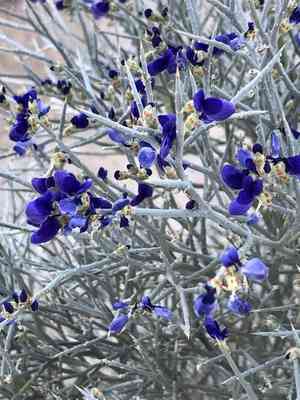
Smoketree (Psorothamnus spinosus)
Also known as: Smoketree, Mistletoe Bush
Psorothamnus spinosus is also referred to as smoke thorn dalea and Corona de Cristo. Its main common name, smoketree, comes from its foliage, which resembles smoke. This plant is part of the pea family.
In This Article
Attributes of Smoketree
Lifespan
Perennial
Plant Type
Tree
Plant Height
3.5 m to 6 m
Spread
2.5 m to 3.5 m
Leaf Color
Green (occasionally the plant appears almost leafless)
Flower Size
6 mm
Flower Color
Purple Blue
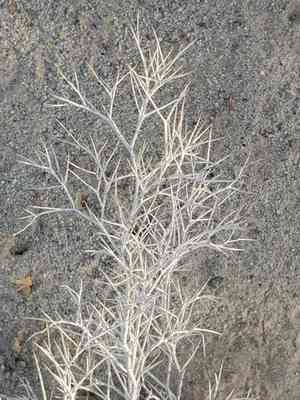
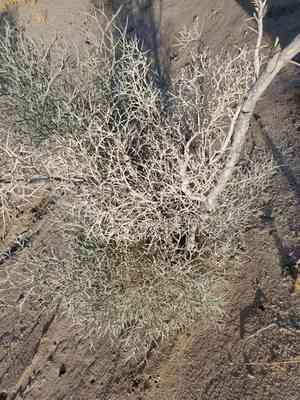
Images of Smoketree


Quickly Identify Smoketree
1
Identify Psorothamnus spinosus by its spiny, leafless branches that give it a smoky appearance from a distance. Its flowers are small, purple, and clustered along the branches, and it often grows in sandy or gravelly soil.
Scientific Classification of Smoketree
Phylum
Vascular plants
Class
Dicotyledons
Order
Fabales
Family
Legume
Genus
Indigo bush
Species
Smoketree
Planting and Growing of Smoketree
Care Difficulty
Hard
Watering Schedule
Every 2 days
Sunlight Requirements
Full sun
Sunshine Duration
4-6 hours
Ideal Temperature
60-85℉
Soil Type
Potting Mix, Peat Mix
Soil pH
6.5-7.5
Fertilizer Type
Balanced
Pruning Season
Spring, Summer
Pruning Area
Branches, Leaves
Pruning Frequency
Once a year
Repotting Season
Spring
Pot Type
Plastic, Ceramic
 How to Water Smoketree?
Psorothamnus spinosus requires a watering amount that ensures the soil is thoroughly moistened without becoming waterlogged. The ideal is to provide about 500 milliliters of water per plant, allowing the soil to fully absorb the moisture at the root level. Remember, the key is to mimic its natural arid environment where it receives sporadic but deep moisture.
What are the symptoms of an underwatered Smoketree?
›
What should I do if my Smoketree is not getting enough water?
›
What are the symptoms of an overwatered Smoketree?
›
How to save an overwatered Smoketree?
›
 What Are the Sunlight Requirements for Smoketree?
Psorothamnus spinosus ideally requires full sun exposure, translating to about 6 to 8 hours of direct sunlight daily. This optimal light range enhances photosynthesis, supports vibrant growth, and maximizes blooming potential.
What is the ideal lighting condition for Psorothamnus spinosus?
›
How can I ensure ideal lighting for Psorothamnus spinosus indoors?
›
What are the benefits of providing ideal lighting conditions to Psorothamnus spinosus?
›
 What Is the Ideal Temperature Range for Smoketree?
Psorothamnus spinosus thrives best between 60°F and 85°F. In this temperature range, the plant can optimally photosynthesize and absorb nutrients, leading to robust growth and flowering. It should replicate the native desert conditions of the Southwestern United States to ensure healthy development.
 What Soil is Best for Smoketree?
Psorothamnus spinosus thrives in well-drained soils, which prevents root rot by allowing excess water to escape quickly. This condition is essential for maintaining healthy roots and ensuring optimal plant growth, as the plant doesn't tolerate waterlogged conditions. This plant exhibits a remarkable ability to flourish in nutrient-poor soils. The sparse nutrient requirement reflects the adaptation to its native desert environments, reducing the need for additional fertilization and making it a low-maintenance choice for such conditions. Psorothamnus spinosus prefers slightly alkaline soils, flourishing with a pH closer to 7.5. Such alkaline conditions mimic its natural habitats, ensuring proper nutrient uptake and increasing its resilience to environmental stressors.
 How to Fertilize Smoketree?
For Psorothamnus spinosus, it's important to use fertilizers sparingly due to its adaptation to nutrient-poor environments. When using liquid fertilizers, apply at a rate of one tablespoon per gallon of water for every application. For slow-release fertilizers, use roughly one ounce per plant, ensuring that you distribute it evenly around the base of the plant to avoid over-concentration.
 How to Prune Smoketree?
Start by removing any dead or diseased branches. This encourages better airflow and sunlight access, allowing the plant to focus its energy on healthy growth. Use a clean, sharp pair of pruners to make precise cuts close to the stem. Trim back overgrown branches to maintain the desired shape of the Psorothamnus spinosus. Focus on achieving a balanced appearance. Avoid over-pruning, which can stress the plant and reduce its natural resilience.
More About Pruning Techniques→
 How to Propagate Smoketree plant?
1
Collect healthy seeds from mature Psorothamnus spinosus plants. Soak them in water for 24 hours to improve germination rates before planting in seed trays.
2
Select semi-hardwood cuttings from a healthy Psorothamnus spinosus plant. Make clean cuts using sharp pruners, ideally below a node, to ensure better rooting.
3
Dip the cut end of the cutting in rooting hormone powder to encourage root development. Plant the cuttings in a well-draining potting mix and keep them in indirect light.
 How to Repot Smoketree plant?
1
Psorothamnus spinosus typically requires repotting when you begin to see roots protruding through the drainage holes at the bottom of the pot. This usually happens as the plant grows larger and requires more space for its root system. If you notice slow growth or the plant becoming top-heavy, these are also indicators that it's time to consider repotting.
2
Select a pot that is one size larger than the current one, with ample drainage holes to prevent waterlogging. A terracotta pot is often ideal as it allows for better air exchange and moisture evaporation, thus keeping the root system healthy and reducing the risk of root rot commonly associated with poor drainage.
3
Pick a well-draining soil blend, like a cactus mix, which mimics the plant's natural desert environment. This type of soil helps to prevent water retention around the roots, thus maintaining proper aeration and reducing the risk of rot and fungal infections.



