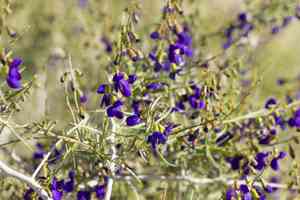
Mojave indigo-bush (Psorothamnus arborescens)
Also known as: California indigobush
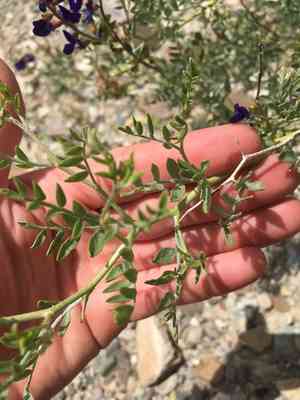
The Texas Sage, native to arid desert regions, is known for its striking blue-green foliage that contrasts beautifully with its dry surroundings. This shrub features a twisted, sculptural branching structure that thrives in harsh conditions. In spring, it bursts into vibrant purple flowers, attracting pollinators and adding a splash of color to its environment.
In This Article
Attributes of Mojave indigo-bush
Lifespan
Perennial
Plant Type
Shrub
Plant Height
1 to 3 meters
Spread
1 to 2 meters
Leaf Color
Green
Flower Size
0.5 to 1 centimeter
Flower Color
Purple
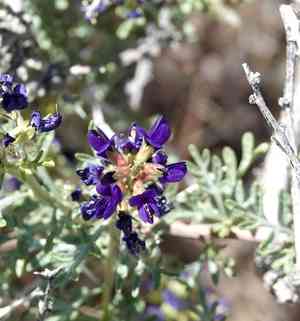
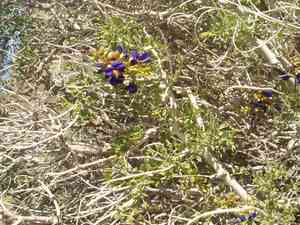
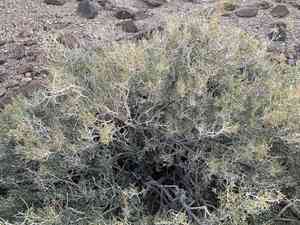
Images of Mojave indigo-bush
Quickly Identify Mojave indigo-bush
1
To identify Psorothamnus arborescens, look for its small, pinnate leaves and vibrant purple flowers that bloom in clusters. The plant typically has a woody base with multiple branches.
Scientific Classification of Mojave indigo-bush
Phylum
Vascular plants
Class
Dicotyledons
Order
Fabales
Family
Legume
Genus
Indigo bush
Species
Mojave indigo-bush
Planting and Growing of Mojave indigo-bush
Care Difficulty
Moderate
Watering Schedule
Every 2 days
Sunlight Requirements
Full sun
Sunshine Duration
4-8 hours
Ideal Temperature
60-85℉
Soil Type
Potting Mix, Peat Mix
Soil pH
6.5-7.5
Fertilizer Type
Balanced
Pruning Season
Spring, Summer
Pruning Area
Branches, Leaves
Pruning Frequency
2 times a year
Repotting Season
Spring
Pot Type
Plastic, Ceramic
 How to Water Mojave indigo-bush?
For Psorothamnus arborescens, each watering session should deliver approximately 500 milliliters of water. This amount ensures that the root zone receives adequate moisture but does not become waterlogged. The soil should be moist to the touch, reaching several inches below the surface.
What are the symptoms of an underwatered Mojave indigo-bush?
›
What should I do if my Mojave indigo-bush is not getting enough water?
›
What are the symptoms of an overwatered Mojave indigo-bush?
›
How to save an overwatered Mojave indigo-bush?
›
 What Are the Sunlight Requirements for Mojave indigo-bush?
Psorothamnus arborescens most benefits from full sun exposure, promoting robust growth, flowering, and overall resilience against environmental stresses.
What are the ideal light conditions for Psorothamnus arborescens?
›
How can I ensure my Psorothamnus arborescens gets the right light?
›
What benefits does the right light offer Psorothamnus arborescens?
›
 What Is the Ideal Temperature Range for Mojave indigo-bush?
The ideal temperature range for Psorothamnus arborescens to thrive is between 60°F and 85°F. This range provides the best conditions for growth and photosynthesis, ensuring that the plant can develop strong stems and healthy foliage. Temperatures within this range minimize stress and promote reproductive success.
 What Soil is Best for Mojave indigo-bush?
Psorothamnus arborescens thrives in soils with excellent drainage. Well-drained soil prevents root rot and fungal diseases, ensuring robust growth and flowering. While not overly demanding, this plant does appreciate moderate nutrient levels found naturally in slightly arid soils; this balance avoids excessive growth, maintaining its natural form. This plant often grows in soils low in organic matter, as it is adapted to survive where nutrients are not abundant, highlighting its resilience and ecological adaptability.
 How to Fertilize Mojave indigo-bush?
For Psorothamnus arborescens, the amount of fertilizer is quite specific. It is recommended to use a balanced fertilizer with a ratio of 10-10-10. When applying liquid fertilizer, dilute it to half-strength to prevent nutrient burn. For solid fertilizers, the application should not exceed one cup per plant annually.
 How to Prune Mojave indigo-bush?
Before you begin trimming your Psorothamnus arborescens, identify and cut away any dead, damaged, or diseased branches. This not only tidies up the plant but also directs energy to healthier parts of the shrub, enhancing overall growth and appearance. To maintain a balanced shape, strategically prune branches to thin out the interior of the plant. This allows sunlight to penetrate and air to circulate better, reducing the risk of fungal diseases. Aim for an open, appealing structure. Trim back roughly one-third of the plant's oldest branches to ground level to encourage vigorous new shoots. By removing these older parts, you stimulate the plant to produce fresh growth that enhances flowering and improves foliage density.
More About Pruning Techniques→
 How to Propagate Mojave indigo-bush plant?
1
To propagate Psorothamnus arborescens via seed, begin by sowing seeds in a well-draining, sterile potting mix. Lightly cover the seeds with a thin layer of soil and gently mist the surface to keep it moist.
2
Maintain a warm environment of around 20-25°C for optimal germination. Temperature control can be achieved by placing seed trays in a warm area or using a heat mat.
3
Ensure consistent moisture without waterlogging. Use a spray bottle to mist the soil surface regularly, ensuring that the seeds and emerging seedlings remain hydrated.
 How to Repot Mojave indigo-bush plant?
1
Monitor Psorothamnus arborescens for roots poking through drainage holes or growth stagnation. This hardy desert shrub signals its need for repotting when it becomes root-bound or its soil has broken down considerably.
2
Select a pot 1-2 inches wider than the current container, with ample drainage holes to prevent root rot. A terracotta pot is ideal, as it allows excess moisture to evaporate, maintaining the dry conditions preferred by desert species.
3
Opt for a well-draining, sandy potting mix that mimics the plant's natural habitat. Incorporate coarse sand or perlite to enhance drainage, ensuring roots stay healthy by preventing waterlogging, a common issue for desert plants.
Learn More About Mojave indigo-bush Diseases
Anthracnose
Bacterial Leaf Spot
Bacterial Wilt
Crown Gall
Cyst Nematode
Damping-off
Downy Mildew
Drought Stress
Fusarium Wilt
Gray Mold
Leaf Curl
Leaf Spot
Mosaic
Nutrient Deficiency
Nutrient Toxicity
Powdery Mildew
Root Rot
Root-knot Nematode
Rusts
Sooty Mold
Spider Mites
Temperature Stress
Thrips Damage
White Mold



