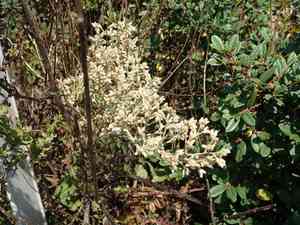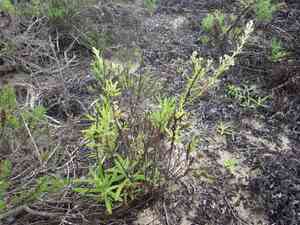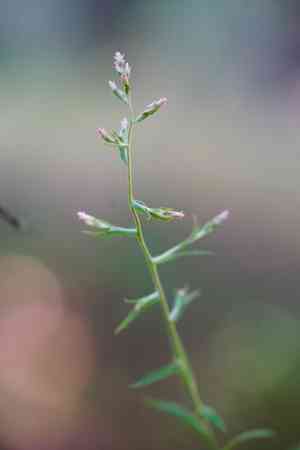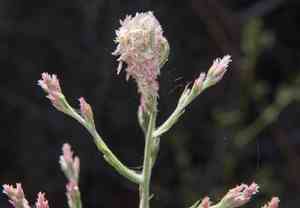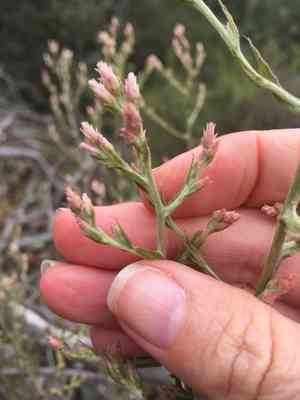
Pink cudweed(Pseudognaphalium ramosissimum)

Pink cudweed (Pseudognaphalium ramosissimum)

Also known as: Pink everlasting

Pink cudweed (Helichrysum pumilum) is well-suited to arid environments due to several distinctive features:

1. **Dense Branching**: The plant exhibits extensive branching, which helps it capture more sunlight and effectively utilize available nutrients.
2. **Silvery, Woolly Leaves**: Its leaves are covered in fine, silvery hairs that reflect sunlight and reduce water loss, maintaining moisture within the plant.
3. **Compact Flower Clusters**: The plant produces clusters of small, fluffy flowers that range from yellowish to white. These flowers are adapted to dry conditions and attract a variety of pollinators, which aids in reproduction.
4. **Moisture Retention**: The plant's leaves are adept at retaining moisture, a crucial adaptation for survival in arid climates.
5. **Pollination**: The bright, attractive flowers ensure effective pollination, which is vital for the plant's life cycle and propagation.

These characteristics collectively enable pink cudweed to thrive in dry, open habitats.

Attributes of Pink cudweed

Lifespan
Annual
Plant Type
Herb
Plant Height
30 to 60 centimeters
Spread
Typically not applicable, as it is a herbaceous plant
Leaf Color
Gray-green
Flower Size
About 1 to 2 centimeters
Flower Color
Pink or white

ForwardPlant - Identify plants with a snap

Identify and diagnose plants, get toxicity alerts, and explore safety guides for all types of fungi.

Try for Free

Images of Pink cudweed

Pink cudweed(Pseudognaphalium ramosissimum)

Quickly Identify Pink cudweed

1
Identify the plant by its characteristic woolly, felt-like leaves and small, densely packed clusters of pinkish or white flowers. The stems are also usually covered in fine, cottony hairs.

Scientific Classification of Pink cudweed

Phylum
Vascular plants
Class
Dicotyledons
Order
Asterales
Family
Daisy
Genus
Cudweeds
Species
Pink cudweed

Planting and Growing of Pink cudweed

Care Difficulty
Easy
Watering Schedule
Every 2 days
Sunlight Requirements
Full sun
Sunshine Duration
6-10 hours
Ideal Temperature
68-77℉
Soil Type
Potting Mix, Peat Mix
Soil pH
6.5-7.5
Fertilizer Type
Balanced
Pruning Season
Spring, Summer
Pruning Area
Branches, Leaves
Pruning Frequency
2 times a year
Repotting Season
Spring
Pot Type
Plastic, Ceramic

water icon How to Water Pink cudweed?

For Pseudognaphalium ramosissimum, the aim is to keep the soil moderately moist. Watering should be done until the soil feels damp but not waterlogged, ensuring the root system gets enough moisture without causing rot.
What are the symptoms of an underwatered Pink cudweed? ›
What should I do if my Pink cudweed is not getting enough water? ›
What are the symptoms of an overwatered Pink cudweed? ›
How to save an overwatered Pink cudweed? ›

sunlight icon What Are the Sunlight Requirements for Pink cudweed?

Sunlight Requirements: Full sun, Partial sun
Duration of light: 4 to 8 hours daily
It benefits most from environments that provide full to partial sunlight. This optimal range allows for healthy photosynthesis, ensuring vigorous growth and vibrant leaf coloration.
What is the best lighting condition for Pseudognaphalium ramosissimum? ›
How to achieve ideal lighting for this plant? ›
What benefits does the plant receive under ideal lighting? ›

temperature icon What Is the Ideal Temperature Range for Pink cudweed?

Ideal Temperature: 68 ~ 77℉
The ideal temperature range for Pseudognaphalium ramosissimum is between 68 and 77 degrees Fahrenheit. Within this range, plants thrive, exhibiting optimal growth and development. Maintaining these temperatures ensures that metabolic processes proceed efficiently, promoting better plant health and vitality.

soil icon What Soil is Best for Pink cudweed?

Soil type: Sandy loam, Loam
Soil PH: 6.5 ~ 7.5
This plant thrives best in well-drained soils, which prevents water from accumulating around the roots, reducing the risk of root rot. Such soil facilitates healthy root development and nutrient uptake, essential for vigorous growth. The plant requires soil with moderate fertility. Overly fertile soil can cause excessive vegetative growth with fewer flowers, while nutrient-poor soil might stunt growth. Balanced nutrients ensure optimal blooming and foliage development. Soil with good aeration is crucial for Pseudognaphalium ramosissimum as it ensures oxygen availability to roots. Proper aeration encourages microbial activity, which contributes to nutrient breakdown and absorbs vital gases necessary for plant health.

fertilize icon How to Fertilize Pink cudweed?

Fertilizer type: Balanced
For Pseudognaphalium ramosissimum, it is recommended to use a balanced fertilizer diluted to half strength for liquid applications. About 100 milliliters per plant is sufficient for each session. For slow-release fertilizers, utilize approximately 20 grams per square meter annually.

prune icon How to Prune Pink cudweed?

Pruning Time: Spring, Summer
Begin by inspecting the plant for any dead or diseased stems and remove them first. This will direct the plant's energy to healthier parts and reduce the risk of disease spread. Focus on shaping the plant according to your aesthetic preference. Trim back overly long stems to maintain a bushier appearance, ensuring you cut just above a leaf node to stimulate new growth. More About Pruning Techniques→

propagate icon How to Propagate Pink cudweed plant?

Propagate Time: Late spring,Early summer
1
To propagate Pseudognaphalium ramosissimum from seeds, collect mature seeds from the plant in late summer. Allow them to dry before sowing to improve germination rates.
2
Choose healthy stems for cuttings, ideally 4-6 inches long. Cut just below a leaf node and remove lower leaves, leaving a few at the top.
3
For division, dig up the entire plant in early spring. Carefully separate it into smaller sections, ensuring each has roots attached, and replant immediately.

repot icon How to Repot Pink cudweed plant?

Repotting frequency: Every 2-3 years
1
Pseudognaphalium ramosissimum needs repotting when its roots start protruding from the drainage holes or the growth appears stunted. These are signs the plant has outgrown its existing space, and it thrives best with a bit more room to expand. Observing the roots can be a clear indicator that it's time for a new pot.
2
Selecting a pot for Pseudognaphalium ramosissimum involves ensuring proper drainage and space. Opt for a pot that's only slightly larger than the current one to avoid overwatering issues. A pot with drainage holes is essential to prevent water from stagnating, which could lead to root rot.
3
The ideal soil for Pseudognaphalium ramosissimum should be well-draining to mimic its natural habitat. A sandy soil mix with some organic matter is perfect, providing the right balance of nutrients and drainage. This ensures that the plant's roots do not sit in water, maintaining healthy growth.

ForwardPlant - Identify plants with a snap

Find the best spots for them to optimize their health, simply using your phone.

Try for Free