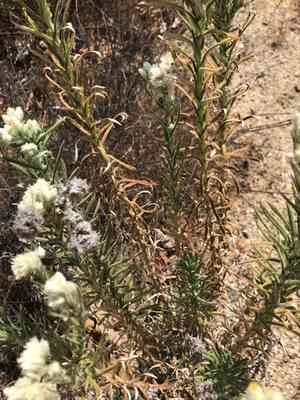
White cudweed (Pseudognaphalium leucocephalum)
Also known as: White Everlasting, Rabbit-tobacco
Pearly everlasting is a hardy perennial herb notable for its woolly, white foliage, ideal for arid environments. This plant features slender stems crowned with fluffy, cotton ball-like flower clusters. The silver-green, lance-shaped leaves add to its soft appearance. Well-suited to nutrient-poor soils, pearly everlasting showcases both resilience and beauty in tough landscapes.
In This Article
Attributes of White cudweed
Lifespan
Annual
Plant Type
Herb
Plant Height
Up to 40 cm
Spread
N/A
Leaf Color
Grayish-green to silver
Flower Size
Small, approximately 0.5 cm
Flower Color
White
Images of White cudweed
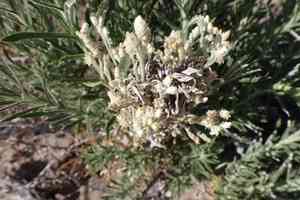
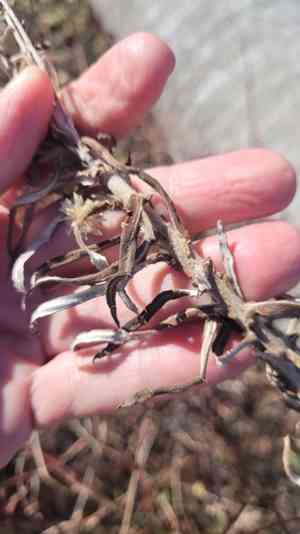
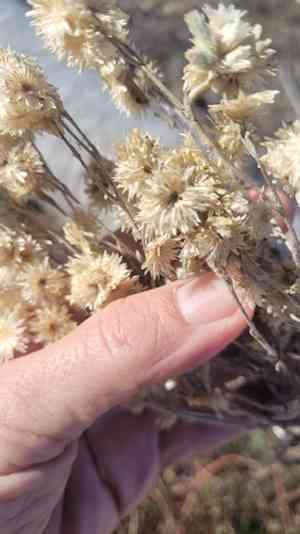
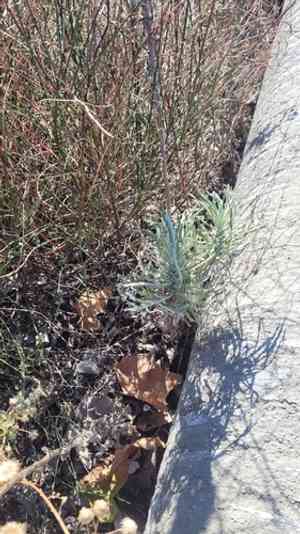
Quickly Identify White cudweed
1
Look for a woolly, silver-white herb that stands up to 40 cm tall with oblong leaves and small clustered white flowers. The plant has a distinctive texture and appearance due to its densely hairy surfaces.
Scientific Classification of White cudweed
Phylum
Vascular plants
Class
Dicotyledons
Order
Asterales
Family
Daisy
Genus
Cudweeds
Species
White cudweed
Planting and Growing of White cudweed
Care Difficulty
Easy
Watering Schedule
Every 2 days
Sunlight Requirements
Full sun
Sunshine Duration
4-6 hours
Ideal Temperature
60-75℉
Soil Type
Potting Mix, Peat Mix
Soil pH
6.5-7.5
Fertilizer Type
Balanced
Pruning Season
Spring, Summer
Pruning Area
Branches, Leaves
Pruning Frequency
2 times a year
Repotting Season
Spring
Pot Type
Plastic, Ceramic
 How to Water White cudweed?
Pseudognaphalium leucocephalum prefers well-drained soil, so water it with 150ml to ensure the soil is moist but not waterlogged. Allow the top inch of soil to dry out between waterings to prevent root rot.
What are the symptoms of an underwatered White cudweed?
›
What should I do if my White cudweed is not getting enough water?
›
What are the symptoms of an overwatered White cudweed?
›
How to save an overwatered White cudweed?
›
 What Are the Sunlight Requirements for White cudweed?
Thriving under full and partial sun, this plant's ideal light conditions promote vibrant growth and increased disease resistance, ensuring a healthy, flourishing specimen.
What is the ideal location to plant this species?
›
How do I ensure it gets adequate sunlight indoors?
›
What are the benefits of optimal light exposure?
›
 What Is the Ideal Temperature Range for White cudweed?
The ideal temperature range for Pseudognaphalium leucocephalum is between 60°F and 75°F. This range provides the optimal conditions for growth and development, ensuring that the plant can photosynthesize and metabolize efficiently. Maintaining such temperatures minimizes stress and promotes strong cellular activity, which is crucial for healthy foliage and flowering.
 What Soil is Best for White cudweed?
Pseudognaphalium leucocephalum thrives in well-drained soils which prevent root rot and promote healthy root development. Ensuring good drainage is crucial for preventing waterlogged conditions that can lead to diseases. Although this plant is somewhat hardy, it benefits significantly from soils rich in organic matter, supporting robust growth and vibrant foliage. A soil enriched with compost or well-rotted manure can enhance its overall vigor. While the plant needs good drainage, the soil should still be able to retain some moisture to sustain the plant through dry periods. This balance helps maintain steady growth without causing stress to the plant.
 How to Fertilize White cudweed?
For Pseudognaphalium leucocephalum, it's vital to use a balanced fertilizer diluted to half strength. Typically, use around 10-20 milliliters mixed in a liter of water. This ensures the soil has enough nutrients without overwhelming the plant's root system.
 How to Prune White cudweed?
Start by identifying any dead or damaged stems on Pseudognaphalium leucocephalum. Remove these by making a clean cut at their base to encourage healthier new growth and prevent the spread of disease. After removing the unwanted parts, focus on shaping the plant by cutting back any overgrown branches. Aim for a rounded, balanced appearance, and ensure the center is not too crowded, enhancing light penetration.
More About Pruning Techniques→
 How to Propagate White cudweed plant?
1
Begin by soaking the seeds in water for 24 hours to soften the seed coat and promote germination. Sow them on the surface of a well-draining seed starting mix, and lightly cover with soil.
2
Select healthy stem cuttings approximately 4-6 inches long. Remove the leaves from the lower part of the stem to prevent rot, and dip the cut end in rooting hormone to encourage root development.
3
For division, carefully dig up the mother plant during the growing season. Use a sharp knife to separate the plant into sections, ensuring each division has roots attached, for successful transplantation.
 How to Repot White cudweed plant?
1
Signs that Pseudognaphalium leucocephalum needs repotting include roots growing through the drainage holes, a decline in growth rate, or the soil drying out very quickly after watering. These signs typically suggest that the plant has outgrown its current pot and needs more space to continue thriving.
2
Select a pot that is just one size larger than the current one, ideally with good drainage holes. This ensures that the plant has enough room to grow without being overwhelmed by too much soil, which can hold excess water and lead to root rot. A terracotta pot is often ideal for this plant as it allows excess moisture to evaporate, reducing the risk of waterlogging.
3
Opt for well-draining sandy soil mixed with some perlite or pumice. This combination is excellent at ensuring good aeration and preventing water from saturating the root zone, which is crucial for the health of Pseudognaphalium leucocephalum. Such a soil mix mimics the plant's natural dry environment, keeping the roots healthy and rot-free.
Learn More About White cudweed Diseases
Anthracnose
Bacterial Leaf Spot
Bacterial Soft Rot
Bacterial Wilt
Chemical Injury
Crown Gall
Cyst Nematode
Damping-off
Downy Mildew
Drought Stress
Fusarium Wilt
Gray Mold
Leaf Spot
Mosaic
Nutrient Deficiency
Nutrient Toxicity
Powdery Mildew
Root Rot
Root-knot Nematode
Rusts
Sooty Mold
Spider Mites
Temperature Stress
Thrips Damage
White Mold


