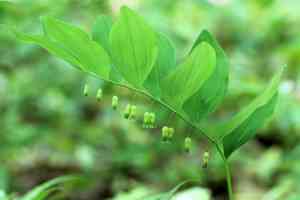
Hairy solomon's seal (Polygonatum pubescens)
Also known as: Downy Solomon's Seal
Hairy Solomon's Seal (Polygonatum pubescens) draws in a variety of wildlife. Bees primarily visit its flowers for pollination. The berries serve as a food source for birds such as thrushes and grouse. Deer and other herbivores sometimes feed on its foliage. While the berries are mildly toxic to humans, young shoots can be eaten in salads or cooked similarly to asparagus, and the roots, rich in starch, can be used in stews.
In This Article
Attributes of Hairy solomon's seal
Lifespan
Perennial
Plant Type
Herb
Plant Height
30 cm to 1.02 m
Spread
30 cm to 90 cm
Leaf Color
Green Blue
Flower Size
2.5 cm
Flower Color
White Green Yellow Gold
Images of Hairy solomon's seal
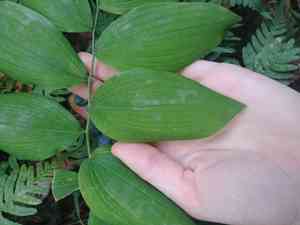
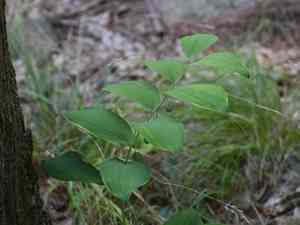
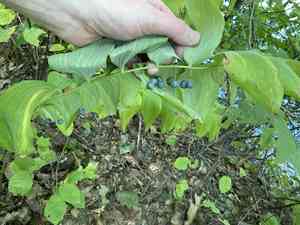
Quickly Identify Hairy solomon's seal
1
Bell-shaped, yellow-green flowers hidden beneath foliage.
2
Blue-black, glossy berries measuring 1/4 inch (0.6 cm).
3
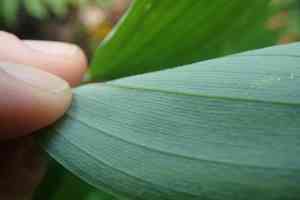
Pubescent leaves with parallel veins and hairy undersides, 2-5 inches (5-13 cm) long.
4
Arching stems reach up to 18 inches (45 cm) in height, forming clumps.
5
Erect stem with zig-zag growth, smooth texture, 2-4 feet (60-120 cm) long.
Scientific Classification of Hairy solomon's seal
Phylum
Vascular plants
Class
Monocotyledons
Order
Asparagales
Family
Asparagus
Genus
Solomon's seal
Species
Hairy solomon's seal
Planting and Growing of Hairy solomon's seal
Care Difficulty
Easy
Watering Schedule
Every 2 days
Sunlight Requirements
Partial sun
Sunshine Duration
6-10 hours
Ideal Temperature
60-75℉
Soil Type
Potting Mix, Peat Mix
Soil pH
6.5-7.5
Fertilizer Type
Balanced
Pruning Season
Spring, Summer
Pruning Area
Branches, Leaves
Pruning Frequency
2 times a year
Repotting Season
Spring
Pot Type
Plastic, Ceramic
 How to Water Hairy solomon's seal?
When watering Polygonatum pubescens, ensure that the soil is thoroughly moistened but not waterlogged. A general rule is to provide about 250 milliliters of water per session, allowing the moisture to reach the root zone. The soil's surface should feel damp, but no excess water should pool.
What are the symptoms of an underwatered Hairy solomon's seal?
›
What should I do if my Hairy solomon's seal is not getting enough water?
›
What are the symptoms of an overwatered Hairy solomon's seal?
›
How to save an overwatered Hairy solomon's seal?
›
 What Are the Sunlight Requirements for Hairy solomon's seal?
Polygonatum pubescens prefers partial sun to full shade, imitating its natural forest undergrowth environment. This ideal range promotes lush leaf development and robust growth without stress from harsh sunlight.
More About Sunlight Requirements Techniques→
What is the ideal light exposure?
›
How to achieve ideal lighting?
›
Benefits of ideal lighting?
›
 What Is the Ideal Temperature Range for Hairy solomon's seal?
Polygonatum pubescens thrives best in temperatures ranging from 60°F to 75°F. This range ensures optimal growth and health of the plant by mimicking its natural woodland environment where moderate temperatures promote robust foliage development and efficient nutrient uptake.
 What Soil is Best for Hairy solomon's seal?
Polygonatum pubescens thrives in soil that can consistently retain moisture. A loam or sandy loam helps maintain the perfect balance of moisture, reducing water stress and promoting healthy growth. This quality ensures that the root system remains hydrated and supports the plant's lush foliage. The plant prospers in soils rich in organic matter. A nutrient-rich loamy soil provides a continuous supply of essential nutrients, fostering vigorous growth and helping the plant resist pests and diseases. Adding organic compost further enhances nutrient content and encourages robust development. While moisture retention is crucial, equally important is the ability of the soil to drain effectively. This prevents waterlogging, which can lead to root rot. A well-draining sandy loam or loam soil ensures surplus water moves away from the roots, maintaining an ideal growth environment.
 How to Fertilize Hairy solomon's seal?
For Polygonatum pubescens, the recommended amount of fertilizer should be moderate. Use a balanced liquid fertilizer diluted to half strength, applying only about 200 milliliters per plant each session. For slow-release granules, sprinkle about a tablespoon around the soil per plant annually.
 How to Prune Hairy solomon's seal?
Begin your pruning by removing dead or damaged stems. This not only improves the plant's appearance but also prevents any diseases from spreading. Cut close to the base, just above the healthy part of the stem. Identify and remove older stems that are no longer producing new shoots. Cutting these away in spring or summer encourages new growth and helps revitalize the plant. Prune the plant to maintain its natural shape by selectively trimming stems that disrupt the desired appearance. Aim to create a balanced and aesthetically pleasing silhouette without over-pruning. After pruning, ensure the plant receives adequate water and nutrients to support its recovery and new growth. This care helps the plant quickly bounce back and thrive.
More About Pruning Techniques→
 How to Propagate Hairy solomon's seal plant?
1
Collect seeds from ripe berries of Polygonatum pubescens in autumn. Clean and dry them thoroughly to prevent mold before storing them for stratification.
2
Stratify the seeds for 2-3 months in moist sand at a temperature of about 4°C to break dormancy, mimicking the natural winter period.
3
In early spring, divide the rhizomes using a spade, ensure each division has buds. Plant them in well-draining soil at the same depth as the original plant.
 How to Repot Hairy solomon's seal plant?
1
Polygonatum pubescens needs repotting when you notice its roots are circling the pot or protruding through drainage holes. Another signal is slowed growth or leaves yellowing, indicating nutrient deficiency. The best time to repot is during its dormancy in early spring.
2
Opt for a pot that's just one size larger than the current one. It should have drainage holes to prevent waterlogging. This size allows for root expansion while avoiding excessive soil that retains water and could rot the roots.
3
Choose a rich potting mix that drains well, such as one with organic matter like compost or peat moss mixed with sand. This soil provides nutrients, retains moisture, and ensures good drainage to prevent root rot.
Toxicity
Ingestion
WARNING
The judgment on toxicity and danger is for reference only. We DO NOT GUARANTEE any accuracy of such judgment. Therefore, you SHALL NOT rely on such judgment. It is IMPORTANT TO SEEK PROFESSIONAL ADVICE in advance when necessary.
Learn More About Hairy solomon's seal Diseases
Anthracnose
Bacterial Leaf Spot
Bacterial Soft Rot
Bacterial Wilt
Crown Gall
Cyst Nematode
Damping-off
Downy Mildew
Drought Stress
Fusarium Wilt
Gray Mold
Leaf Spot
Mosaic
Nutrient Deficiency
Nutrient Toxicity
Powdery Mildew
Root Rot
Root-knot Nematode
Rusts
Sooty Mold
Spider Mites
Temperature Stress
Thrips Damage
White Mold



