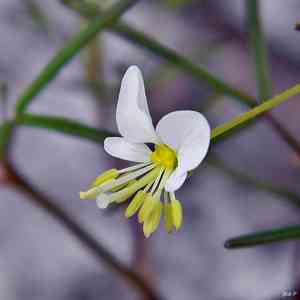
Slenderleaf clammyweed (Polanisia tenuifolia)
Also known as: Slender-Leaved Clammyweed
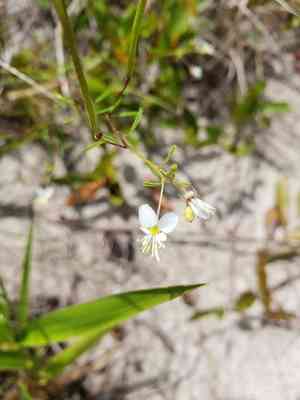
The slenderleaf clammyweed is a delicate wildflower characterized by its wiry stems and clusters of small, white to pinkish flowers with prominent yellow stamens. Adapted to dry environments, it has narrow leaves that help conserve water. This resilient plant thrives in sandy or gravelly soils, often in full sunlight, and attracts pollinators with its understated beauty.
In This Article
Attributes of Slenderleaf clammyweed
Lifespan
Annual
Plant Type
Herb
Plant Height
30-60 cm
Spread
N/A
Leaf Color
Green
Flower Size
1-2 cm
Flower Color
White to pinkish
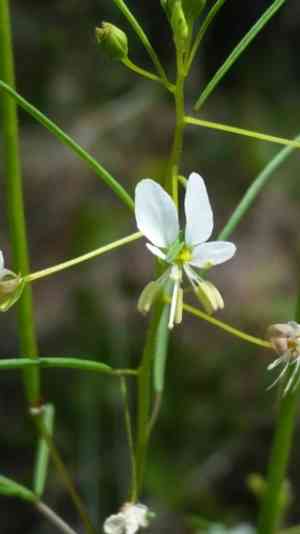
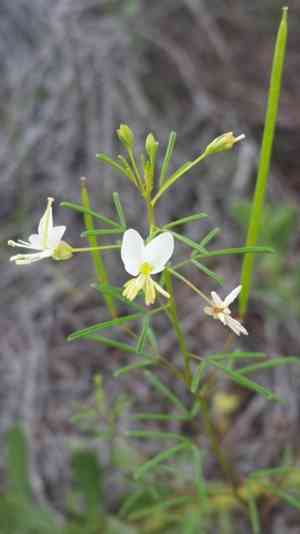
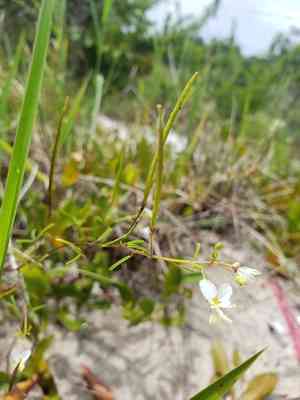
Images of Slenderleaf clammyweed
Quickly Identify Slenderleaf clammyweed
1
Look for its distinctive sticky leaves that emit a strong scent when crushed, and its small flowers with long stamens.
Scientific Classification of Slenderleaf clammyweed
Phylum
Vascular plants
Class
Dicotyledons
Order
Brassicales
Family
Spider flower
Genus
Clammyweeds
Species
Slenderleaf clammyweed
Planting and Growing of Slenderleaf clammyweed
Care Difficulty
Moderate
Watering Schedule
Every 3 days
Sunlight Requirements
Full sun
Sunshine Duration
4-6 hours
Ideal Temperature
70-85℉
Soil Type
Potting Mix, Peat Mix
Soil pH
6.5-7.5
Fertilizer Type
Balanced
Pruning Season
Spring, Summer
Pruning Area
Branches, Leaves
Pruning Frequency
2 times a year
Repotting Season
Spring
Pot Type
Plastic, Ceramic
 How to Water Slenderleaf clammyweed?
The Polanisia tenuifolia requires a moderate yet sufficient watering approach. Each session should involve approximately 150 milliliters of water. This ensures that the soil is evenly moist without becoming waterlogged, promoting healthy root growth. Always water until the top inch of soil feels damp, but not saturated.
What are the symptoms of an underwatered Slenderleaf clammyweed?
›
What should I do if my Slenderleaf clammyweed is not getting enough water?
›
What are the symptoms of an overwatered Slenderleaf clammyweed?
›
How to save an overwatered Slenderleaf clammyweed?
›
 What Are the Sunlight Requirements for Slenderleaf clammyweed?
Full sun is ideal for Polanisia tenuifolia. Providing adequate sunlight enhances its growth, enabling vibrant foliage and blooming. This range ensures the plant capitalizes on the energy necessary for development.
What is the best lighting condition for Polanisia tenuifolia?
›
How can you achieve ideal lighting for Polanisia tenuifolia?
›
Why is ideal lighting crucial for Polanisia tenuifolia?
›
 What Is the Ideal Temperature Range for Slenderleaf clammyweed?
What is the ideal temperature range for Polanisia tenuifolia? The ideal temperature for this plant species ranges between 70°F and 85°F. Maintaining temperatures within this range ensures optimal growth and vitality, as it aligns with the plant's natural habitat conditions. This temperature range fosters efficient physiological processes, leading to healthy foliage and flowering.
 What Soil is Best for Slenderleaf clammyweed?
Polanisia tenuifolia thrives in well-drained soil, which prevents waterlogging and root rot. Ensuring proper drainage can significantly enhance root health, supporting robust growth and vibrant foliage. A nutrient-rich medium encourages vigorous growth and flowering. Incorporating organic matter such as compost can provide essential nutrients and improve the soil structure. Sandy texture ensures that the soil doesn’t compact, allowing for air circulation around the roots, which is vital for healthy plant development and drought resilience.
 How to Fertilize Slenderleaf clammyweed?
For Polanisia tenuifolia, a balanced 10-10-10 liquid fertilizer should be diluted to half strength. Apply around 200 ml per plant to avoid over-fertilization. Ensure even distribution for optimal growth.
 How to Prune Slenderleaf clammyweed?
Begin by removing wilted flowers to redirect energy to the plant's healthier parts. This stimulates new flower production and prolongs the blooming period. Continue by cutting back overgrown shoots to shape the plant and maintain its desired size. This also helps improve air circulation and sunlight penetration. Make your cuts just above a leaf node or a lateral bud to encourage new growth in a specific direction, aiding in creating a bushier appearance. To prevent the spread of disease, disinfect your shears with rubbing alcohol between cuts, especially after removing diseased foliage.
More About Pruning Techniques→
 How to Propagate Slenderleaf clammyweed plant?
1
Collect seeds from mature Polanisia tenuifolia plants after the flowering season. Ensure that the seed pods are fully dry and brown before harvesting to guarantee mature seeds.
2
Soak seeds in water for 24 hours to help soften the seed coat and enhance germination rates. This step is essential in breaking dormancy for seeds with a harder outer layer.
3
Sow the prepared seeds in a propagation tray filled with sterilized potting mix. Cover them lightly with a thin layer of soil and water gently to avoid displacing the seeds.
 How to Repot Slenderleaf clammyweed plant?
1
Polanisia tenuifolia signals it needs repotting when roots are visible from the drainage holes or when growth noticeably slows down. An ideal time to repot is when the plant is actively growing, typically in spring or early summer, to ensure it can quickly establish itself in fresh soil.
2
Select a pot that is one size larger than the current one, with sufficient drainage holes. A slightly bigger pot prevents water-logging, aids in aeration, and allows for healthy root expansion, promoting robust plant growth.
3
Opt for a well-draining, sandy loam soil mix, ensuring it retains enough moisture while allowing excess to escape. This mix mimics its natural habitat, providing the necessary nutrients and preventing root rot due to stagnant water.
Learn More About Slenderleaf clammyweed Diseases
Anthracnose
Bacterial Leaf Spot
Bacterial Soft Rot
Bacterial Wilt
Chemical Injury
Damping-off
Downy Mildew
Drought Stress
Fusarium Wilt
Gray Mold
Leaf Curl
Leaf Spot
Mosaic
Nutrient Deficiency
Nutrient Toxicity
Powdery Mildew
Root Rot
Root-knot Nematode
Rusts
Sooty Mold
Spider Mites
Temperature Stress
Thrips Damage
White Mold



