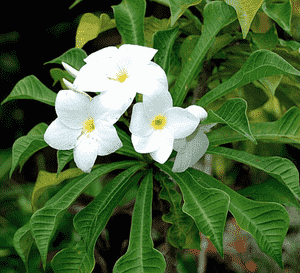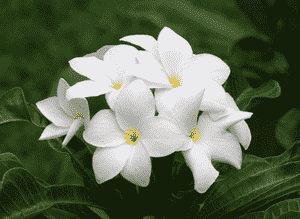
Bridal bouquet(Plumeria pudica)

Bridal bouquet (Plumeria pudica)

Also known as: Fiddle leaf plumeria, White frangipani, Sri supakorn, Golden arrow

Bridal bouquet (Plumeria pudica) is an evergreen tropical tree that features unusual spoon-shaped leaves and is known for its flowers. Unlike other plumerias, these blooms do not have any fragrance. This tropical tree grows in full sunlight and requires well-drained soil.

Attributes of Bridal bouquet

Lifespan
Perennial
Plant Type
Tree, Shrub
Plant Height
3 m to 4 m
Spread
1.2 m to 1.8 m
Leaf Color
Green
Flower Size
4 cm to 5 cm
Flower Color
White

ForwardPlant - Identify plants with a snap

Identify and diagnose plants, get toxicity alerts, and explore safety guides for all types of fungi.

Try for Free

Images of Bridal bouquet

Bridal bouquet(Plumeria pudica)

Quickly Identify Bridal bouquet

1
You can identify Plumeria pudica by its spoon-shaped leaves and clusters of white flowers with yellow centers. The leaves are unique to this species, often shaped like fiddles or lollipops, and are evergreen.

Scientific Classification of Bridal bouquet

Phylum
Vascular plants
Class
Dicotyledons
Order
Gentianales
Family
Dogbane
Genus
Plumeria
Species
Bridal bouquet

Planting and Growing of Bridal bouquet

Care Difficulty
Easy
Watering Schedule
Every 3 days
Sunlight Requirements
Full sun
Sunshine Duration
4-6 hours
Ideal Temperature
60-80℉
Soil Type
Potting Mix, Peat Mix
Soil pH
6.5-7.5
Fertilizer Type
Balanced
Pruning Season
Spring, Summer
Pruning Area
Branches, Leaves
Pruning Frequency
Once a year
Repotting Season
Spring
Pot Type
Plastic, Ceramic

water icon How to Water Bridal bouquet?

For Plumeria pudica, watering should be thorough, ensuring the soil is moist but not waterlogged. Aim for about 500 ml of water per session, allowing the excess to drain out from the bottom to prevent root rot. It's crucial to let the soil dry out between waterings.
What are the symptoms of an underwatered Bridal bouquet?
What should I do if my Bridal bouquet is not getting enough water?
What are the symptoms of an overwatered Bridal bouquet?
How to save an overwatered Bridal bouquet?
More About Watering Techniques

sunlight icon What Are the Sunlight Requirements for Bridal bouquet?

Sunlight Requirements: Full sun
Duration of light: 6-8 hours
Plumeria pudica thrives in full sun conditions. Providing it with 6 to 8 hours of direct sunlight daily ensures its healthy development and the production of abundant, fragrant flowers.
What is the optimum lighting setup for Plumeria pudica?
How do I ensure my Plumeria pudica gets ideal sunlight?
What benefits does Plumeria pudica gain from the ideal light?
More About Sunlight Requirements Techniques

temperature icon What Is the Ideal Temperature Range for Bridal bouquet?

Ideal Temperature: 60 ~ 80℉
The ideal temperature range for Plumeria pudica is between 60°F to 80°F. This range allows the plant to thrive, promoting healthy growth and abundant flowering. At these temperatures, Plumeria pudica can efficiently perform photosynthesis and remain free from temperature stress.

soil icon What Soil is Best for Bridal bouquet?

Soil type: Sandy soil, Loam, Sandy loam
Soil PH: 6.5 ~ 7.5
Plumeria pudica thrives in well-drained soils to prevent root rot. This requirement is crucial because excess water can suffocate roots, leading to poor plant health. Ensuring good drainage allows the plant to absorb the necessary nutrients and oxygen it needs to flourish. This plant benefits from nutrient-rich soil that supports its growth and blooming. Adequate nutrients ensure that the plant develops healthy leaves and abundant flowers, providing vibrant visual appeal. Moderate fertility is essential for the balanced growth of Plumeria pudica. Over-fertilizing can lead to excessive foliage with limited flowers, while under-fertilizing can stunt growth. A moderate approach provides the perfect balance for sustained health. More About Soil

fertilize icon How to Fertilize Bridal bouquet?

Fertilizer type: Balanced
Plumeria pudica typically requires moderate fertilization, balancing between lush growth and maintaining the natural soil ecosystem. For liquid fertilizers, a dilution ratio of 1:20 is suitable, ensuring the nutrients are available without overwhelming the plant. Slow-release granules, on the other hand, should be applied at a rate of approximately 100 grams per square meter. More About Fertilizing Techniques

prune icon How to Prune Bridal bouquet?

Pruning Time: Spring, Summer
Before you start pruning your Plumeria pudica, ensure you have a pair of sharp and sanitized pruning shears. Cutting with clean tools helps prevent the spread of diseases. Assess the plant for any dead or diseased branches that need removal, as well as any crossing branches which could hinder growth. Begin pruning by removing dead, damaged, or diseased branches. Cut them back to healthy wood to prevent the spread of illness. Next, aim for an open center by removing any inward-facing branches. This improves air circulation and light penetration, supporting the plant's health and vigor. Trim back any overly long branches to maintain a balanced shape, which encourages stronger growth. Cut above a leaf node or bud to promote new growth in the desired direction. Keep the overall shape rounded or vase-like for a visually appealing structure and balanced growth. More About Pruning Techniques

propagate icon How to Propagate Bridal bouquet plant?

Propagate Time: Spring, Early summer
1
Select healthy stems from the Plumeria pudica, ideally during the early morning or late afternoon. Cut a section of stem about 12 inches long with at least 2-3 nodes. Make sure the cutting is free from any flowers or buds to focus energy on root development.
2
Strip leaves from the lower part of the cutting, leaving a few on top for photosynthesis. Dip the cut end into rooting hormone, then tap lightly to remove excess powder. This step is crucial as it encourages root formation and success in propagation.
3
Insert the treated cutting about 3 inches deep into a well-draining potting mix. Water lightly to settle the soil around the stem. Avoid over-watering, as too much moisture can lead to rot rather than encourage root growth.
More About Propagating Techniques

repot icon How to Repot Bridal bouquet plant?

Repotting frequency: Every 2-3 years
1
Plumeria pudica shows signs that it's time to repot when its roots start to crowd the pot excessively. If you notice roots growing out of the drainage holes or the plant's growth seems stunted despite proper care, it is likely indicating the need for a larger pot. Repotting is best done during the active growing seasons of spring and summer when the plant can recover quickly.
2
Choosing the right pot for Plumeria pudica involves selecting a container slightly larger than the current one, allowing room for root expansion. Pots with good drainage prevent waterlogged soil, which can lead to root rot. Opt for porous materials like terracotta, which help wick away excess moisture and ensure healthy root aeration.
3
Select a well-draining potting mix tailored for cacti or succulents. Such soil typically contains ingredients like perlite or pumice, ensuring excellent drainage and reducing the risk of root diseases. This mix provides a stable yet airy environment for root development, aiding in vibrant growth and flowering.

ForwardPlant - Identify plants with a snap

Find the best spots for them to optimize their health, simply using your phone.

Try for Free

Toxicity of Bridal bouquet

Is Bridal bouquet toxic to humans?

The risk of poisoning from the bridal bouquet primarily arises from either ingestion or skin exposure to the sap, which may lead to irritation. This plant contains toxic alkaloids in all its parts and is considered mildly toxic if ingested. Consuming any portion of the bridal bouquet can lead to gastrointestinal discomfort, including symptoms such as abdominal pain, cramping, and diarrhea. When the sap comes into contact with skin, it can produce a mild rash characterized by redness, itchiness, and localized inflammation, or may even result in blistering for those with heightened sensitivity, so it is crucial to prevent accidental exposure.

Is Bridal bouquet toxic to cat?

The plant species known as bridal bouquet presents a toxicity threat to felines. If ingested, which could happen if cats mistakenly consume any part of the bridal bouquet, they may suffer from physical distress. Given that every part of the bridal bouquet is toxic, the chances of poisoning are substantial if any section is consumed. It is crucial for cat owners to remain alert in keeping their cats away from bridal bouquet in order to prevent possible intoxication. Should a cat ingest any portion of the bridal bouquet, it is vital to seek immediate veterinary attention to guarantee swift and suitable treatment.

Is Bridal bouquet toxic to dog?

The bridal bouquet plant is known to be toxic to dogs. When dogs consume any parts of this plant, whether by accident or out of curiosity, they risk poisoning. Every part of the bridal bouquet, including the leaves, flowers, and stems, is dangerous if ingested by a canine friend. Symptoms of toxicity in dogs can vary but often include vomiting, diarrhea, lethargy, and decreased appetite. Dog owners must vigilantly watch their pets and restrict access to bridal bouquet to prevent accidental eating. If a dog ingests any portion of the bridal bouquet, it is critical to seek veterinary assistance immediately, as timely treatment is vital for the health and safety of the affected animal.

Identify toxic plants for your safety

Learn which plants are harmful to you and your pets, and make informed choices for a safer home!

Try for Free
WARNING
The judgment on toxicity and danger is for reference only. We DO NOT GUARANTEE any accuracy of such judgment. Therefore, you SHALL NOT rely on such judgment. It is IMPORTANT TO SEEK PROFESSIONAL ADVICE in advance when necessary.
More About Toxic Techniques