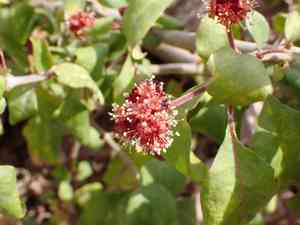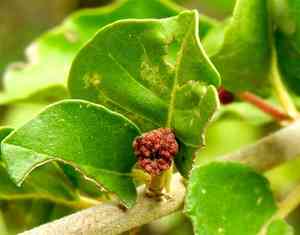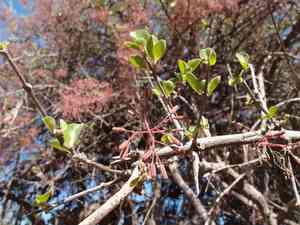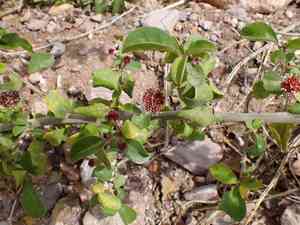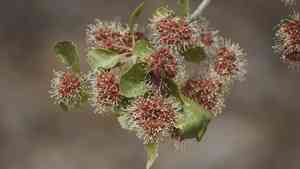
Mexican devil's-claws(Pisonia capitata)

Mexican devil's-claws (Pisonia capitata)

Also known as: Sticky Tree, Birdcatcher Tree

Mexican devil's-claws (Proboscidea spp.) are well-adapted to arid and semi-arid environments, rather than tropical ones, with several unique characteristics:

1. **Drought Resistance:** They possess deep root systems that tap into underground water sources, allowing them to survive prolonged dry periods.
2. **Efficient Seed Dispersal:** Their distinctive claw-shaped seed pods latch onto passing animals, facilitating wide distribution of the seeds.
3. **Tough Seeds:** The seeds have hard outer shells that protect them during harsh conditions, ensuring they can germinate when conditions are favorable.
4. **Soil Versatility:** They can grow in various soil types, including nutrient-poor, sandy soils, which are common in their native habitats.
5. **Low Water Requirement:** These plants need minimal water, making them ideal for survival in dry climates.

These features collectively enable Mexican devil's-claws to effectively colonize and thrive in their natural, often challenging environments.

Attributes of Mexican devil's-claws

Lifespan
Perennial
Plant Type
Tree
Plant Height
Up to 10 meters
Spread
Up to 5 meters
Leaf Color
Dark green
Flower Size
Less than 1 cm
Flower Color
Creamy white

ForwardPlant - Identify plants with a snap

Identify and diagnose plants, get toxicity alerts, and explore safety guides for all types of fungi.

Try for Free

Images of Mexican devil's-claws

Mexican devil's-claws(Pisonia capitata)

Quickly Identify Mexican devil's-claws

1
Identifying Pisonia capitata involves looking for a medium-sized tree with broad, dark green leaves and sticky seeds. Flowers are small and creamy white.

Scientific Classification of Mexican devil's-claws

Phylum
Vascular plants
Class
Dicotyledons
Order
Caryophyllales
Family
Four o'clock
Genus
Catchbirdtrees
Species
Mexican devil's-claws

Planting and Growing of Mexican devil's-claws

Care Difficulty
Moderate
Watering Schedule
Every 4 days
Sunlight Requirements
Partial sun
Sunshine Duration
6-12 hours
Ideal Temperature
65-80℉
Soil Type
Potting Mix, Peat Mix
Soil pH
6.5-7.5
Fertilizer Type
Balanced
Pruning Season
Spring, Summer
Pruning Area
Branches, Leaves
Pruning Frequency
2 times a year
Repotting Season
Spring
Pot Type
Plastic, Ceramic

water icon How to Water Mexican devil's-claws?

For Pisonia capitata, it's essential to ensure the soil stays consistently moist but not waterlogged. The aim is to mimic its natural habitat, which involves frequent rains but also good drainage. Watering should involve applying 250 ml per session, allowing water to seep deep into the soil without pooling at the top.
What are the symptoms of an underwatered Mexican devil's-claws? ›
What should I do if my Mexican devil's-claws is not getting enough water? ›
What are the symptoms of an overwatered Mexican devil's-claws? ›
How to save an overwatered Mexican devil's-claws? ›

sunlight icon What Are the Sunlight Requirements for Mexican devil's-claws?

Sunlight Requirements: Partial sun, Full sun
Duration of light: Five to seven hours
Partial sun, full sun exposure is ideal. When placed in optimal lighting, Pisonia capitata will develop strong stems, lush leaves, and vigorous growth, taking full advantage of photosynthesis to maintain its health and resilience.
What type of light does Pisonia capitata need? ›
How can I achieve ideal lighting for Pisonia capitata? ›
What are the benefits of ideal light conditions for Pisonia capitata? ›

temperature icon What Is the Ideal Temperature Range for Mexican devil's-claws?

Ideal Temperature: 65 ~ 80℉
The optimal temperature range for Pisonia capitata is between 65°F and 80°F. In these conditions, the plant can efficiently perform photosynthesis, ensuring robust growth and development. Maintaining a stable temperature within this range supports nutrient uptake and minimizes stress, allowing for healthy foliage and root systems.

soil icon What Soil is Best for Mexican devil's-claws?

Soil type: Loam, Sandy soil
Soil PH: 6.5 ~ 7.5
Pisonia capitata thrives in soil that drains well to prevent root rot. Good drainage ensures that excess water does not accumulate, which can cause root damage and disease, fostering a healthy root system. A nutrient-rich soil provides the essential minerals and organic matter necessary for the robust growth of Pisonia capitata. Nutrients are critical for vigorous foliage and overall plant health. While the soil should drain well, it must also retain some moisture to support plant growth. The balanced moisture helps maintain stable hydration levels between watering.

fertilize icon How to Fertilize Mexican devil's-claws?

Fertilizer type: Balanced
Pisonia capitata should be fertilized cautiously since its nutrient needs may vary based on environmental conditions. Generally, use a balanced liquid fertilizer diluted to half the recommended strength for houseplants. For solid fertilizers, aim for a light application of a slow-release formula. Exact measurements can vary, so observe the plant's response and adjust accordingly, keeping in mind that it's better to under-fertilize than over-fertilize this species.

prune icon How to Prune Mexican devil's-claws?

Pruning Time: Spring, Summer
To prune Pisonia capitata effectively, you'll need a pair of sharp, clean pruning shears. It's crucial to sanitize your tools before use to prevent the spread of disease. Ensure the blades are sharp to make clean cuts, minimizing any stress to the plant. Begin by identifying any dead or diseased branches and remove them at their base. Next, trim any overcrowded or crossing branches to improve light penetration and airflow. Shape the plant by cutting back any excessively long growth, encouraging a more bushy form. Always cut just above a leaf node to promote healthy new shoots. More About Pruning Techniques→

propagate icon How to Propagate Mexican devil's-claws plant?

Propagate Time: Spring, Early summer
1
Select healthy, non-woody stems from the parent plant. Use sterilized pruning shears to make a clean cut just below a node. Ensure each cutting is about 4-6 inches long with at least two leaf nodes.
2
Fill the seed tray with a mixture of potting soil and sand to ensure good drainage. Place the seeds on the surface and cover them lightly with soil. Water gently to keep the soil moist, but avoid overwatering.
3
For cutting propagation, dipping the cut end of the stem in a rooting hormone can promote faster root development. This step helps increase the success rate of cuttings taking root.
More About Propagating Techniques→

repot icon How to Repot Mexican devil's-claws plant?

Repotting frequency: Every 2-3 years
1
Pisonia capitata gives clear signs when it's time to repot. These include roots protruding from drainage holes, slowed growth despite proper care, or a noticeable salt buildup on the soil surface. These indicators suggest it's time to move the plant into a fresh potting environment for optimal growth.
2
Select a pot that is one size larger than the current one, ensuring it has proper drainage holes. A slightly larger pot provides space for root expansion and helps prevent the risk of root rot by ensuring excess water can escape easily. The material can be either plastic or terracotta, depending on preference.
3
For Pisonia capitata, a well-draining potting mix is ideal. This type of soil ensures that water flows through the soil freely, preventing root rot, which can occur if the roots sit in overly moist conditions. A mix with perlite or sand can enhance drainage and aeration.

ForwardPlant - Identify plants with a snap

Find the best spots for them to optimize their health, simply using your phone.

Try for Free

Toxicity

Ingestion, Skin contact

Identify toxic plants for your safety

Learn which plants are harmful to you and your pets, and make informed choices for a safer home!

Try for Free
WARNING
The judgment on toxicity and danger is for reference only. We DO NOT GUARANTEE any accuracy of such judgment. Therefore, you SHALL NOT rely on such judgment. It is IMPORTANT TO SEEK PROFESSIONAL ADVICE in advance when necessary.