Pink Mountain Heather (Phyllodoce empetriformis)
Also known as: Pink Mountain Heath
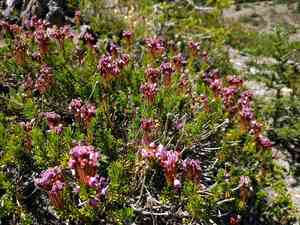
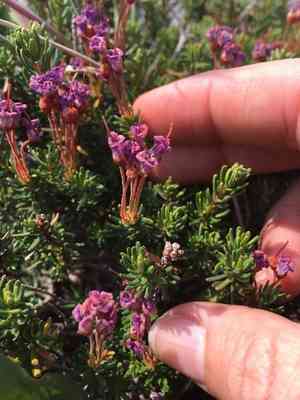
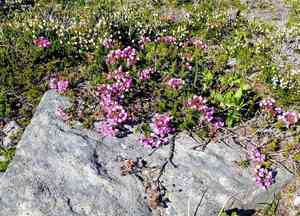
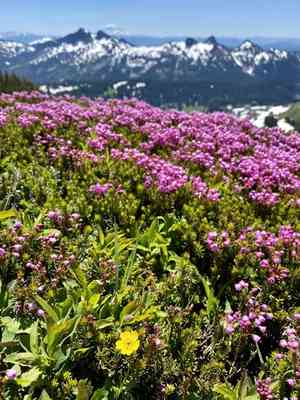
The Pink Mountain Heather (Phyllodoce empetriformis) is a perennial evergreen shrub indigenous to the mountainous regions of western North America, particularly the Pacific Northwest. Its foliage consists of tightly rolled, needle-like leaves, resembling those of pine trees. During the summer, it produces clusters of small, bell-shaped flowers that range in color from pink to reddish-purple. It typically thrives in the alpine and subalpine zones, favoring moist, well-drained soils and open, sunny locations.
In This Article
Attributes of Pink Mountain Heather
Lifespan
Perennial
Plant Type
Shrub
Plant Height
30 cm
Spread
40 cm
Leaf Color
Green
Flower Size
8 mm
Flower Color
Pink Purple Red
Images of Pink Mountain Heather
Quickly Identify Pink Mountain Heather
1
Phyllodoce empetriformis can be identified by its small, needle-like leaves that are dark green and slightly glossy. The plant produces clusters of bell-shaped, pink to reddish flowers on short stems. The leaves remain evergreen throughout the year.
Scientific Classification of Pink Mountain Heather
Phylum
Vascular plants
Class
Dicotyledons
Order
Ericales
Family
Heath
Genus
Mountain heaths
Species
Pink Mountain Heather
Planting and Growing of Pink Mountain Heather
Care Difficulty
Hard
Watering Schedule
Every 2 days
Sunlight Requirements
Full sun
Sunshine Duration
6-10 hours
Ideal Temperature
50-68℉
Soil Type
Potting Mix, Peat Mix
Soil pH
4.5-6.5
Fertilizer Type
Balanced
Pruning Season
Spring, Summer
Pruning Area
Branches, Leaves
Pruning Frequency
2 times a year
Repotting Season
Spring
Pot Type
Plastic, Ceramic
 How to Water Pink Mountain Heather?
For Phyllodoce empetriformis, watering should provide enough moisture to reach the root zone without oversaturating the soil. Aim for around 350 milliliters per watering to keep the soil evenly moist but not wet.
What are the symptoms of an underwatered Pink Mountain Heather?
›
What should I do if my Pink Mountain Heather is not getting enough water?
›
What are the symptoms of an overwatered Pink Mountain Heather?
›
How to save an overwatered Pink Mountain Heather?
›
 What Are the Sunlight Requirements for Pink Mountain Heather?
Partial sun is ideal, providing dappled morning light with protection during midday. This balance helps encourage vibrant growth and prevents photo-stress.
More About Sunlight Requirements Techniques→
What type of sunlight does Phyllodoce empetriformis prefer?
›
How do you ensure optimal light availability for Phyllodoce empetriformis?
›
What benefits does Phyllodoce empetriformis gain from the ideal light exposure?
›
 What Is the Ideal Temperature Range for Pink Mountain Heather?
The ideal temperature range for growing Phyllodoce empetriformis is between 50°F to 68°F. In this range, the plant is likely to thrive, displaying optimal growth and flowering. Keeping the plant within this temperature range ensures that its metabolic processes function efficiently, promoting overall plant health.
 What Soil is Best for Pink Mountain Heather?
Phyllodoce empetriformis thrives in acidic soils. This ensures that the plant absorbs essential nutrients effectively, promoting lush growth and vibrant blooms. The requirement for well-drained soil ensures that the roots get the necessary oxygen, preventing root rot and fostering healthy root development. Soils rich in organic matter improve moisture retention and supply ample nutrients, enhancing the plant's overall vigor and resilience.
 How to Fertilize Pink Mountain Heather?
Phyllodoce empetriformis thrives in nutrient-poor soils and hence requires a minimal fertilizer approach. Use a balanced, diluted formula, applying no more than one tablespoon per gallon of water for liquid feed. For solid feed, use a small handful spread evenly around the root zone.
 How to Prune Pink Mountain Heather?
Begin by inspecting the plant for dead or diseased branches. Use sharp shears to cut these back to a healthy cross-section. Next, shape the plant by lightly trimming the outer branches, focusing on maintaining its natural form. Be sure to step back occasionally to view the plant’s overall shape. For Phyllodoce empetriformis, pruning should ideally be done in early spring before new growth appears. This timing helps stimulate fresh growth and ensures a bountiful flowering season.
More About Pruning Techniques→
 How to Propagate Pink Mountain Heather plant?
1
Begin by soaking the seeds in water for a few hours to encourage germination. This step helps soften the seed coat and speeds up the germination process.
2
Select healthy, non-flowering stems and use pruning shears to cut 4-6 inch segments. Ensure each cutting has at least two leaves at the top to facilitate photosynthesis.
3
Prepare a potting mix rich in organic matter. Plant seeds or cuttings and ensure the medium is moist but not waterlogged. Maintain consistent moisture to encourage rooting.
 How to Repot Pink Mountain Heather plant?
1
Phyllodoce empetriformis typically signals the need for repotting when its roots start poking through the drainage holes or when growth appears stunted. Spring and autumn are ideal seasons, as the plant is not in its active flowering phase and can easily recover from the physical stress of repotting.
2
Opt for a slightly larger pot with excellent drainage. Ceramic or terracotta pots are great choices, as they offer breathability. Ensuring the pot has drainage holes prevents waterlogging, which is crucial for maintaining the health of this alpine plant.
3
Choose an acidic, well-drained mix or a commercial rhododendron blend. This soil type mimics the plant's natural alpine environment, allowing for proper aeration and providing nutrients necessary for growth. The well-drained nature of the soil prevents root rot, ensuring a thriving plant.



