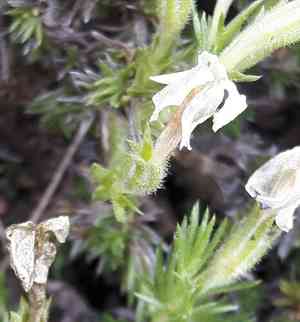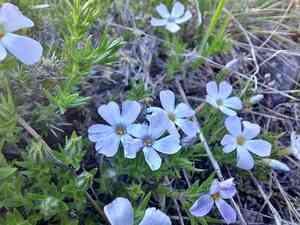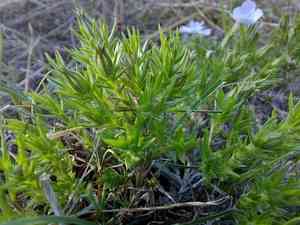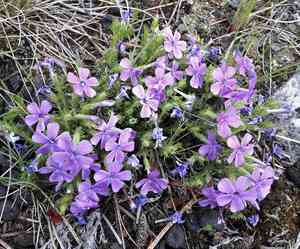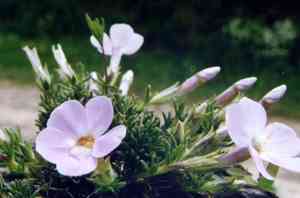
Tufted phlox(Phlox caespitosa)

Tufted phlox (Phlox caespitosa)

Also known as: Carpet phlox

Tufted phlox (Phlox caespitosa) is a compact, mat-forming perennial celebrated for its vibrant, starry blossoms that appear in spring to early summer. This plant features dense, needle-like leaves that create a cushiony texture, remaining evergreen in milder climates.

### Ideal Growing Conditions:
- **Light:** Prefers full sun but can tolerate partial shade.
- **Soil:** Requires well-drained, sandy, or rocky soil, with a preference for slightly alkaline to neutral pH levels.
- **Water:** Once established, it is moderately drought-tolerant and needs minimal watering.
- **Climate:** Best suited for USDA hardiness zones 4-9.
- **Maintenance:** Low-maintenance; deadhead to promote further blooming.

Tufted phlox's colorful flowers, in shades of purple, pink, or white, attract pollinators and contrast beautifully with its evergreen foliage. Its ability to thrive in challenging environments like rocky terrains makes it an excellent choice for rock gardens, borders, and ground cover.

Attributes of Tufted phlox

Lifespan
Perennial
Plant Type
Herb
Plant Height
15 cm
Spread
1.8 m
Leaf Color
Green
Flower Size
0.4-0.8 inches (1-2 cm)
Flower Color
Pink, White, Lavender

ForwardPlant - Identify plants with a snap

Identify and diagnose plants, get toxicity alerts, and explore safety guides for all types of fungi.

Try for Free

Images of Tufted phlox

Tufted phlox(Phlox caespitosa)

Quickly Identify Tufted phlox

1
To identify Phlox caespitosa, look for its tight, cushion-like mounds of needle-like leaves and clusters of small flowers that come in various colors like pink, white, and lavender.

Scientific Classification of Tufted phlox

Phylum
Vascular plants
Class
Dicotyledons
Order
Ericales
Family
Phlox
Genus
Phloxes
Species
Tufted phlox

Planting and Growing of Tufted phlox

Care Difficulty
Easy
Watering Schedule
Every 3 days
Sunlight Requirements
Full sun
Sunshine Duration
6-10 hours
Ideal Temperature
60-70℉
Soil Type
Potting Mix, Peat Mix
Soil pH
6.5-7.5
Fertilizer Type
Balanced
Pruning Season
Spring, Summer
Pruning Area
Branches, Leaves
Pruning Frequency
2 times a year
Repotting Season
Spring
Pot Type
Plastic, Terracotta

water icon How to Water Tufted phlox?

Phlox caespitosa prefers a well-draining soil. Watering should be enough to moisten the top 2-3 inches of the soil but take care not to let the plant stand in water. Aim for about 150ml of water per session, ensuring the plant is not waterlogged yet has sufficient moisture to thrive.
What are the symptoms of an underwatered Tufted phlox?
What should I do if my Tufted phlox is not getting enough water?
What are the symptoms of an overwatered Tufted phlox?
How to save an overwatered Tufted phlox?

sunlight icon What Are the Sunlight Requirements for Tufted phlox?

Sunlight Requirements: Full sun, Partial sun
Duration of light: 4-6 hours
Ideally, Phlox caespitosa should be grown in a location that receives partial to full sun, benefiting from brighter light conditions. Ideal sunlight enhances its flowering potential and overall health.
How much sun does Phlox caespitosa need?
What is the best location for planting?
How can optimal sunlight be achieved?

temperature icon What Is the Ideal Temperature Range for Tufted phlox?

Ideal Temperature: 60 ~ 70℉
The ideal temperature range for Phlox caespitosa is between 60°F and 70°F. This temperature range allows the plant to grow optimally, ensuring healthy blooms and foliage. Maintaining these temperatures encourages the plant to conserve energy for growth, avoiding stress that can be caused by extreme conditions.

soil icon What Soil is Best for Tufted phlox?

Soil type: Sandy soil, Loam, Sandy loam, Calcareous soil
Soil PH: 6.5 ~ 7.5
Phlox caespitosa thrives in well-draining soil, which helps prevent root rot by ensuring water doesn't pool around its roots. This requirement is crucial as it simulates its natural habitat and provides essential drainage to maintain healthy plant growth. A nutrient-rich soil is beneficial for Phlox caespitosa, as it supports robust growth and vibrant flowering. Incorporating organic matter such as compost into the soil can enhance its fertility, offering the plant a balanced nutrient profile. While excellent drainage is crucial, the soil should retain some moisture to support its growth. Sandy loam is particularly suited to this requirement since it provides a balance between drainage and moisture retention, fostering the plant's adaptation to various conditions.

fertilize icon How to Fertilize Tufted phlox?

Fertilizer type: Balanced
For Phlox caespitosa, ensure that you use a balanced fertilizer with a ratio such as 10-10-10. Generally, use about half the recommended amount on the package to prevent over-fertilization, especially when the plant is actively growing.

prune icon How to Prune Tufted phlox?

Pruning Time: Spring, Summer
Start by identifying any dead, damaged, or diseased stems and leaves. Carefully cut these parts back to healthy tissue to prevent the spread of any disease and to promote better air circulation within the plant. Trim back any overly tall or leggy growth to encourage a more compact form. Focus on cutting back to just above a leaf node or lateral branch to guide new growth in the desired direction. To boost flowering throughout the blooming season, deadhead spent blooms regularly. This prevents seed formation and encourages the plant to produce more flowers. More About Pruning Techniques

propagate icon How to Propagate Tufted phlox plant?

Propagate Time: Spring,Early spring,Summer,Late summer
1
Start by collecting seeds from mature plants in the autumn. Store them in a cool, dry place until early spring. Before sowing, scarify the seeds gently to enhance germination rates.
2
In early summer, select healthy stem cuttings of about 4-6 inches long, cutting just below a node. Remove the lower leaves and dip the cut end in rooting hormone powder.
3
Divide mature clumps in early spring. Carefully lift the plant from the soil and use a sharp knife or spade to separate offsets from the main plant, ensuring each section has roots.
More About Propagating Techniques

repot icon How to Repot Tufted phlox plant?

Repotting frequency: Every 2-3 years
1
Phlox caespitosa should be repotted when you notice roots coming out of the drainage holes or its growth appears stunted. These signs indicate the plant has outgrown its current pot and needs more space for healthy root development, typically noticed at the start of Spring or Autumn.
2
Choose a pot that is one size larger than the current one, ideally made of terracotta for its porous nature. This helps in preventing root rot by allowing excess moisture to evaporate, maintaining optimal soil conditions for Phlox caespitosa.
3
Opt for a well-draining sandy loam soil that facilitates good airflow and moisture retention. This soil type mimics the plant's natural rocky habitat, supporting healthy growth and preventing waterlogged conditions that could harm its roots.

ForwardPlant - Identify plants with a snap

Find the best spots for them to optimize their health, simply using your phone.

Try for Free