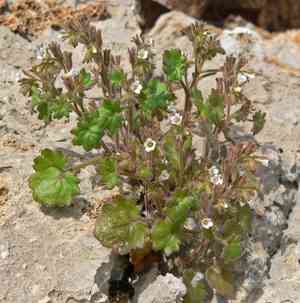
Roundleaf phacelia (Phacelia rotundifolia)
Also known as: None
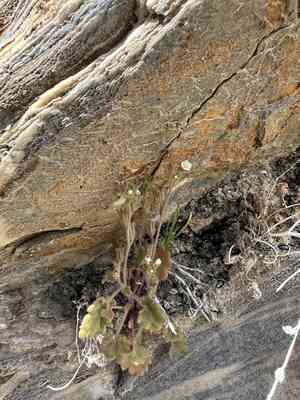
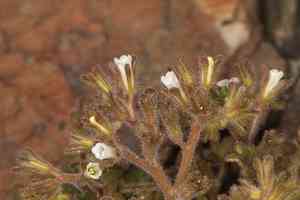
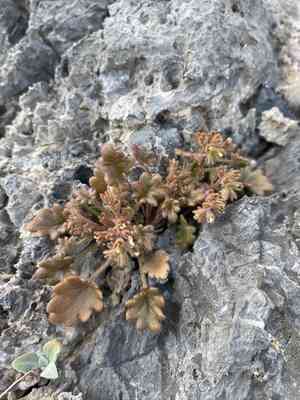
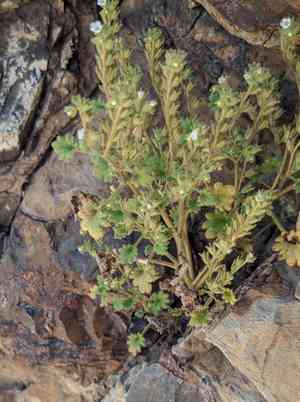
The plant features round leaves attached to petioles. Its inflorescence is a one-sided, curving or coiled cyme that is covered in hairs. The small, bell-shaped flowers, each about half a centimeter in length, range in color from white to purple and have a pale yellow throat.
In This Article
Attributes of Roundleaf phacelia
Lifespan
Annual
Plant Type
Herb
Plant Height
10 to 30 cm
Spread
Approximately 20 cm
Leaf Color
Green
Flower Size
1 to 2 cm
Flower Color
Blue to Purple
Images of Roundleaf phacelia
Quickly Identify Roundleaf phacelia
1
Roundleaf phacelia is characterized by its rounded leaves, small blue to purple flowers, and hairy stems. The flowers are clustered together near the top of the plant.
Scientific Classification of Roundleaf phacelia
Phylum
Vascular plants
Class
Dicotyledons
Order
Boraginales
Family
Waterleaf
Genus
Heliotrope
Species
Roundleaf phacelia
Planting and Growing of Roundleaf phacelia
Care Difficulty
Easy
Watering Schedule
Every 3 days
Sunlight Requirements
Full sun
Sunshine Duration
6-12 hours
Ideal Temperature
60-70℉
Soil Type
Potting Mix, Peat Mix
Soil pH
6.5-7.5
Fertilizer Type
Balanced
Pruning Season
Spring, Summer
Pruning Area
Branches, Leaves
Pruning Frequency
2 times a year
Repotting Season
Spring
Pot Type
Plastic, Ceramic
 How to Water Roundleaf phacelia?
The watering amount for Phacelia rotundifolia should be sufficient enough to moisten the soil evenly while avoiding waterlogging. It's essential to ensure the soil is moist to the touch, but not soggy, which could drown the plant. Generally, 250 ml per session is adequate for keeping its hydration needs satisfied.
What are the symptoms of an underwatered Roundleaf phacelia?
›
What should I do if my Roundleaf phacelia is not getting enough water?
›
What are the symptoms of an overwatered Roundleaf phacelia?
›
How to save an overwatered Roundleaf phacelia?
›
 What Are the Sunlight Requirements for Roundleaf phacelia?
Phacelia rotundifolia thrives best in full to partial sun, benefiting from 6-8 hours of sunlight. This balance allows sufficient photosynthesis, leading to vibrant blooms and healthy growth.
Optimal positioning
›
Use of reflective surfaces
›
Seasonal adjustments
›
 What Is the Ideal Temperature Range for Roundleaf phacelia?
Phacelia rotundifolia thrives best in moderate temperatures. Ideally, keeping the temperature between 60°F and 70°F ensures optimal growth. These conditions mimic its natural habitat, providing the warmth necessary for proper photosynthesis and growth while avoiding stress associated with heat extremes.
 What Soil is Best for Roundleaf phacelia?
Phacelia rotundifolia thrives in soils with good drainage. Proper drainage prevents waterlogging and root rot, ensuring healthy growth and vibrant foliage. Choosing a well-draining soil promotes robust root systems and enhances the plant's ability to absorb nutrients. This plant prefers soils of moderate fertility, where essential nutrients are available without excessive richness that might lead to lush growth but poor flowering. Balanced soil fertility ensures optimal flowering and increases the plant's resilience to environmental stresses. Loose soil textures facilitate root penetration and air exchange, which is crucial for Phacelia rotundifolia. Such conditions support vigorous root development and help the plant to anchor well, drawing ample nutrients and water efficiently.
 How to Fertilize Roundleaf phacelia?
For Phacelia rotundifolia, use a balanced fertilizer with an N-P-K ratio of 10-10-10. Apply diluted liquid fertilizer at half the recommended concentration to avoid over-fertilization, as this plant can be sensitive to excessive nutrients.
 How to Prune Roundleaf phacelia?
During the pruning seasons, focus on removing any dead, damaged, or diseased stems. This helps improve air circulation within the plant, reducing the chances of fungal infections. To maintain a neat appearance, trim back any excessively long stems. This encourages the plant to develop a more compact, attractive shape and enhances its overall aesthetic appeal.
More About Pruning Techniques→
 How to Propagate Roundleaf phacelia plant?
1
Begin by filling the seed starting trays with potting soil, lightly compacting it to eliminate air pockets. Spread the Phacelia rotundifolia seeds evenly over the surface and cover them with a thin layer of soil, as they require light for germination.
2
After sowing, water the soil gently to ensure it is moist but not waterlogged. Maintain a consistent temperature of around 15-20°C (59-68°F) to facilitate germination, which typically occurs within two to three weeks.
3
Once seedlings have developed several true leaves, carefully transplant them to larger pots or directly into the garden. Choose a location with full sun and loose, well-drained soil to encourage robust growth.
 How to Repot Roundleaf phacelia plant?
1
Repot your Phacelia rotundifolia when you notice roots protruding from drainage holes, or if growth has slowed despite optimal care. These signs indicate that the plant has outgrown its current pot, and providing new space can invigorate its growth.
2
Choose a pot that is approximately 1-2 inches larger in diameter than the current one. This incremental increase ensures the roots have more room to expand without the risk of waterlogging, which can occur in overly large pots.
3
Opt for a well-draining sandy mix, allowing excess water to escape easily, mimicking this plant's natural habitats. This soil prevents root rot and ensures the plant receives enough oxygen, crucial for healthy growth.
Toxicity
N/A
WARNING
The judgment on toxicity and danger is for reference only. We DO NOT GUARANTEE any accuracy of such judgment. Therefore, you SHALL NOT rely on such judgment. It is IMPORTANT TO SEEK PROFESSIONAL ADVICE in advance when necessary.
Learn More About Roundleaf phacelia Diseases
Anthracnose
Bacterial Leaf Spot
Bacterial Wilt
Chemical Injury
Cyst Nematode
Damping-off
Downy Mildew
Drought Stress
Fusarium Wilt
Gray Mold
Leaf Spot
Mosaic
Nutrient Deficiency
Nutrient Toxicity
Powdery Mildew
Root Rot
Root-knot Nematode
Rusts
Sooty Mold
Spider Mites
Temperature Stress
Thrips Damage
White Mold



