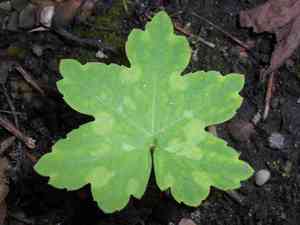
Blacktack phacelia (Phacelia pachyphylla)
Also known as: Thick-leaved Phacelia
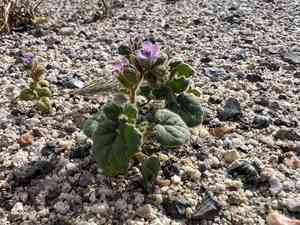
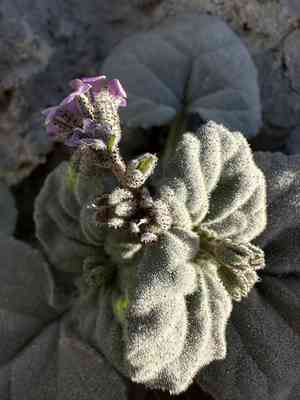
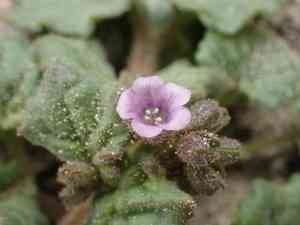
The blacktack phacelia (Phacelia crenulata) thrives in arid North American desert regions, where it is well-suited to survive harsh conditions. It features thick, succulent leaves that help retain moisture, essential for enduring the intense desert heat. The plant's vibrant blue to violet flowers, blooming atop coiling stems, attract pollinators. It grows well in gravelly soils, with its specialized foliage minimizing water loss and enabling it to withstand extreme sun exposure.
In This Article
Attributes of Blacktack phacelia
Lifespan
Annual
Plant Height
15-30 cm
Spread
15-45 cm
Leaf Color
Green
Flower Size
1-2 cm
Flower Color
Purple, Blue
Images of Blacktack phacelia
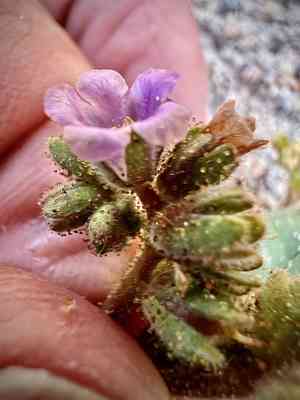
Quickly Identify Blacktack phacelia
1
Phacelia pachyphylla can be identified by its thick, succulent leaves and clusters of small, bell-shaped flowers that are usually purple or blue. The plant grows close to the ground and has a resilience to dry conditions.
Scientific Classification of Blacktack phacelia
Phylum
Vascular plants
Class
Dicotyledons
Order
Boraginales
Family
Waterleaf
Genus
Heliotrope
Species
Blacktack phacelia
Planting and Growing of Blacktack phacelia
Care Difficulty
Easy
Watering Schedule
Every 2 days
Sunlight Requirements
Partial sun
Sunshine Duration
6-8 hours
Ideal Temperature
60-75℉
Soil Type
Potting Mix, Peat Mix
Soil pH
6.5-7.5
Fertilizer Type
Balanced
Pruning Season
Spring, Summer
Pruning Area
Branches, Leaves
Pruning Frequency
2 times a year
Repotting Season
Spring
Pot Type
Plastic, Ceramic
 How to Water Blacktack phacelia?
For Phacelia pachyphylla, ensure that you provide around 250 milliliters of water each time. This amount is generally sufficient to reach the root zone without saturating the soil completely. Always water deeply but infrequently, so the roots have a reason to grow deeper. Water until you see that the soil is moist at least 2 inches down but not waterlogged.
What are the symptoms of an underwatered Blacktack phacelia?
›
What should I do if my Blacktack phacelia is not getting enough water?
›
What are the symptoms of an overwatered Blacktack phacelia?
›
How to save an overwatered Blacktack phacelia?
›
 What Are the Sunlight Requirements for Blacktack phacelia?
Phacelia pachyphylla flourishes best with partial sun exposure throughout the day. This light condition supports healthy photosynthesis, improving growth rates, flowering potential, and general plant vigor.
What are the ideal lighting conditions for Phacelia pachyphylla?
›
How can I provide Phacelia pachyphylla with its ideal light conditions?
›
What are the benefits of giving Phacelia pachyphylla its ideal light?
›
 What Is the Ideal Temperature Range for Blacktack phacelia?
For optimal growth, Phacelia pachyphylla thrives in a temperature range of 60°F to 75°F. This range provides sufficient warmth for photosynthesis while preventing stress from excessive heat.
 What Soil is Best for Blacktack phacelia?
Phacelia pachyphylla thrives in well-drained soil that prevents water accumulation. This type of soil is crucial to avoid root rot and ensures healthy plant growth. Incorporating organic matter like compost enhances soil fertility and structure. It provides Phacelia pachyphylla with essential nutrients and promotes robust blooming. Maintaining low soil salinity is beneficial as high salinity levels can hinder nutrient absorption and plant growth, adversely affecting Phacelia pachyphylla's health.
 How to Fertilize Blacktack phacelia?
For Phacelia pachyphylla, use a balanced liquid fertilizer with a ratio of 10-10-10. Apply approximately half-strength liquid fertilizer every two weeks during the growing season to ensure optimal growth without the risk of over-fertilization.
 How to Prune Blacktack phacelia?
Begin by assessing the plant for any dead or damaged branches. Identifying these parts helps to promote better overall plant health as you're removing potential sources of disease. Carefully remove any dead or dying stems with clean, sharp pruning shears. This removal will improve air circulation within the plant and prevent pests and diseases from taking hold. Trim back any overgrown stems to maintain a compact, tidy shape. Focus on cutting just above a leaf node to encourage bushier growth. This also helps to retain the plant’s ornamental appeal.
More About Pruning Techniques→
 How to Propagate Blacktack phacelia plant?
1
Begin by filling the seed tray with a sterile potting mix. Sow the seeds lightly on the surface and cover them with a thin layer of the potting mix. Lightly water to ensure even moisture.
2
Place the tray in a location with indirect sunlight. Ensure the soil remains moist but not waterlogged, maintaining temperatures between 18-24°C for healthy germination.
3
Once the seedlings develop true leaves and are large enough to handle, they can be transplanted to individual pots or garden locations. Handle them carefully to avoid root damage.
 How to Repot Blacktack phacelia plant?
1
Repot Phacelia pachyphylla when you notice roots emerging through drainage holes or when growth seems stunted despite proper care. Spring and summer are ideal times as the plant is in active growth, facilitating quicker recovery from transplant shock.
2
Select a pot only one size larger than the current one with adequate drainage holes. This ensures space for root growth without overly moist soil which can lead to root rot. Terra-cotta pots are excellent for moisture regulation.
3
Choose a gritty, well-draining soil mix, such as a combination of cactus potting mix with perlite or coarse sand. This soil structure prevents waterlogging, mimicking the natural habitat and promoting healthy root development.
Learn More About Blacktack phacelia Diseases
Anthracnose
Bacterial Leaf Spot
Bacterial Soft Rot
Bacterial Wilt
Chemical Injury
Crown Gall
Cyst Nematode
Damping-off
Downy Mildew
Drought Stress
Fusarium Wilt
Gray Mold
Leaf Curl
Leaf Spot
Mosaic
Nutrient Deficiency
Nutrient Toxicity
Powdery Mildew
Root Rot
Root-knot Nematode
Rusts
Sooty Mold
Spider Mites
Temperature Stress
Thrips Damage
White Mold



