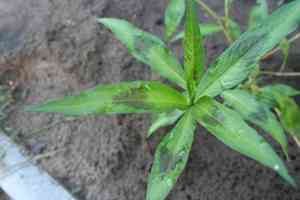
Curlytop Knotweed(Persicaria lapathifolia)

Curlytop Knotweed (Persicaria lapathifolia)

Also known as: Pale persicaria, Dock-leaved smartweed

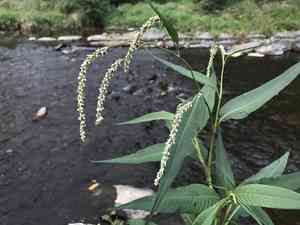
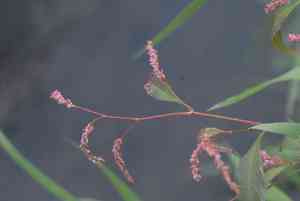
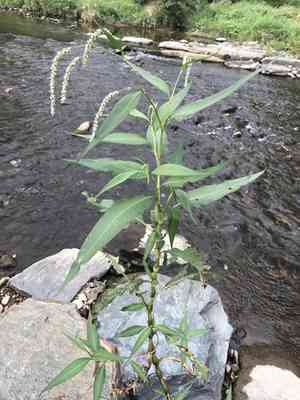
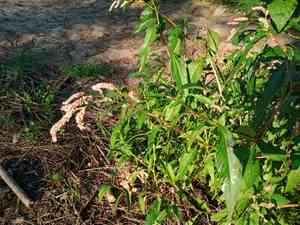
Curlytop Knotweed (Persicaria lapathifolia) is an annual herbaceous plant that typically reaches heights of 20 to 79 cm. It is characterized by its purplish stems, which exhibit noticeable swelling at the joints. The plant blooms from mid to late summer, producing small, pink flowers arranged in dense, spike-like clusters. The fruit of this plant is a rounded, flat nut.

Curlytop Knotweed thrives in moist, disturbed environments, including wetlands, riverbanks, and fields. It propagates through seeds that can remain viable for several years, spreading via water, animals, and human activities. Effective management strategies include mechanical removal, herbicide application, and proper land management practices to prevent its spread.

Attributes of Curlytop Knotweed

Lifespan
Annual
Plant Type
Herb
Plant Height
40 cm to 90 cm
Spread
90 cm
Leaf Color
Green
Flower Size
5 mm to 1.2 cm
Flower Color
White Green Pink Red Brown

ForwardPlant - Identify plants with a snap

Identify and diagnose plants, get toxicity alerts, and explore safety guides for all types of fungi.

Try for Free

Images of Curlytop Knotweed

Curlytop Knotweed(Persicaria lapathifolia)

Quickly Identify Curlytop Knotweed

1
To identify Persicaria lapathifolia, look for its alternate leaves that are lanceolate to ovate-lanceolate in shape, with a membranous ochrea at the base. The plant has small greenish-white to pinkish flowers in dense, spike-like racemes.

Scientific Classification of Curlytop Knotweed

Phylum
Vascular plants
Class
Dicotyledons
Order
Caryophyllales
Family
Buckwheat
Genus
Persicaria
Species
Curlytop Knotweed

Planting and Growing of Curlytop Knotweed

Care Difficulty
Easy
Watering Schedule
Every 3 days
Sunlight Requirements
Partial sun
Sunshine Duration
6-10 hours
Ideal Temperature
60-75℉
Soil Type
Potting Mix, Peat Mix
Soil pH
5-8
Fertilizer Type
Balanced
Pruning Season
Spring, Summer
Pruning Area
Branches, Leaves
Pruning Frequency
2 times a year
Repotting Season
Spring
Pot Type
Plastic, Terracotta

water icon How to Water Curlytop Knotweed?

Persicaria lapathifolia enjoys a moderate amount of water. It thrives well when the soil is kept consistently moist but not waterlogged. Watering with around 500 milliliters each time should be adequate, ensuring the soil is damp up to a few inches without puddling on the surface.
What are the symptoms of an underwatered Curlytop Knotweed? ›
What should I do if my Curlytop Knotweed is not getting enough water? ›
What are the symptoms of an overwatered Curlytop Knotweed? ›
How to save an overwatered Curlytop Knotweed? ›

sunlight icon What Are the Sunlight Requirements for Curlytop Knotweed?

Sunlight Requirements: Partial sun
Duration of light: 4-6 hours daily
Persicaria lapathifolia benefits from partial sun exposure. Ideal light ensures robust growth, vibrant foliage, and a balanced energy cycle for this species.
Best Environment for Growth ›
Shifting Sunlight Requirement ›
Protecting from Harsh Rays ›

temperature icon What Is the Ideal Temperature Range for Curlytop Knotweed?

Ideal Temperature: 60 ~ 75℉
The ideal temperature range for Persicaria lapathifolia growth is between 60°F and 75°F. This range supports optimal metabolic processes and ensures healthy growth by providing the necessary warmth that facilitates enzymatic activities and nutrient absorption. In these conditions, the plant can photosynthesize efficiently, leading to vigorous growth and development.

soil icon What Soil is Best for Curlytop Knotweed?

Soil type: Sandy soil, Loam, Clay soil
Soil PH: 5 ~ 8
Persicaria lapathifolia thrives in well-drained soil, which prevents waterlogging and root rot. This condition allows the roots to absorb essential nutrients efficiently, promoting robust growth and health. Enriching the soil with organic matter is crucial for this plant. Organic matter improves soil structure, increasing water retention and providing nutrients, vital for its vigorous foliage and flowering. Moderate moisture levels in the soil are ideal for Persicaria lapathifolia, ensuring the plant doesn't dry out while avoiding over-saturation. This balance fosters a stable environment for optimal growth.

fertilize icon How to Fertilize Curlytop Knotweed?

Fertilizer type: Balanced
Persicaria lapathifolia typically requires a balanced approach to fertilization. Use a liquid fertilizer at a dilution of one tablespoon per gallon of water. Ensure that you are using a balanced NPK (nitrogen, phosphorus, potassium) ratio like 10-10-10 to promote healthy growth without overloading any specific nutrient.

prune icon How to Prune Curlytop Knotweed?

Pruning Time: Spring, Summer, Autumn
First, inspect the plant to identify any dead, damaged, or diseased branches. Use a pair of sharp shears to cut them back to the base or a healthy part of the plant. Once you have removed damaged parts, step back and assess the plant's shape. Trim branches that stick out awkwardly to maintain a compact and aesthetically pleasing form. Encourage bushier growth by trimming back the tips of branches. This helps the plant to develop a denser foliage and produce a multitude of new shoots.

propagate icon How to Propagate Curlytop Knotweed plant?

Propagate Time: Spring, Early spring
1
Collect seeds from mature Persicaria lapathifolia plants when the seeds have ripened. It's crucial to identify seeds that are healthy and free from signs of disease or pest infestation before collecting them.
2
Sow the collected seeds in a prepared seed tray filled with potting mix. They should be sown at a depth of about twice their size. Maintain even moisture until germination occurs in approximately two to three weeks.
3
Once seedlings reach a few inches in height and have developed a strong root system, they can be transplanted to individual pots or directly into the garden. Ensure to harden them off by gradually exposing them to outdoor conditions.

repot icon How to Repot Curlytop Knotweed plant?

Repotting frequency: Every 2-3 years
1
Recognize the signs when Persicaria lapathifolia needs repotting, such as roots growing out of the drainage holes or the plant becoming root-bound. It's best to repot during active growth in spring or autumn, ensuring the plant is healthy enough to handle the change.
2
Select a pot that is one size larger than the current one and provides adequate drainage. A terracotta pot is ideal, allowing excess moisture to escape, thus preventing root rot, and providing better aeration to the roots.
3
Choose a well-draining loamy soil mix. The soil should retain some moisture, but not become waterlogged. This blend allows roots to access oxygen while providing adequate nutrients, supporting healthy plant growth.

ForwardPlant - Identify plants with a snap

Find the best spots for them to optimize their health, simply using your phone.

Try for Free