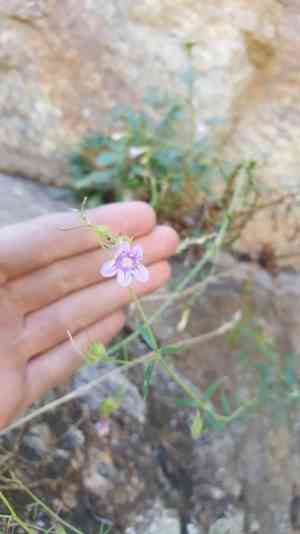
Riggin's penstemon (Penstemon triphyllus)
Also known as: Three-leaved Penstemon
Riggin's penstemon, also known as Penstemon rostriflorus, is a perennial herb featuring tubular, red to reddish-orange flowers arranged in a spike-like formation on upright stems. Its leaves are lance-shaped and grow in opposite pairs along the stem. This structural design enhances its ability to attract pollinators such as hummingbirds and bees, which are essential for its reproduction. Additionally, the opposite leaf arrangement maximizes sunlight capture and water efficiency, making it well-suited for temperate environments with well-drained soils.
In This Article
Attributes of Riggin's penstemon
Lifespan
Perennial
Plant Height
30-60 cm
Spread
15-30 cm
Leaf Color
Green
Flower Size
1-2 cm
Flower Color
Pink, Purple
Images of Riggin's penstemon
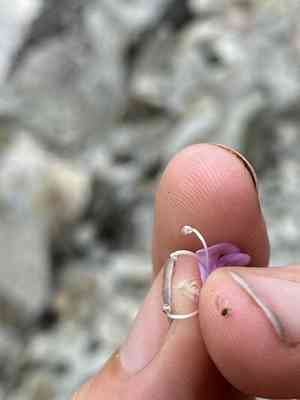
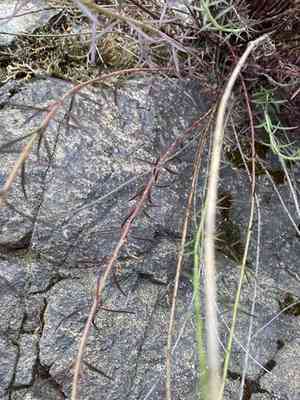
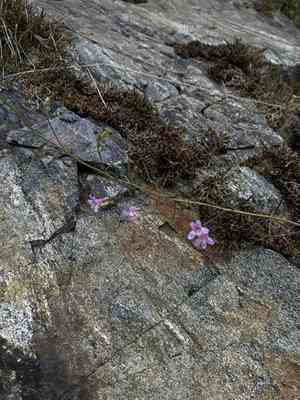
Quickly Identify Riggin's penstemon
1
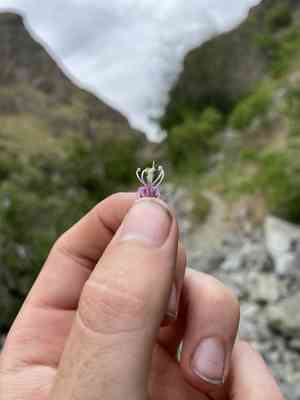
Penstemon triphyllus can be identified by its three-lobed leaves and tubular flowers that range in color from pink to purple. Look for hairy stems and leaves which are common to the species.
Scientific Classification of Riggin's penstemon
Phylum
Vascular plants
Class
Dicotyledons
Order
Lamiales
Family
Plantain
Genus
Penstemon
Species
Riggin's penstemon
Planting and Growing of Riggin's penstemon
Care Difficulty
Moderate
Watering Schedule
Every 3 days
Sunlight Requirements
Full sun
Sunshine Duration
4-8 hours
Ideal Temperature
60-75℉
Soil Type
Potting Mix, Peat Mix
Soil pH
6.5-7.5
Fertilizer Type
Balanced
Pruning Season
Spring, Summer
Pruning Area
Branches, Leaves
Pruning Frequency
2 times a year
Repotting Season
Spring
Pot Type
Plastic, Ceramic
 How to Water Riggin's penstemon?
For Penstemon triphyllus, it is best to water until the soil feels evenly moist but not waterlogged. This plant thrives with deep watering that allows its roots to breathe.
What are the symptoms of an underwatered Riggin's penstemon?
›
What should I do if my Riggin's penstemon is not getting enough water?
›
What are the symptoms of an overwatered Riggin's penstemon?
›
How to save an overwatered Riggin's penstemon?
›
 What Are the Sunlight Requirements for Riggin's penstemon?
Penstemon triphyllus benefits from full to partial sun; direct sunlight stimulates bright floral displays and strong growth, enhancing both resilience and aesthetic features.
How much sun does Penstemon triphyllus need?
›
What is the best strategy for ensuring ideal sunlight exposure?
›
What benefits does the ideal light condition offer to Penstemon triphyllus?
›
 What Is the Ideal Temperature Range for Riggin's penstemon?
Penstemon triphyllus thrives best in a temperature range of 60 to 75°F. This range facilitates optimal metabolic activities, including photosynthesis and respiration. Within these temperatures, the plant efficiently uses water and nutrients. Maintaining this range aids in healthy flowering and foliage development.
 What Soil is Best for Riggin's penstemon?
Penstemon triphyllus thrives in well-drained soil. This requirement ensures that the plant's roots do not sit in waterlogged conditions, which can lead to root rot and other diseases, ultimately promoting healthier growth and vibrant blooms. While Penstemon triphyllus does not need overly rich soil, moderate fertility helps ensure that it receives enough nutrients to grow strong and beautiful. This characteristic supports its robust structure and overall health. The plant prefers a pH range from 6.5 to 7.5, slightly acidic to neutral. Maintaining this pH helps optimize nutrient uptake and improves plant vigor, ensuring lush foliage and optimal flowering.
 How to Fertilize Riggin's penstemon?
For Penstemon triphyllus, an appropriate amount of fertilizer is crucial for healthy growth. Typically, a diluted liquid fertilizer should be used at one-quarter to half strength. This delicate balance provides essential nutrients without overwhelming the plant's roots, which are sensitive to over-fertilization.
 How to Prune Riggin's penstemon?
In spring, prune back old growth to encourage fresh shoots. In autumn, focus on removing dead or damaged stems. Achieving the best results requires careful timing, as early spring pruning stimulates robust growth, while autumn pruning prepares the plant for winter dormancy. Use sharp, sterilized shears to make clean cuts. Always cut back stems to a pair of healthy leaves. For shaping, remove no more than one-third of the plant to avoid shock, ensuring you maintain the natural, appealing shape of Penstemon triphyllus. Regularly remove spent flowers after blooming to encourage continuous flowering throughout the season. Deadheading not only tidies the plant but also redirects its energy from seed production to growth and bloom production.
More About Pruning Techniques→
 How to Propagate Riggin's penstemon plant?
1
Begin by filling a seed tray with a well-draining seed-starting mix. Sow the seeds evenly and cover them lightly with soil. Keep the tray in a warm, brightly lit area and water gently, maintaining consistent moisture without waterlogging.
2
Select a healthy parent plant and use sterile snippers to take 4-6 inch cuttings. Remove the lower leaves, dip the cut end in rooting hormone, and plant in a potting mix. Keep them in indirect sunlight and water regularly.
3
Once seedlings have developed true leaves, carefully transplant them into individual pots. Ensure each pot has adequate drainage and continue to provide consistent moisture and light to promote healthy growth.
 How to Repot Riggin's penstemon plant?
1
Penstemon triphyllus needs repotting when its roots start to outgrow the current pot, protruding through the drainage holes or causing the soil to dry out very quickly after watering. Another indicator is if the plant's growth has noticeably slowed down, suggesting it needs more space to thrive.
2
Select a pot that is one size larger than the current pot and has sufficient drainage holes. The extra room encourages healthy root growth, and good drainage prevents waterlogging, which is critical for this plant to prevent root rot. Opt for materials like terracotta for added breathability.
3
Use a well-draining sandy mix rich in organic matter. The sandy texture provides excellent drainage, preventing water retention that can lead to root diseases. The organic matter supplies essential nutrients for optimal growth and vibrancy, mimicking the plant's natural environment.
Learn More About Riggin's penstemon Diseases
Anthracnose
Bacterial Leaf Spot
Bacterial Wilt
Chemical Injury
Crown Gall
Cyst Nematode
Damping-off
Downy Mildew
Drought Stress
Fusarium Wilt
Gray Mold
Leaf Curl
Leaf Spot
Mosaic
Nutrient Deficiency
Nutrient Toxicity
Powdery Mildew
Root Rot
Root-knot Nematode
Rusts
Sooty Mold
Spider Mites
Temperature Stress
Thrips Damage
White Mold



