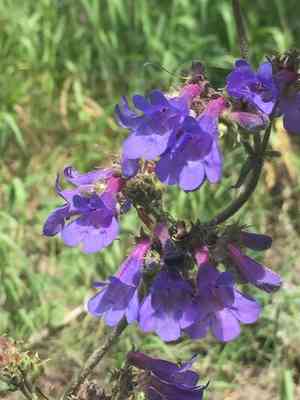
Eggleaf beardtongue (Penstemon ovatus)
Also known as: Brewer's penstemon, Broad-leaved penstemon
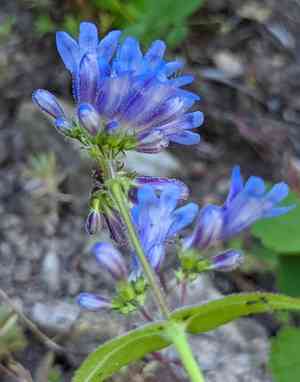
Eggleaf beardtongue, known for its vibrant tubular flowers in shades of blue to violet with white accents, flourishes in open woodlands and rocky terrains. Its broad, lush leaves grow from a sturdy, upright stem. This perennial plant is well-adapted to thrive in dry, well-drained soils, making it a favorite in its native habitats where it attracts numerous pollinators.
In This Article
Attributes of Eggleaf beardtongue
Lifespan
Perennial
Plant Type
Herb, Shrub
Plant Height
61 cm to 1.2 m
Spread
50 cm
Leaf Color
Green
Flower Size
2-3 cm
Flower Color
Blue to Purple
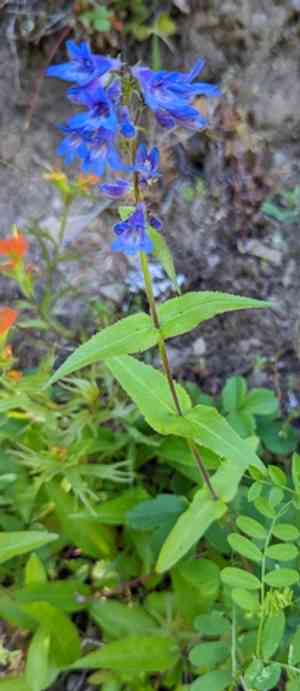
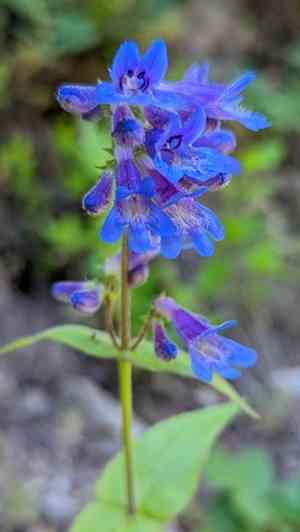
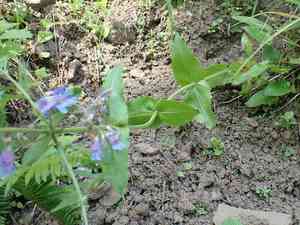
Images of Eggleaf beardtongue
Quickly Identify Eggleaf beardtongue
1
Identifying Penstemon ovatus includes looking for its broad, ovate-shaped leaves and tubular flowers that range in color from blue to purple. The flowers have a unique \'beard\' of white hair inside the tube, which is a characteristic feature of the Penstemon genus.
Scientific Classification of Eggleaf beardtongue
Phylum
Vascular plants
Class
Dicotyledons
Order
Lamiales
Family
Plantain
Genus
Penstemon
Species
Eggleaf beardtongue
Planting and Growing of Eggleaf beardtongue
Care Difficulty
Easy
Watering Schedule
Every 4 days
Sunlight Requirements
Partial sun
Sunshine Duration
4-8 hours
Ideal Temperature
60-75℉
Soil Type
Potting Mix, Peat Mix
Soil pH
6.5-7.5
Fertilizer Type
Balanced
Pruning Season
Spring, Summer
Pruning Area
Branches, Leaves
Pruning Frequency
2 times a year
Repotting Season
Spring
Pot Type
Plastic, Ceramic
 How to Water Eggleaf beardtongue?
Penstemon ovatus prefers its soil to be moderately moist. A good rule of thumb is to deeply water the plant until water starts to drain out of the bottom of the pot or ground, ensuring the soil is moist throughout without becoming waterlogged. This usually translates to around 250 milliliters of water per session, depending on the plant's size and soil conditions.
What are the symptoms of an underwatered Eggleaf beardtongue?
›
What should I do if my Eggleaf beardtongue is not getting enough water?
›
What are the symptoms of an overwatered Eggleaf beardtongue?
›
How to save an overwatered Eggleaf beardtongue?
›
 What Are the Sunlight Requirements for Eggleaf beardtongue?
Penstemon ovatus should ideally be placed in partial to full sun. Such lighting encourages vibrant blooms and healthy, vigorous growth, leveraging the energy from sunlight effectively.
What is the best light condition for Penstemon ovatus?
›
How can Penstemon ovatus achieve ideal lighting?
›
What are the benefits of the ideal light for Penstemon ovatus?
›
 What Is the Ideal Temperature Range for Eggleaf beardtongue?
For optimal growth, Penstemon ovatus thrives within the temperature range of 60-75°F. This range helps ensure proper metabolic processes, photosynthesis, and transpiration rates, promoting healthy leaf and flower development.
 What Soil is Best for Eggleaf beardtongue?
Penstemon ovatus thrives in well-drained soil which prevents waterlogging and root rot. Good drainage ensures that the roots can access necessary nutrients and oxygen, promoting healthier growth and vibrant blooms. This plant prefers soil with moderate fertility to support its robust growth. Excessive nutrients, particularly nitrogen, can lead to excessive foliage at the expense of flowers. Balanced nutrients encourage strong flowering and overall plant vigor. Incorporating organic matter into the soil can improve its structure and moisture retention capabilities. This benefits Penstemon ovatus by providing a steady water supply without the risk of saturation, thus supporting sustained growth and resilience to drought conditions.
 How to Fertilize Eggleaf beardtongue?
For Penstemon ovatus, use a balanced fertilizer that can ensure steady growth. Typically, use about half the recommended amount stated on the fertilizer package to avoid overwhelming the plant. Consistency and moderation are key to maintaining healthy growth.
 How to Prune Eggleaf beardtongue?
Start by observing the overall structure of the Penstemon ovatus. Look for any dead, damaged, or diseased stems which should be the first to be removed. This assessment helps in determining how much pruning is necessary. Cut back any dead or damaged stems to their base to encourage new growth. For healthy stems, prune back to the desired size and shape while maintaining the plant's natural form. Target to cut approximately one-third of the stem's length to balance between maintaining growth and encouraging more blooming. Look for branches that cross over each other and remove one to avoid rubbing, which could lead to wounds and potential infection. Ensuring good airflow through open branch structure reduces the incidence of fungal diseases.
More About Pruning Techniques→
 How to Propagate Eggleaf beardtongue plant?
1
Collect seeds from mature Penstemon ovatus plants in late autumn. Dry and clean the seeds to remove chaff before storing them in a cool, dry place until you are ready to sow.
2
Select healthy, semi-hardwood stems in late spring. Cut each stem just below a leaf node and strip the lower leaves. Dip the cut end into rooting hormone to enhance root development.
3
In early summer, carefully dig up the parent plant. Use a sharp spade to divide the root ball into smaller sections, ensuring each section has healthy roots and shoots. Replant immediately and water well.
 How to Repot Eggleaf beardtongue plant?
1
Signs that your Penstemon ovatus needs repotting include roots growing out of the drainage holes, the plant drying out quickly after watering, or stunted growth. The ideal time to repot is during its active growing seasons, specifically in spring or early autumn, when the plant is less stressed and can quickly establish in its new pot.
2
Select a pot that is one to two inches larger in diameter than the current one. It should have proper drainage holes to prevent water from sitting at the bottom and causing root rot. A slightly larger pot will give the plant room to grow without overwhelming it with excessive soil that can retain moisture for too long.
3
Use a well-draining potting mix composed of organic matter like peat or compost and inorganic components such as perlite or sand. This type of soil provides optimum drainage while retaining enough moisture to supply nutrients, promoting healthy root development and preventing waterlogging.
Learn More About Eggleaf beardtongue Diseases
Anthracnose
Bacterial Leaf Spot
Bacterial Soft Rot
Bacterial Wilt
Black Spot
Chemical Injury
Crown Gall
Damping-off
Downy Mildew
Drought Stress
Fusarium Wilt
Gray Mold
Leaf Curl
Leaf Spot
Mosaic
Nutrient Deficiency
Nutrient Toxicity
Powdery Mildew
Root Rot
Root-knot Nematode
Rusts
Sooty Mold
Spider Mites
Temperature Stress
Thrips Damage
White Mold



