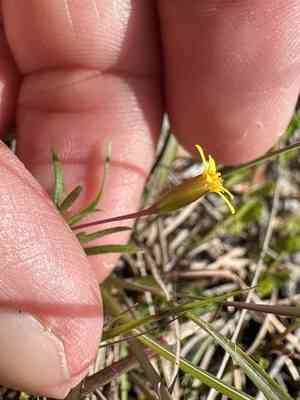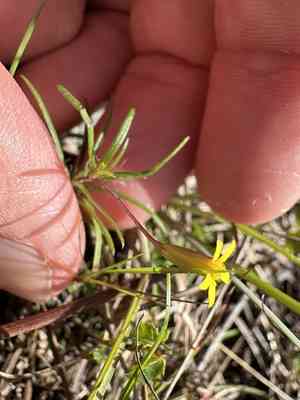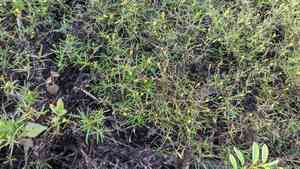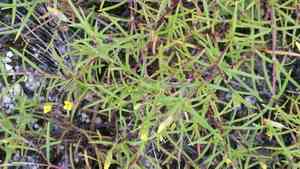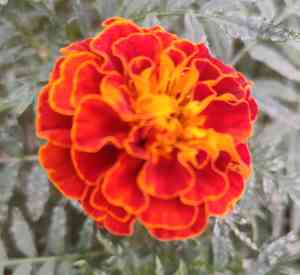
Sanddune chinchweed(Pectis glaucescens)

Sanddune chinchweed (Pectis glaucescens)

Also known as: None

Sanddune chinchweed (Pectis glaucescens) is a perennial herb indigenous to the southwestern United States and northern Mexico, particularly thriving in sandy desert environments. Here are its distinctive traits and essential cultivation guidelines:

### Characteristics:
1. **Appearance**: Features finely divided, gray-green leaves.
2. **Flowers**: Produces small, bright yellow flowers that typically bloom from late summer to early fall.
3. **Height**: Grows to a modest height of about 6-12 inches (15-30 cm).
4. **Aroma**: Leaves release a citrus-like scent when crushed.

### Cultivation Requirements:
1. **Soil**: Thrives in well-drained, sandy soils.
2. **Sunlight**: Requires full sun for optimal growth.
3. **Water**: Highly drought-tolerant, needing minimal water once established.
4. **Temperature**: Prefers hot, arid climates but can tolerate mild frost.
5. **Propagation**: Best propagated by seeds sown in the spring after the danger of frost has passed.
6. **Salt Tolerance**: Not tolerant of salt spray or saline conditions, as the leaves may become scorched.

This plant is excellent for xeriscaping and enhancing desert landscapes with its vibrant yellow blooms.

Attributes of Sanddune chinchweed

Lifespan
Annual
Plant Type
Herb
Plant Height
Up to 20 cm
Spread
Approximately 30 cm
Leaf Color
Green
Flower Size
Approximately 1-2 cm
Flower Color
Yellow

ForwardPlant - Identify plants with a snap

Identify and diagnose plants, get toxicity alerts, and explore safety guides for all types of fungi.

Try for Free

Images of Sanddune chinchweed

Sanddune chinchweed(Pectis glaucescens)

Quickly Identify Sanddune chinchweed

1
Pectis glaucescens can be identified by its small, yellow, daisy-like flowers and its aromatic foliage. The leaves are typically narrow and elongated, and the plant tends to form low-lying clumps.

Scientific Classification of Sanddune chinchweed

Phylum
Vascular plants
Class
Dicotyledons
Order
Asterales
Family
Daisy
Genus
Pectis
Species
Sanddune chinchweed

Planting and Growing of Sanddune chinchweed

Care Difficulty
Moderate
Watering Schedule
Every 2 days
Sunlight Requirements
Full sun
Sunshine Duration
4-8 hours
Ideal Temperature
70-85℉
Soil Type
Potting Mix, Peat Mix
Soil pH
6.5-7.5
Fertilizer Type
Balanced
Pruning Season
Spring, Summer
Pruning Area
Branches, Leaves
Pruning Frequency
2 times a year
Repotting Season
Spring
Pot Type
Terracotta, Plastic

water icon How to Water Sanddune chinchweed?

For Pectis glaucescens, watering should be done until the soil is moist but not waterlogged. This typically means applying about 300 ml of water, enough to soak the root zone without causing standing water. The principle is to ensure consistent moisture availability without drenching the plant, avoiding both drought stress and root rot.
What are the symptoms of an underwatered Sanddune chinchweed? ›
What should I do if my Sanddune chinchweed is not getting enough water? ›
What are the symptoms of an overwatered Sanddune chinchweed? ›
How to save an overwatered Sanddune chinchweed? ›

sunlight icon What Are the Sunlight Requirements for Sanddune chinchweed?

Sunlight Requirements: Full sun, Partial sun
Duration of light: 6-8 hours per day
Pectis glaucescens prefers a range from full sun to partial sun exposure. Adequate sunlight enhances growth vigor, healthier leaves, and flowering properties, supporting optimal plant development and resilience.
What is the ideal light condition for Pectis glaucescens? ›
How can I ensure my plant gets the right amount of light? ›
Why is adequate lighting important for Pectis glaucescens? ›

temperature icon What Is the Ideal Temperature Range for Sanddune chinchweed?

Ideal Temperature: 70 ~ 85℉
The ideal temperature range for Pectis glaucescens, commonly known as 'Sourweed,' is between 70°F and 85°F. These temperatures closely mimic its native habitats, which are characterized by warm, mild climates where the plant can thrive. Maintaining this range ensures optimal growth, effective photosynthesis, and proper metabolic functions. Deviations from these temperatures could stress the plant and affect its overall health and productivity.

soil icon What Soil is Best for Sanddune chinchweed?

Soil type: Sandy loam, Loam
Soil PH: 6.5 ~ 7.5
Pectis glaucescens thrives in well-drained soil, which allows for optimal root aeration and prevents waterlogging. This environment ensures the roots have ample space to grow and access necessary nutrients. A soil high in organic matter provides the essential nutrients for the plant to flourish. Organic material improves soil structure, increases water retention, and supplies the nutrients vital for growth. Maintaining moderate moisture levels in the soil is key for the health of Pectis glaucescens. Overwatering can lead to root rot, while underwatering stunts growth, hence balanced moisture promotes robust development.

fertilize icon How to Fertilize Sanddune chinchweed?

Fertilizer type: Balanced
Pectis glaucescens typically requires a balanced approach to fertilization. For liquid fertilizers, use a diluted solution that contains equal parts of nitrogen, phosphorus, and potassium (such as a 10-10-10 NPK formulation). Apply approximately 0.5 to 1 teaspoon per gallon of water when using liquid fertilizers, ensuring that the roots get the nutrients without being overwhelmed.

prune icon How to Prune Sanddune chinchweed?

Pruning Time: Spring, Summer
Begin with selecting sharp and clean pruning shears or scissors suitable for small stems. Ergonomic handles will reduce hand strain. For thicker branches, loppers might be necessary. Focus on cutting back dead, damaged, or diseased foliage first. Once done, step back to observe the plant's natural shape and make smaller trims to enhance its form and open up the center for better air circulation. Make your cuts at a 45-degree angle above a leaf node or bud. This encourages healthy regrowth and reduces the risk of water pooling on cut surfaces that can lead to rot. After pruning, it's important to give your plant some tender loving care. Water it adequately to help with stress recovery and applying a slow-release fertilizer can aid in its continued health and vitality. More About Pruning Techniques→

propagate icon How to Propagate Sanddune chinchweed plant?

Propagate Time: Spring, Late spring, Early summer
1
Harvest seeds from mature Pectis glaucescens plants after flowering. Allow seed heads to dry on the plant before collecting to ensure seed viability.
2
Select healthy, non-flowering shoots and make a clean cut below a node. Remove lower leaves to reduce moisture loss and promote rooting.
3
Plant seeds in seed trays with a light covering of soil and keep them moist. For cuttings, insert them into a well-draining potting mix and firm the soil around the base.
More About Propagating Techniques→

repot icon How to Repot Sanddune chinchweed plant?

Repotting frequency: Every 2-3 years
1
Repot Pectis glaucescens when its roots fill the pot or when growth slows noticeably. These are signs the plant needs fresh soil space to continue thriving. Typically, spring or early summer are ideal for repotting, as the plant is entering its active growth phase, helping it recover swiftly from the repotting process.
2
Select a pot that's only one size larger than the current one to prevent waterlogging. Ensure it has ample drainage holes, as Pectis glaucescens prefers its roots not to stand in water. A clay or terracotta pot can be beneficial as it allows soil to breathe, enhancing root health.
3
Opt for a well-draining sandy soil mix to mimic its natural habitat. Such a mix prevents root rot by allowing excess moisture to escape easily. You can achieve this by combining equal parts of potting soil, sand, and perlite, creating a lightweight and airy medium.

ForwardPlant - Identify plants with a snap

Find the best spots for them to optimize their health, simply using your phone.

Try for Free