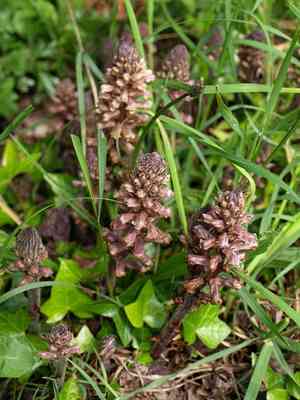
Ivy broomrape (Orobanche hederae)
Also known as: Ivy Broomrape
Unlike other plants, ivy broomrape contains no chlorophyll, the element required to absorb light for photosynthesis. Ivy broomrape is considered a parasitic plant because it depends entirely on its host plant, ivy, for survival. Part of the scientific name, hederae, is derived from the Greek and means "of ivy."
In This Article
Attributes of Ivy broomrape
Lifespan
Annual
Plant Type
Herb
Plant Height
60 cm
Spread
10 cm to 30 cm
Leaf Color
N/A (leafless)
Flower Size
1 cm to 2 cm
Flower Color
Yellow Purple Brown
Images of Ivy broomrape
Quickly Identify Ivy broomrape
1
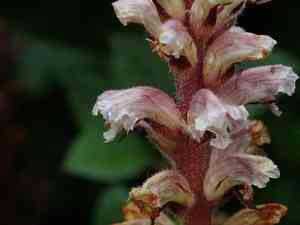
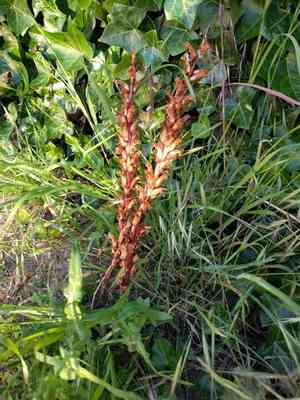
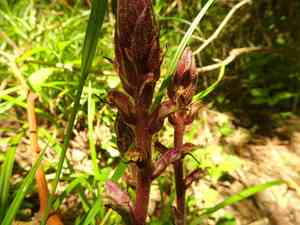
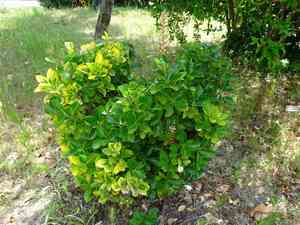
Identifying Orobanche hederae involves looking for its pale, leafless stems that grow directly from the root systems of its host plants. The flowers are tubular and range from purple to brownish-yellow. The plant lacks green pigment due to its parasitic nature.
Scientific Classification of Ivy broomrape
Phylum
Vascular plants
Class
Dicotyledons
Order
Lamiales
Family
Broomrape
Genus
Broomrapes
Species
Ivy broomrape
Planting and Growing of Ivy broomrape
Care Difficulty
Hard
Watering Schedule
Every 2 days
Sunlight Requirements
Full shade
Sunshine Duration
6-10 hours
Ideal Temperature
60-70℉
Soil Type
Potting Mix, Peat Mix
Soil pH
6.5-7.5
Fertilizer Type
Balanced
Pruning Season
Spring, Summer
Pruning Area
Branches, Leaves
Pruning Frequency
2 times a year
Repotting Season
Spring
Pot Type
Plastic, Ceramic
 How to Water Ivy broomrape?
When watering Orobanche hederae, aim to provide approximately 100 milliliters of water per session. It thrives in environments where the soil remains slightly moist; too much water can cause root rot. Water should permeate the soil just enough to reach the root system without pooling.
What are the symptoms of an underwatered Ivy broomrape?
›
What should I do if my Ivy broomrape is not getting enough water?
›
What are the symptoms of an overwatered Ivy broomrape?
›
How to save an overwatered Ivy broomrape?
›
 What Are the Sunlight Requirements for Ivy broomrape?
Partial sun to full shade provides Orobanche hederae with enough filtered light to thrive. Ideal lighting encourages lush, healthy foliage and sustains its unique parasitic adaptations.
More About Sunlight Requirements Techniques→
What kind of sunlight does it prefer?
›
How can you achieve ideal sunlight conditions?
›
What are the benefits of receiving ideal sunlight?
›
 What Is the Ideal Temperature Range for Ivy broomrape?
For optimal growth, Orobanche hederae prefers a temperature range between 60°F and 70°F. This range allows the plant to thrive and ensures adequate metabolic processes. In this temperature span, the plant is able to successfully carry out photosynthesis and maintain its physiological functions.
 What Soil is Best for Ivy broomrape?
Orobanche hederae thrives in well-draining soil, which prevents root rot by allowing excess water to flow away. This drainage ability ensures the plant roots receive the oxygen they require, bolstering healthy growth. Although Orobanche hederae is a parasitic plant drawing nutrients from its host, a nutrient-rich soil environment can enhance its overall health, supporting the host and subsequently benefiting the parasite. The plant prefers soil with a neutral to slightly alkaline pH between 6.5 and 7.5. This range ensures that essential nutrients are readily available, maximizing absorption and promoting vigorous development.
 How to Fertilize Ivy broomrape?
Orobanche hederae is a parasitic plant that relies heavily on its host for nutrition. This means that the plant itself does not require direct fertilization. However, if you are providing support for the host plant, ensure that the fertilizers used don't overly nourish the host, as it could impact the balance between the host and the parasitic plant.
 How to Prune Ivy broomrape?
Begin by identifying any dead or diseased parts of Orobanche hederae. Use clean, sharp scissors or pruning shears to cut these areas back to the ground level. Aim to trim back to where you see an intersection of healthy tissue to encourage new, robust growth.
More About Pruning Techniques→
 How to Propagate Ivy broomrape plant?
1
Collect seeds from mature Orobanche hederae plants in late summer. Ensure the seed pods are fully dry and ripe before collecting. Handle gently to prevent seed loss as these pods can burst open easily.
2
Prepare a well-draining soil mix in the seed trays. It can be a mix of equal parts potting soil, sand, and perlite. This will provide a suitable growing medium that replicates the plant's natural habitat.
3
Sow the seeds lightly on the soil surface and cover them with a thin layer of soil. Water gently and cover with a humidity dome. Keep in a warm location with indirect light. Germination can take several weeks, so patience is needed.
 How to Repot Ivy broomrape plant?
1
Repotting should be done when growth appears stunted or roots start circling the pot’s bottom. The plant should ideally be repotted during active growth seasons, like spring or early summer, to minimize stress.
2
Select a pot that's slightly larger than the current one with good drainage. A pot too large can retain excessive moisture, leading to root rot; a slightly larger pot ensures a snug fit for new growth with enough room for soil aeration.
3
Choose a well-draining loamy soil mix to avoid water retention while still keeping nutrients. Such soil types provide the right balance, allowing the roots to breathe and preventing the heaviness that can suffocate them.



