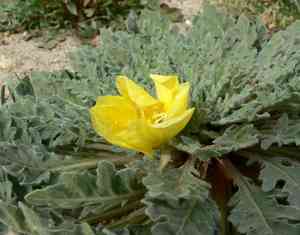
Desert evening primrose (Oenothera primiveris)
Also known as: Yellow desert evening primrose
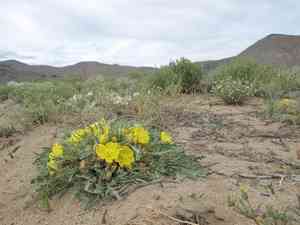
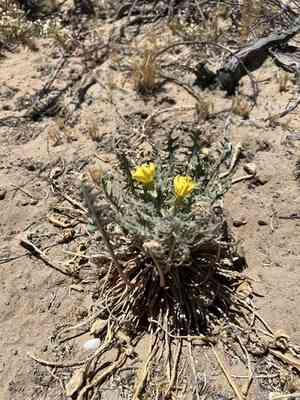
The desert evening primrose is a hardy perennial that showcases bright yellow flowers during the cooler early spring months. These delicate, cup-like blooms open at night, drawing in nocturnal pollinators, and close by morning. This species is well-adapted to arid environments, with a deep root system that helps it access water from beneath the surface. Its ground-hugging rosette formation minimizes water loss and protects it from the harsh desert climate, making it well-suited to thrive in sparse, dry soils.
In This Article
Attributes of Desert evening primrose
Lifespan
Biennial
Plant Type
Herb
Plant Height
0 mm to 30 cm
Spread
N/A (not typically measured for herbaceous plants)
Leaf Color
Green
Flower Size
2-4 cm (0.8-1.6 inches)
Flower Color
Yellow
Images of Desert evening primrose
Quickly Identify Desert evening primrose
1
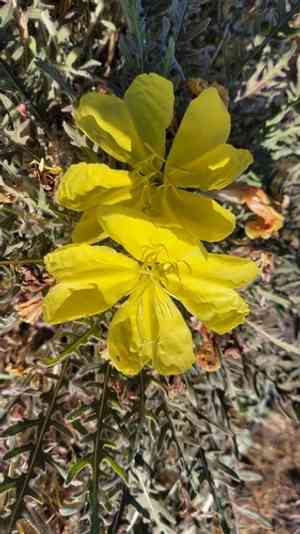
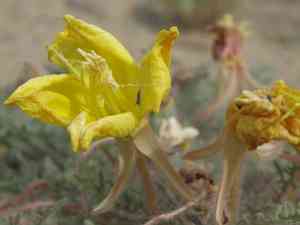
Oenothera primiveris can be identified by its yellow, cup-shaped flowers that open in the evening and close by midday. The plant has a basal rosette of leaves that are lobed or toothed, and stems that can be erect or sprawling.
Scientific Classification of Desert evening primrose
Phylum
Vascular plants
Class
Dicotyledons
Order
Myrtales
Family
Evening primrose
Genus
Evening Primrose
Species
Desert evening primrose
Planting and Growing of Desert evening primrose
Care Difficulty
Easy
Watering Schedule
Every 3 days
Sunlight Requirements
Full sun
Sunshine Duration
4-6 hours
Ideal Temperature
65-75℉
Soil Type
Potting Mix, Peat Mix
Soil pH
6.5-7.5
Fertilizer Type
Balanced
Pruning Season
Spring, Summer
Pruning Area
Branches, Leaves
Pruning Frequency
2 times a year
Repotting Season
Spring
Pot Type
Plastic, Ceramic
 How to Water Desert evening primrose?
Oenothera primiveris thrives best when the soil is consistently moist but not waterlogged. Approximately 250 milliliters per session is ideal. Ensure the water reaches the root zone without leaving residual water, as this plant likes well-drained conditions.
What are the symptoms of an underwatered Desert evening primrose?
›
What should I do if my Desert evening primrose is not getting enough water?
›
What are the symptoms of an overwatered Desert evening primrose?
›
How to save an overwatered Desert evening primrose?
›
 What Are the Sunlight Requirements for Desert evening primrose?
Oenothera primiveris thrives best with full sun to partial shade. Ideally, it should receive between 5 to 7 hours of sun each day, promoting robust growth and a healthy flowering cycle.
How can I ensure Oenothera primiveris receives ideal light?
›
What measures can enhance ideal light conditions?
›
What are the benefits of ideal lighting for Oenothera primiveris?
›
 What Is the Ideal Temperature Range for Desert evening primrose?
For optimal growth, Oenothera primiveris thrives best within a temperature range of 65°F to 75°F. This range provides the conditions necessary for the plant to carry out essential physiological processes efficiently, such as photosynthesis and nutrient absorption. Maintaining this temperature helps the plant to produce vibrant flowers and sustain healthy foliage.
 What Soil is Best for Desert evening primrose?
Oenothera primiveris thrives in well-draining soils. Good drainage prevents root rot, ensuring healthy root systems and optimal nutrient absorption, which is beneficial for the plant’s growth and vibrant blooms. This plant prefers soils rich in organic matter. Enriched soils provide essential nutrients, promoting robust growth and enhancing the plant's natural resistance to pests and diseases. An aerated soil structure is vital for this species. Aeration allows for ample root expansion and efficient water and nutrient uptake, promoting vigorous plant development and longevity.
 How to Fertilize Desert evening primrose?
Oenothera primiveris, commonly known as the desert evening primrose, requires a balanced approach when it comes to fertilizer amount to ensure healthy growth. Ideally, use a balanced liquid fertilizer diluted to half its recommended strength. Apply approximately 50 milliliters per plant every two weeks during the growing season. For slow-release fertilizers, use about 20 grams per plant per application, spaced out over the year as described.
 How to Prune Desert evening primrose?
Start by identifying any dead, damaged, or diseased parts of the Oenothera primiveris. These should be your first targets for removal. Carefully inspect the plant and use clean, sharp pruning shears to make clean cuts close to the base of the affected areas. Once the unhealthy parts have been removed, consider the overall shape of the Evening Primrose. Trim back overly long stems that disrupt the natural symmetry of the plant. This not only enhances its appearance but also improves air circulation, reducing the risk of fungal infections. Periodic pruning can help control the growth of Oenothera primiveris, preventing it from sprawling too much. Make targeted cuts just above a leaf node to encourage bushier growth. This also helps in maintaining a compact, tidy appearance.
More About Pruning Techniques→
 How to Propagate Desert evening primrose plant?
1
Start by filling seed trays with a well-draining potting mix, then gently press the seeds into the soil's surface. Lightly cover them with a thin layer of soil and water carefully to avoid washing away the seeds.
2
Select healthy, non-flowering stems from the parent plant and cut them just below a node. Ensure each cutting is approximately 4-6 inches in length and remove any leaves from the lower portion.
3
Dip the cut end of each cutting in rooting hormone powder to enhance root development. Plant them in a container filled with a damp, well-draining potting mixture, making sure the nodes are buried.
 How to Repot Desert evening primrose plant?
1
Repot your Oenothera primiveris when you notice roots growing out of the drainage holes, or when the soil dries out exceptionally fast after watering. These are clear signs that your plant has outgrown its current pot and needs more space.
2
Choose a pot that's about 1-2 inches larger in diameter than the current one. Ensure it has good drainage to prevent waterlogging. This allows the roots more room to grow, reduces the risk of root rot, and promotes healthier overall plant growth.
3
Select a well-drained, sandy soil mix specifically designed for desert plants. This type of soil ensures adequate drainage and aeration, preventing root rot and providing the perfect balance of nutrients for optimal growth.
Learn More About Desert evening primrose Diseases
Anthracnose
Bacterial Leaf Spot
Bacterial Wilt
Crown Gall
Cyst Nematode
Damping-off
Downy Mildew
Drought Stress
Fusarium Wilt
Gray Mold
Leaf Curl
Leaf Spot
Mosaic
Nutrient Deficiency
Nutrient Toxicity
Powdery Mildew
Root Rot
Root-knot Nematode
Rusts
Sooty Mold
Spider Mites
Temperature Stress
Thrips Damage
White Mold
Chemical Injury


