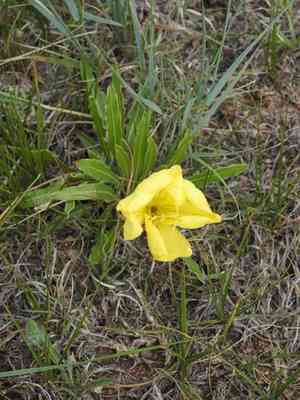
Howard's evening primrose (Oenothera howardii)
Also known as: Howard's evening primrose
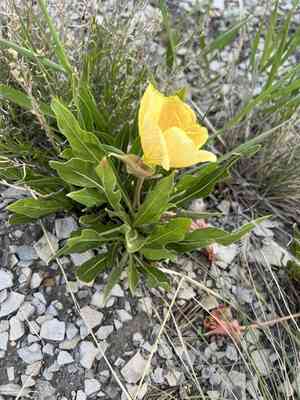
Howard's evening primrose (Oenothera howardii) is characterized by its vibrant yellow flowers that open in the evening, attracting nocturnal pollinators. This resilient perennial forms a basal rosette of narrow leaves and sends up tall flowering stems. It thrives in dry, sandy, or rocky soils, typically found in desert and arid grassland habitats of the southwestern United States. The plant's deep taproot allows it to endure drought conditions, making it well-suited for full sun environments.
In This Article
Attributes of Howard's evening primrose
Lifespan
Perennial
Plant Type
Herb
Plant Height
20-60 cm (8-24 inches)
Spread
Varies, typically up to 30 cm
Leaf Color
Green
Flower Size
2-4 cm (0.8-1.6 inches)
Flower Color
Yellow
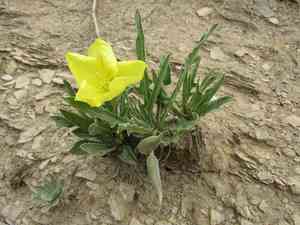
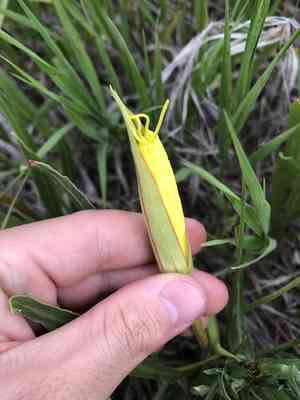
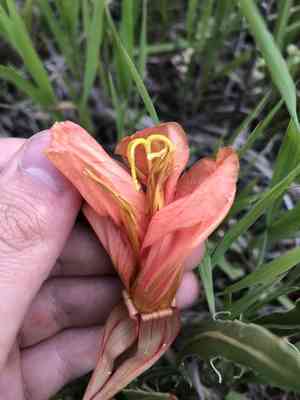
Images of Howard's evening primrose
Quickly Identify Howard's evening primrose
1
Identifying Oenothera howardii can be done by observing its bright yellow flowers, which have four petals and are about 2-4 cm in diameter. The plant has lanceolate leaves that are arranged alternately, and it typically grows to be around 20-60 cm tall. Look for a rosette of basal leaves and a characteristic reddish stem.
Scientific Classification of Howard's evening primrose
Phylum
Vascular plants
Class
Dicotyledons
Order
Myrtales
Family
Evening primrose
Genus
Evening Primrose
Species
Howard's evening primrose
Planting and Growing of Howard's evening primrose
Care Difficulty
Easy
Watering Schedule
Every 2 days
Sunlight Requirements
Full sun
Sunshine Duration
4-8 hours
Ideal Temperature
60-75℉
Soil Type
Potting Mix, Peat Mix
Soil pH
6.5-7.5
Fertilizer Type
Balanced
Pruning Season
Spring, Summer
Pruning Area
Branches, Leaves
Pruning Frequency
2 times a year
Repotting Season
Spring
Pot Type
Plastic, Ceramic
 How to Water Howard's evening primrose?
Oenothera howardii, also known as Howard's evening primrose, requires a moderate watering amount of about 250ml each time. The key principle is to ensure the soil is thoroughly moist but not waterlogged. Water should be provided until it starts draining from the bottom of the pot.
What are the symptoms of an underwatered Howard's evening primrose?
›
What should I do if my Howard's evening primrose is not getting enough water?
›
What are the symptoms of an overwatered Howard's evening primrose?
›
How to save an overwatered Howard's evening primrose?
›
 What Are the Sunlight Requirements for Howard's evening primrose?
Oenothera howardii prefers full sun, meaning it should receive sunlight for at least six to eight hours daily. Adequate light supports its blooming and growth cycle significantly.
What is the best lighting condition for Oenothera howardii?
›
How can I achieve ideal lighting conditions?
›
What benefits arise from ideal lighting?
›
 What Is the Ideal Temperature Range for Howard's evening primrose?
The ideal temperature range for Oenothera howardii, commonly known as Howard's evening primrose, is crucial for optimal growth and flowering. This range falls between 60°F and 75°F, providing a stable environment where the plant's metabolic and physiological processes can operate most effectively. These temperatures support nutrient uptake, photosynthesis, and overall health, leading to robust growth and vibrant blooms.
 What Soil is Best for Howard's evening primrose?
Oenothera howardii thrives in well-drained soil, ensuring that water does not stagnate around the roots, which can lead to root rot. This setup helps the plant absorb nutrients effectively and maintain its health. A nutrient-rich soil supports Oenothera howardii's growth by providing essential minerals and nutrients. Enriched soil promotes vibrant blooms and robust foliage, vital for ornamental appeal and plant health. The plant prefers a slightly acidic to neutral pH level, which facilitates optimal nutrient uptake and prevents nutrient lockout. This pH balance is key to preventing common deficiencies and fostering healthy growth.
 How to Fertilize Howard's evening primrose?
Oenothera howardii typically requires a modest amount of fertilizer. It's best to use a balanced, water-soluble formula, applying 1/2 teaspoon per gallon of water, ensuring you don't overload the soil with nutrients.
 How to Prune Howard's evening primrose?
Start by identifying any dead or damaged stems. Use sharp, clean gardening shears to cut these back to the base. Focus on removing weak or rubbing branches to enhance airflow and sunlight penetration. Trim the plant to maintain a pleasing shape. Cut back excessive growth to prevent legginess, ensuring that you leave some leaves on each stem to aid photosynthesis and help the plant recover quickly.
More About Pruning Techniques→
 How to Propagate Howard's evening primrose plant?
1
Begin by acquiring high-quality seeds of Oenothera howardii. Soak the seeds overnight in water to soften their outer shell, enhancing their ability to germinate more effectively and consistently.
2
After soaking, sow the seeds just below the surface of the well-moistened potting soil. Ensure they are evenly spaced to avoid overcrowding, which can lead to weak seedlings due to limited access to resources.
3
Place the seed trays or pots in a warm, light-filled location but out of direct sunlight. Maintain soil moisture by gently misting without waterlogging. Seeds should germinate in a couple of weeks if conditions are optimal.
 How to Repot Howard's evening primrose plant?
1
Oenothera howardii typically needs repotting when you notice roots circling the bottom of the pot or poking out of the drainage holes. Another sign is if the plant appears to be top-heavy or if the soil dries out too quickly after watering. Ideally, repotting should be done in spring or summer to allow the plant time to adjust before its active growing season.
2
Select a pot that is slightly larger than the current one, with adequate drainage holes. The larger pot provides space for root growth and reduces the risk of root bound, promoting healthier growth. Opting for pots made of materials such as terracotta can also aid in moisture regulation.
3
A well-draining sandy soil mix is essential for Oenothera howardii, mimicking its natural habitat. This type of soil prevents water accumulation around the roots, reducing the risk of rot and ensuring the plant has the aerated environment it thrives in.
Learn More About Howard's evening primrose Diseases
Anthracnose
Bacterial Leaf Spot
Bacterial Wilt
Black Spot
Chemical Injury
Crown Gall
Cyst Nematode
Damping-off
Downy Mildew
Drought Stress
Fusarium Wilt
Gray Mold
Leaf Spot
Mosaic
Nutrient Deficiency
Nutrient Toxicity
Powdery Mildew
Root Rot
Root-knot Nematode
Rusts
Sooty Mold
Spider Mites
Temperature Stress
Thrips Damage
White Mold



