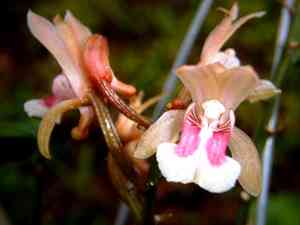
African spotted orchid (Oeceoclades maculata)
Also known as: Monk orchid
The African spotted orchid (*Oeceoclades maculata*) originates from tropical Africa and Madagascar. It has successfully spread to areas in South and Central America, the Caribbean, and parts of the southeastern United States, including Florida. Known for its adaptability, it thrives in shady forests and disturbed environments, often becoming invasive. This orchid features slender stems adorned with 5-15 delicate white and pink flowers, each with a distinctive curved spur, and is also commonly cultivated as a houseplant.
In This Article
Attributes of African spotted orchid
Lifespan
Perennial
Plant Type
Herb
Plant Height
50 cm
Spread
50 cm
Leaf Color
Dark green with white marbling
Flower Size
2.5 cm
Flower Color
White Pink Red
Images of African spotted orchid
Quickly Identify African spotted orchid
1
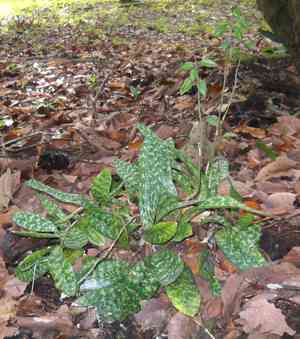
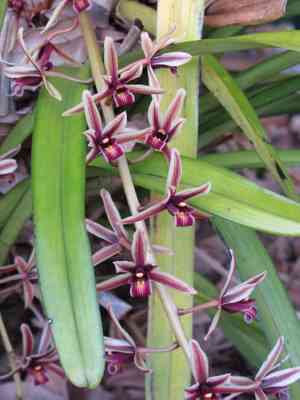
Oeceoclades maculata can be identified by its distinctively plicate leaves with dark green and white marbling. The flowers are small, fragrant, and typically white with pinkish or purplish spots.
Scientific Classification of African spotted orchid
Phylum
Vascular plants
Class
Monocotyledons
Order
Asparagales
Family
Orchid
Genus
Monk orchids
Species
African spotted orchid
Planting and Growing of African spotted orchid
Care Difficulty
Moderate
Watering Schedule
Every 2 days
Sunlight Requirements
Partial sun
Sunshine Duration
6-8 hours
Ideal Temperature
68-77℉
Soil Type
Potting Mix, Peat Mix
Soil pH
6.5-7.5
Fertilizer Type
Balanced
Pruning Season
Spring, Summer
Pruning Area
Branches, Leaves
Pruning Frequency
Once a year
Repotting Season
Spring
Pot Type
Plastic, Terracotta
 How to Water African spotted orchid?
For Oeceoclades maculata, water thoroughly but allow the top 2 inches of soil to dry out between waterings. This method ensures the roots are hydrated without being waterlogged.
What are the symptoms of an underwatered African spotted orchid?
›
What should I do if my African spotted orchid is not getting enough water?
›
What are the symptoms of an overwatered African spotted orchid?
›
How to save an overwatered African spotted orchid?
›
 What Are the Sunlight Requirements for African spotted orchid?
Oeceoclades maculata thrives in partial sunlight, where it receives bright but filtered light. Ideal lighting affects the plant's growth positively by enhancing its photosynthetic efficiency, leading to robust and vigorous growth as well as potential flowering.
More About Sunlight Requirements Techniques→
Question: What is the best lighting condition for Oeceoclades maculata?
›
Solution: How to achieve ideal lighting for Oeceoclades maculata?
›
Effect: Benefits of ideal lighting for Oeceoclades maculata.
›
 What Is the Ideal Temperature Range for African spotted orchid?
Oeceoclades maculata thrives best in temperatures ranging from 68°F to 77°F. This range supports optimal photosynthesis and metabolic functions, ensuring healthy growth and vibrant foliage. Maintaining consistent temperatures within this range helps prevent stress and promotes robust flowering. To monitor and maintain this environment, use a reliable thermometer and adjust indoor heating or cooling systems accordingly.
 What Soil is Best for African spotted orchid?
Oeceoclades maculata thrives in well-draining soil, which prevents waterlogging and root rot, ensuring healthy growth and vibrant foliage. A mix rich in organic matter supports the growth of Oeceoclades maculata by providing essential nutrients and promoting strong root development. The soil should retain moderate moisture, ensuring the roots remain hydrated without becoming soggy, which supports optimal plant metabolism.
 How to Fertilize African spotted orchid?
Oeceoclades maculata, also known as the monk orchid, requires a modest fertilization approach given its adaptability to a variety of environments. Utilize a balanced water-soluble fertilizer at half strength, approximately 1/4 teaspoon per gallon of water. This ensures the orchid receives essential nutrients without overwhelming its natural growth cycle. For slow-release granules, use sparingly by placing a few pellets at the root base, ensuring not to bury them in the substrate.
 How to Prune African spotted orchid?
Begin by using sharp, sterilized shears to trim back any dead or damaged leaves. Focus on shaping the plant by cutting back overgrown stems to maintain a tidy appearance. Always cut just above a node to encourage healthy new growth.
More About Pruning Techniques→
 How to Propagate African spotted orchid plant?
1
Collect mature seeds from an existing plant. Clean and soak them in water overnight to facilitate quicker germination. This helps in softening the seed coat, allowing the seed embryo to emerge more easily.
2
Evenly distribute the seeds on the surface of a sterilized potting mix in a seed tray. Lightly press them into the soil without covering them completely, as they require light to germinate.
3
Use a spray bottle to mist the soil lightly, ensuring it stays moist. Be careful not to over-water, as excess moisture can lead to mold growth or seed rot.
 How to Repot African spotted orchid plant?
1
Oeceoclades maculata should be repotted when the roots start crowding the pot, which usually happens every two years. You might also notice that the plant’s growth has slowed or it has stopped flowering, which signals it's time for a bigger home.
2
Select a pot that is one or two inches larger in diameter than the current one. A pot made of clay with drainage holes is preferred, as it allows for better aeration and prevents waterlogging, which is crucial for the health of this orchid-like plant.
3
Opt for a well-draining orchid mix composed of bark, perlite, and charcoal. This mix mimics the plant's natural habitat, providing excellent drainage and preventing root rot, whilst also allowing air circulation around the roots.
Learn More About African spotted orchid Diseases
Anthracnose
Bacterial Leaf Spot
Bacterial Soft Rot
Black Spot
Chemical Injury
Damping-off
Downy Mildew
Drought Stress
Fusarium Wilt
Gray Mold
Leaf Curl
Leaf Spot
Mosaic
Nutrient Deficiency
Nutrient Toxicity
Powdery Mildew
Root Rot
Root-knot Nematode
Rusts
Sooty Mold
Spider Mites
Temperature Stress
Thrips Damage
White Mold



