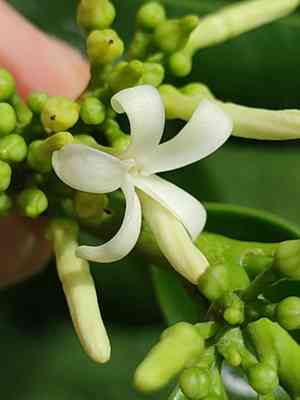
Ochrosia oppositifolia (Ochrosia oppositifolia)
Also known as: Yellow Snake Tree, Golden Fountain Tree
Ochrosia oppositifolia, also known as "Bois jaune" or "Yellowwood," is a tropical evergreen shrub or small tree. It is distinguished by its shiny, dark green, oppositely arranged leaves. The plant produces clusters of fragrant white flowers that eventually turn into yellow, oval fruits. It thrives in warm, coastal settings, favoring well-drained sandy to loamy soils. Its ability to tolerate salt makes it well-suited for growth near sea bluffs and other saline environments.
In This Article
Attributes of Ochrosia oppositifolia
Lifespan
Perennial
Plant Type
Tree
Plant Height
5-12 meters
Spread
4-8 meters
Leaf Color
Dark green
Flower Size
3-5 cm
Flower Color
Yellow
Images of Ochrosia oppositifolia
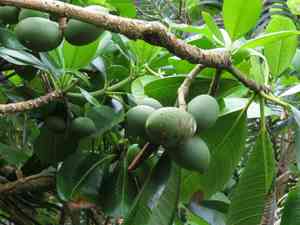
Quickly Identify Ochrosia oppositifolia
1
Identify this species by its opposite leaf arrangement, elongated leaves, and clusters of bright yellow, tubular flowers. It also has a distinct corky bark and produces large, spherical fruit.
Scientific Classification of Ochrosia oppositifolia
Phylum
Vascular plants
Class
Dicotyledons
Order
Gentianales
Family
Dogbane
Genus
Ochrosia
Species
Ochrosia oppositifolia
Planting and Growing of Ochrosia oppositifolia
Care Difficulty
Moderate
Watering Schedule
Every 2 days
Sunlight Requirements
Full sun
Sunshine Duration
6-10 hours
Ideal Temperature
65-82℉
Soil Type
Potting Mix, Peat Mix
Soil pH
6.5-7.5
Fertilizer Type
Balanced
Pruning Season
Spring, Summer
Pruning Area
Branches, Leaves
Pruning Frequency
2 times a year
Repotting Season
Spring
Pot Type
Plastic, Ceramic
 How to Water Ochrosia oppositifolia?
Ochrosia oppositifolia thrives when watered with approximately 500 milliliters of water per session. This amount ensures that the soil is moist, yet not waterlogged, providing the roots ample hydration without drowning them. Proper measurement is key; aiming for evenly moist soil is crucial, allowing the top inch to dry out between waterings. This prevents root rot while supplying adequate moisture for sustained growth.
What are the symptoms of an underwatered Ochrosia oppositifolia?
›
What should I do if my Ochrosia oppositifolia is not getting enough water?
›
What are the symptoms of an overwatered Ochrosia oppositifolia?
›
How to save an overwatered Ochrosia oppositifolia?
›
 What Are the Sunlight Requirements for Ochrosia oppositifolia?
Ochrosia oppositifolia thrives in full sun to partial sun conditions. Optimal lighting promotes vibrant growth, rich leaf color, and enhanced resilience against pests and diseases.
What is the best light intensity for Ochrosia oppositifolia?
›
How can I ensure Ochrosia oppositifolia gets ideal sunlight exposure?
›
What are the benefits of providing ideal sunlight to Ochrosia oppositifolia?
›
 What Is the Ideal Temperature Range for Ochrosia oppositifolia?
For optimal growth, Ochrosia oppositifolia thrives best in a temperature range between 65°F and 82°F. This range supports healthy photosynthesis and nutrient uptake, allowing the plant to maintain its lush foliage and vibrant blooms.
 What Soil is Best for Ochrosia oppositifolia?
Ochrosia oppositifolia thrives in well-draining soil which prevents waterlogging and root rot. This ensures a healthy root system, which is essential for nutrient uptake and plant stability. This plant prefers soil with moderate fertility, providing enough nutrients for growth without overwhelming the plant. Balanced nutrients support healthy leaf and flower development. While the plant prefers well-draining soil, it also benefits from consistent moisture, especially during growth periods. This helps maintain turgidity and prevents stress from drought conditions.
 How to Fertilize Ochrosia oppositifolia?
Ochrosia oppositifolia doesn't require excessive fertilization. For liquid fertilizer, use a balanced 10-10-10 (N-P-K) solution at half the recommended strength. Solid fertilizers, like a slow-release formulation, should be applied sparingly to avoid nutrient overload.
 How to Prune Ochrosia oppositifolia?
Before you start pruning your Ochrosia oppositifolia, ensure you have the right tools. Sharp pruning shears, loppers for thicker branches, and protective gloves are essential. Clean and sterilize your tools to prevent spreading diseases to the plant. Begin pruning your Ochrosia oppositifolia by removing any dead or diseased branches to prevent infection and decay. Focus on trimming back overgrown branches and those that cross over each other to enhance air circulation. Aim to maintain the plant’s natural shape by making cuts at a 45-degree angle just above a leaf node or bud. After pruning, ensure your Ochrosia oppositifolia is properly watered and mulched. This helps the plant recover quickly and encourages new growth. Keep an eye out for any signs of stress or disease in the weeks following pruning to address any issues promptly.
More About Pruning Techniques→
 How to Propagate Ochrosia oppositifolia plant?
1
Harvest mature seeds from Ochrosia oppositifolia fruits. Clean them thoroughly to remove the pulp and let them dry. Plant the seeds in a seed tray filled with moist, well-draining potting mix and cover lightly with soil.
2
Choose healthy branches from the Ochrosia oppositifolia plant and make clean cuts with disinfected pruning shears. Each cutting should be about 4-6 inches in length. Dip the cut end into rooting hormone to promote root development.
3
Insert the cuttings into a prepared medium composed of sand and peat. Ensure the medium retains some moisture but isn't waterlogged. Keep the planted cuttings in a humid and warm environment with indirect sunlight.
 How to Repot Ochrosia oppositifolia plant?
1
Ochrosia oppositifolia should be repotted when you notice roots emerging from the drainage holes or the plant appears to be root-bound. Additionally, if the plant's growth has stalled despite proper care, it might be time to consider repotting to provide fresh nutrients and space.
2
Select a pot that is one size larger than the current one, ensuring it has adequate drainage holes to prevent waterlogging. The extra space allows for root expansion and improves air circulation, supporting healthy growth. Additionally, a pot that's too large can retain water excessively, which can be detrimental to the plant.
3
Opt for a well-draining, nutrient-rich soil mix to encourage robust root development and prevent water retention. A suitable mix often includes components like perlite and organic matter, which enhance aeration and drainage while supplying essential nutrients for the plant's growth.
Toxicity
Ingestion, contact with sap
WARNING
The judgment on toxicity and danger is for reference only. We DO NOT GUARANTEE any accuracy of such judgment. Therefore, you SHALL NOT rely on such judgment. It is IMPORTANT TO SEEK PROFESSIONAL ADVICE in advance when necessary.
Learn More About Ochrosia oppositifolia Diseases
Anthracnose
Bacterial Leaf Spot
Bacterial Soft Rot
Bacterial Wilt
Black Spot
Chemical Injury
Crown Gall
Cyst Nematode
Damping-off
Downy Mildew
Drought Stress
Fusarium Wilt
Gray Mold
Leaf Curl
Leaf Spot
Mosaic
Nutrient Deficiency
Nutrient Toxicity
Powdery Mildew
Root Rot
Root-knot Nematode
Rusts
Sooty Mold
Spider Mites
Temperature Stress
Thrips Damage
White Mold



