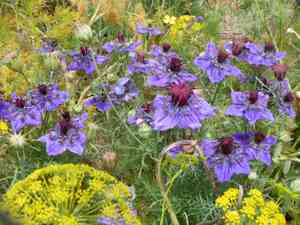
Spanish fennel (Nigella hispanica)
Also known as: Pale fennel-flower
Spanish fennel is an attractive plant admired for its wispy, feathery leaves and its clusters of small, yellow flowers that bloom from spring to summer. Native to the Mediterranean, it thrives in sunny locations and well-drained soil. As it grows, it produces aromatic seeds, adding both culinary and visual interest to gardens. Due to its ability to attract pollinators and its low-maintenance nature, Spanish fennel is a popular choice for cottage gardens, where it contributes both beauty and functionality.
In This Article
Attributes of Spanish fennel
Lifespan
Annual
Plant Type
Herb
Plant Height
1 m
Spread
50 cm
Leaf Color
Green
Flower Size
3-5 cm
Flower Color
Red Blue
Images of Spanish fennel
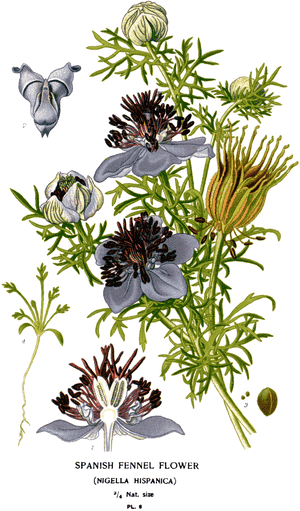
Quickly Identify Spanish fennel
1
Nigella hispanica can be identified by its finely divided, almost thread-like leaves and its large, showy, blue flowers with green centers. The flowers have a distinctive airy appearance, and the plant produces interesting seed pods after flowering.
Scientific Classification of Spanish fennel
Phylum
Vascular plants
Class
Dicotyledons
Order
Ranunculales
Family
Buttercup
Genus
Love-in-a-mist
Species
Spanish fennel
Planting and Growing of Spanish fennel
Care Difficulty
Easy
Watering Schedule
Every 2 days
Sunlight Requirements
Full sun
Sunshine Duration
4-8 hours
Ideal Temperature
65-75℉
Soil Type
Potting Mix, Peat Mix
Soil pH
6.5-7.5
Fertilizer Type
Balanced
Pruning Season
Spring, Summer
Pruning Area
Branches, Leaves
Pruning Frequency
2 times a year
Repotting Season
Spring
Pot Type
Plastic, Terracotta
 How to Water Spanish fennel?
For Nigella hispanica, the watering principle is to keep the soil consistently moist but not waterlogged. You should aim to provide 300 milliliters each time, ensuring the water reaches the root zones while the excess drains away. The soil should be evenly moist but not soggy, allowing the plant to intake enough water without being drowned.
What are the symptoms of an underwatered Spanish fennel?
›
What should I do if my Spanish fennel is not getting enough water?
›
What are the symptoms of an overwatered Spanish fennel?
›
How to save an overwatered Spanish fennel?
›
 What Are the Sunlight Requirements for Spanish fennel?
Nigella hispanica thrives ideally in full sun to partial sun conditions. This range allows it to receive enough energy for optimal blooming and robust plant health, translating to vibrant flowers and strong structures.
What is the best spot for Nigella hispanica?
›
How to optimize sunlight exposure?
›
What are the benefits of ideal lighting?
›
 What Is the Ideal Temperature Range for Spanish fennel?
Nigella hispanica thrives best when grown in a temperature range of 65 to 75 degrees Fahrenheit. This range ensures optimal photosynthetic activity and overall health, minimizing stress on the plant. Providing a consistent temperature within this range promotes vigorous growth and enhances flowering.
 What Soil is Best for Spanish fennel?
Nigella hispanica thrives in well-drained soil, which prevents waterlogging that can lead to root rot. Such soils enable effective oxygen exchange essential for healthy root growth, supporting the plant's robust flowering. Providing nutrient-rich soil boosts the growth of Nigella hispanica by supplying essential minerals and organic matter. This promotes strong stem development and vibrant blooms, enriching overall plant vitality. The soil should retain some moisture without staying wet. Sandy loam is ideal as it holds moisture while allowing excess to drain away, providing Nigella hispanica with necessary hydration without risking overwatering.
 How to Fertilize Spanish fennel?
For Nigella hispanica, using a balanced liquid fertilizer diluted to half strength is advisable. Ensure you don't exceed one tablespoon per gallon of water if you're using concentrated formulations. This amount provides essential nutrients without the risk of over-fertilization, ensuring the plant grows robust and healthy.
 How to Prune Spanish fennel?
Begin by inspecting the plant for any dead, damaged, or diseased stems and remove them to promote overall health. Trim back any overgrown and leggy stems to just above a leaf node to encourage branching and fuller growth. During blooming season, regularly remove spent flowers to prolong the flowering period, making sure to cut just above a healthy leaf set. Finally, thin out the center of the plant if it's too crowded to ensure adequate air circulation and prevent fungal diseases.
More About Pruning Techniques→
 How to Propagate Spanish fennel plant?
1
Collect seeds from mature Nigella hispanica pods once they turn brown and dry. Gently open the pods and shake out the seeds. These seeds can be sown directly or stored in a cool, dry place if not planting immediately. Proper seed preparation ensures that seeds remain viable and have higher germination rates.
2
Sprinkle the collected seeds thinly over the surface of a moist potting mix in seed trays. Lightly cover them with a thin layer of soil or vermiculite, as they require light to germinate. Keep the seed trays in a warm location with indirect sunlight, maintaining consistent moisture until germination occurs.
3
Once seedlings have developed a set of true leaves, they can be carefully transplanted to larger pots or directly into the garden. Ensure that the planting location has well-drained soil and sufficient sunlight. Handle the seedlings by the leaves to prevent damage to delicate stems and roots during the process.
 How to Repot Spanish fennel plant?
1
Nigella hispanica should be repotted when you notice roots growing out of the drainage holes, or the plant appears stunted and doesn’t thrive despite proper care. New growth in spring is typically the best time to consider repotting, as it allows the plant to quickly establish itself in fresh soil.
2
Select a pot that is one size larger than the current one, ideally made from materials such as clay or terracotta, which allow breathability. Ensure the pot has ample drainage holes at the bottom to prevent waterlogging, which can lead to root rot.
3
Opt for a well-draining, sandy loam soil mix to replicate the plant’s natural growing conditions. This type of soil prevents excess moisture retention while providing adequate support for root development, essential for the healthy growth of Nigella hispanica.
Learn More About Spanish fennel Diseases
Anthracnose
Bacterial Leaf Spot
Bacterial Soft Rot
Bacterial Wilt
Black Spot
Chemical Injury
Crown Gall
Cyst Nematode
Damping-off
Downy Mildew
Drought Stress
Fusarium Wilt
Gray Mold
Leaf Curl
Leaf Spot
Mosaic
Nutrient Deficiency
Nutrient Toxicity
Powdery Mildew
Root Rot
Root-knot Nematode
Rusts
Sooty Mold
Spider Mites
Temperature Stress
Thrips Damage
White Mold



