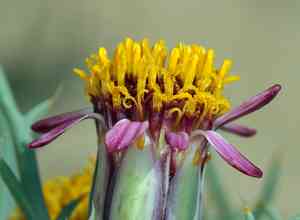
Mojave hole-in-the-sand plant (Nicolletia occidentalis)
Also known as: Western nicolletia
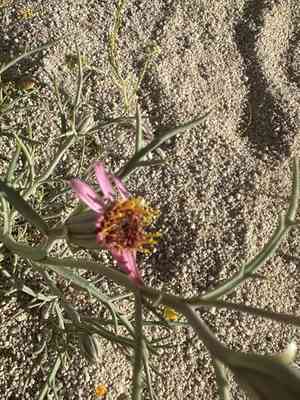
The Mojave hole-in-the-sand plant (Nicollia cycladenia) is a rare perennial herb native to the Mojave Desert. It features a small, cushion-like form with thick, blue-green leaves that are adapted to retain moisture. Unlike the dense, woolly foliage of some desert plants, its leaves are smooth and fleshy. The plant produces delicate white to pale pink flowers that stand out against its foliage, attracting pollinators. It thrives in sandy or gravelly soils, often found in washes and dunes, and is well-suited to the extreme arid conditions of its harsh desert habitat.
In This Article
Attributes of Mojave hole-in-the-sand plant
Lifespan
Perennial
Plant Type
Herb
Plant Height
10-20 inches (25-50 cm)
Spread
Varies, generally around 12 inches (30 cm)
Leaf Color
Gray-green
Flower Size
0.5-1 inch (1.3-2.5 cm)
Flower Color
Bright yellow
Images of Mojave hole-in-the-sand plant
Quickly Identify Mojave hole-in-the-sand plant
1
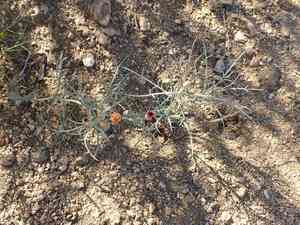
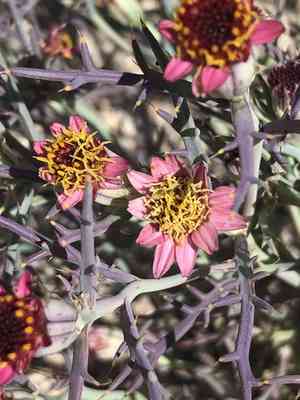
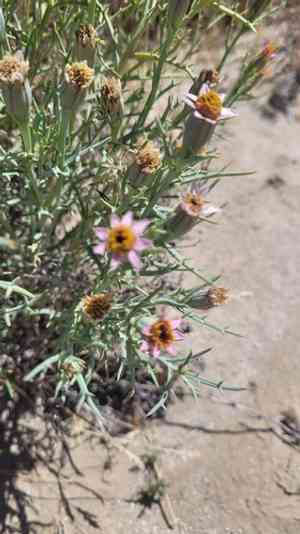
Look for small, bright yellow daisylike flowers and finely divided, vaguely gray-green foliage. The plant often grows in clusters and has a somewhat scraggly appearance.
Scientific Classification of Mojave hole-in-the-sand plant
Phylum
Vascular plants
Class
Dicotyledons
Order
Asterales
Family
Daisy
Genus
Hole-in-the-sand plants
Species
Mojave hole-in-the-sand plant
Planting and Growing of Mojave hole-in-the-sand plant
Care Difficulty
Hard
Watering Schedule
Every day
Sunlight Requirements
Full sun
Sunshine Duration
6-10 hours
Ideal Temperature
60-75℉
Soil Type
Potting Mix, Peat Mix
Soil pH
6.5-7.5
Fertilizer Type
Balanced
Pruning Season
Spring, Summer
Pruning Area
Branches, Leaves
Pruning Frequency
2 times a year
Repotting Season
Spring
Pot Type
Plastic, Ceramic
 How to Water Mojave hole-in-the-sand plant?
Nicolletia occidentalis requires careful attention to its water levels. Typically, you should aim to deliver about 250 milliliters per watering session. The goal is to keep the soil moderately moist but never soggy, ensuring the roots receive enough moisture without becoming waterlogged.
What are the symptoms of an underwatered Mojave hole-in-the-sand plant?
›
What should I do if my Mojave hole-in-the-sand plant is not getting enough water?
›
What are the symptoms of an overwatered Mojave hole-in-the-sand plant?
›
How to save an overwatered Mojave hole-in-the-sand plant?
›
 What Are the Sunlight Requirements for Mojave hole-in-the-sand plant?
The ideal light range for Nicolletia occidentalis is full to partial sun. Establishing this range boosts photosynthesis, promoting vibrant blooms and robust health.
How much sunlight does Nicolletia occidentalis need?
›
What is the best location for optimal sunlight exposure?
›
What are the benefits of optimal light exposure for Nicolletia occidentalis?
›
 What Is the Ideal Temperature Range for Mojave hole-in-the-sand plant?
The optimal temperature range for Nicolletia occidentalis growth is between 60°F to 75°F. Maintaining temperatures within this range ensures vigorous growth and healthy foliage. It supports efficient photosynthesis and minimizes the risk of diseases.
 What Soil is Best for Mojave hole-in-the-sand plant?
Nicolletia occidentalis thrives best in soils that ensure effective water discharge. A well-drained soil structure prevents waterlogging that can suffocate roots and promote fungal diseases, offering optimal root growth and overall plant health. For Nicolletia occidentalis, having a soil with a balanced nutrient profile is crucial. Vital nutrients like nitrogen, phosphorus, and potassium support robust growth and vibrant foliage, ensuring the plant can carry out photosynthesis efficiently. This plant benefits from soils with good aeration and porosity. The presence of air spaces facilitated by porous soil allows roots to receive the oxygen they need and expel carbon dioxide, maintaining vigorous root health.
 How to Fertilize Mojave hole-in-the-sand plant?
Generally, Nicolletia occidentalis should be fertilized using a balanced 10-10-10 NPK fertilizer. For liquid fertilizers, use 1/2 teaspoon per gallon of water. For slow-release granular fertilizers, use about 1 tablespoon per plant. It’s crucial to ensure that the nutrients are absorbed efficiently without risking root burn.
 How to Prune Mojave hole-in-the-sand plant?
Begin by identifying branches that are dead, damaged, or crossing each other. These are the primary candidates for removal to optimize the plant's health and appearance. Make clean cuts at a 45-degree angle just above a leaf node. This technique ensures rapid healing and reduces the chances of water-induced diseases. To encourage more robust growth, cut back leggy stems to just above a set of healthy leaves, stimulating the plant to produce denser foliage.
More About Pruning Techniques→
 How to Propagate Mojave hole-in-the-sand plant plant?
1
Choose seeds from healthy parent plants that exhibit strong growth patterns. Ensure seeds are free from any apparent damage or disease to maximize germination success.
2
Create a well-draining potting mix using peat and perlite. The mix must retain some moisture while providing enough aeration to prevent root rot and encourage healthy root development.
3
Gently place seeds into prepared trays or soil, about a quarter inch deep, and cover lightly. For cuttings, insert them into the soil with the rooting hormone applied at the base to boost chances of growth.
 How to Repot Mojave hole-in-the-sand plant plant?
1
Repotting Nicolletia occidentalis is necessary when roots begin circling the pot or when growth noticeably slows. Signs include roots growing out of drainage holes or soil that seems compacted and dry. Plan to repot in spring or summer when the plant exhibits robust active growth, ensuring a better establishment in the new container.
2
Select a pot 1-2 inches larger in diameter than the current one to accommodate growth without overwhelming the roots with too much soil. Ensure it has adequate drainage holes as Nicolletia occidentalis prefers dry to moderately moist conditions, and stagnant water can lead to root rot.
3
Opt for a well-draining sandy soil mix, essential for this plant's health. The mix should allow quick water runoff, mimicking the plant's natural dry habitat, thus preventing root suffocation and decay while promoting healthy root expansion.
Toxicity
Ingestion
WARNING
The judgment on toxicity and danger is for reference only. We DO NOT GUARANTEE any accuracy of such judgment. Therefore, you SHALL NOT rely on such judgment. It is IMPORTANT TO SEEK PROFESSIONAL ADVICE in advance when necessary.



