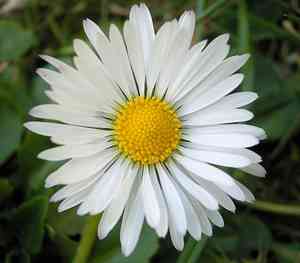
Narrowleaf mock goldenweed (Nestotus stenophyllus)
Also known as: Mojave nest-straw
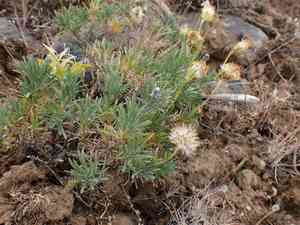
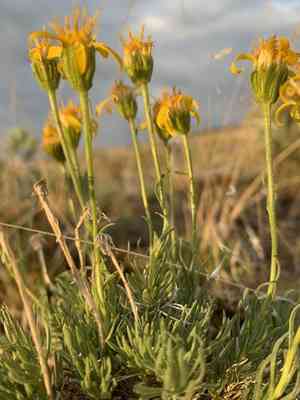
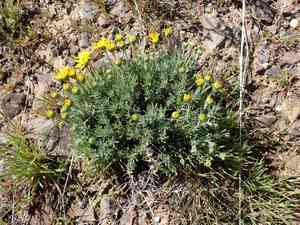
The plant's leaves are rough-textured and covered in tiny glands, measuring between 1 to 2 centimeters in length and ranging from linear to lance-like in shape. Each flower head, which stands on an upright stem, is covered in hair and features several yellow disc florets about a centimeter in length, surrounded by additional yellow disc florets at the center. The fruit is an achene with silky hairs, capped with a white pappus.
In This Article
Attributes of Narrowleaf mock goldenweed
Lifespan
Perennial
Plant Type
Herb, Shrub
Plant Height
15 cm
Spread
Approximately 30 cm
Leaf Color
Green
Flower Size
1 to 2 cm
Flower Color
Yellow
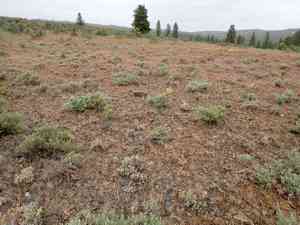
Images of Narrowleaf mock goldenweed
Quickly Identify Narrowleaf mock goldenweed
1
Identify Nestotus stenophyllus by its needle-like leaves and small yellow flowers that form in clusters. The stems are typically covered with fine hairs.
Scientific Classification of Narrowleaf mock goldenweed
Phylum
Vascular plants
Class
Dicotyledons
Order
Asterales
Family
Daisy
Genus
Nestotus
Species
Narrowleaf mock goldenweed
Planting and Growing of Narrowleaf mock goldenweed
Care Difficulty
Easy
Watering Schedule
Every 2 days
Sunlight Requirements
Full sun
Sunshine Duration
4-10 hours
Ideal Temperature
65-75℉
Soil Type
Potting Mix, Peat Mix
Soil pH
6.5-7.5
Fertilizer Type
Balanced
Pruning Season
Spring, Summer
Pruning Area
Branches, Leaves
Pruning Frequency
2 times a year
Repotting Season
Spring
Pot Type
Plastic, Ceramic
 How to Water Narrowleaf mock goldenweed?
Nestotus stenophyllus requires around 100 milliliters of water per session. The key is to water deeply but infrequently, allowing the soil to dry out completely in between. This helps prevent root rot and encourages deep root growth. Ensure the top inch of soil is dry before each watering session.
What are the symptoms of an underwatered Narrowleaf mock goldenweed?
›
What should I do if my Narrowleaf mock goldenweed is not getting enough water?
›
What are the symptoms of an overwatered Narrowleaf mock goldenweed?
›
How to save an overwatered Narrowleaf mock goldenweed?
›
 What Are the Sunlight Requirements for Narrowleaf mock goldenweed?
Nestotus stenophyllus performs best with full to partial sun exposure. Proper lighting conditions facilitate healthy photosynthesis, blooming, and structural integrity, enhancing its ornamental appeal and longevity.
What is the ideal lighting environment?
›
How to achieve optimal lighting?
›
What are the benefits of optimal lighting?
›
 What Is the Ideal Temperature Range for Narrowleaf mock goldenweed?
Nestotus stenophyllus thrives in an ideal temperature range of 65 to 75 degrees Fahrenheit. This range supports healthy growth, photosynthesis, and flowering, ensuring the plant is not stressed by extreme cold or heat.
 What Soil is Best for Narrowleaf mock goldenweed?
Nestotus stenophyllus thrives in well-drained soils to prevent root rot. Well-aerated soil ensures healthy root development, allowing the plant to access necessary nutrients and moisture efficiently. This plant prefers soils that are rich in organic matter, providing essential nutrients that promote vigorous growth and resilience to environmental stresses. Adequate moisture retention is key for Nestotus stenophyllus, ensuring the plant has access to water without becoming waterlogged. This aids in maintaining steady growth patterns and vibrant foliage.
 How to Fertilize Narrowleaf mock goldenweed?
For Nestotus stenophyllus, the amount of fertilizer should be adjusted according to the plant's growth stage. During the active growing period, use a liquid fertilizer diluted to half strength to avoid over-fertilization. Always water the plant before applying fertilizer to help it absorb nutrients more effectively and prevent root burn.
 How to Prune Narrowleaf mock goldenweed?
Begin by inspecting the plant for dead or diseased branches. Use sharp pruning shears to remove these branches at their base. Next, thin out any areas where branches are overcrowded, cutting back to a point where new growth is desired. Shape the plant by trimming back long shoots, aiming to maintain a natural look. Ensure you cut at a 45-degree angle and just above a bud for optimal regrowth. Dispose of pruned material carefully to prevent the spread of disease. Composting healthy plant material is a great option, whereas diseased or pest-infested branches should be discarded in the trash to avoid contamination of other plants.
More About Pruning Techniques→
 How to Propagate Narrowleaf mock goldenweed plant?
1
Begin by selecting healthy seeds. It might be beneficial to soak the seeds in water overnight to soften their outer coat, enhancing germination rates. Drain and dry them before sowing.
2
Select a healthy parent plant for taking cuttings. Using pruning shears, cut a segment just below a node, approximately 4-6 inches long. Remove the lower leaves and dip the cut end in rooting hormone.
3
Carefully dig up the plant and divide it into smaller sections, ensuring each section has roots. Plant these divisions into prepared soil, water thoroughly, and place in a shaded area initially.
 How to Repot Narrowleaf mock goldenweed plant?
1
Repot Nestotus stenophyllus when you notice its roots growing through drainage holes or if its growth appears stunted. A clear sign is when the soil dries out quickly after watering. These indicators suggest the plant has outgrown its current pot and requires more space.
2
Select a pot that is only slightly larger than the current one, ideally one size up. This prevents excessive soil moisture that can lead to root rot. Make sure the pot has good drainage to allow excess water to escape, ensuring that the roots remain healthy.
3
Choose a well-drained sandy soil mix to mimic its natural environment. Such soil ensures excellent aeration and water drainage, crucial for preventing root rot. This type of soil also supports the plant during its growth, promoting healthy root development.
Learn More About Narrowleaf mock goldenweed Diseases
Anthracnose
Bacterial Leaf Spot
Bacterial Soft Rot
Bacterial Wilt
Black Spot
Chemical Injury
Crown Gall
Cyst Nematode
Damping-off
Downy Mildew
Drought Stress
Fusarium Wilt
Gray Mold
Leaf Curl
Leaf Spot
Mosaic
Nutrient Deficiency
Nutrient Toxicity
Powdery Mildew
Root Rot
Root-knot Nematode
Rusts
Sooty Mold
Spider Mites
Temperature Stress
Thrips Damage
White Mold



