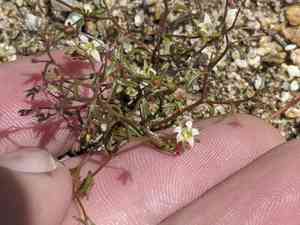
Eastern glandular nemacladus (Nemacladus glanduliferus)
Also known as: Glandular nemacladus, Threadstem
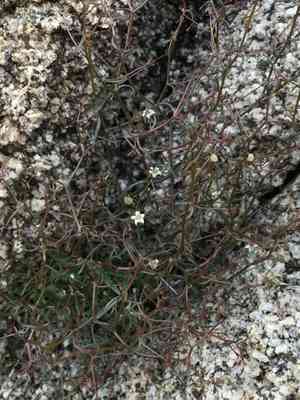
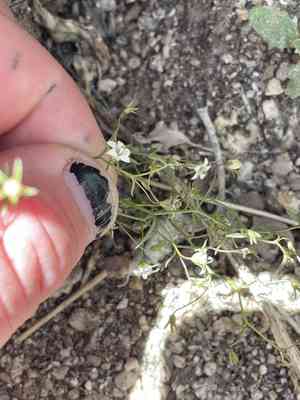
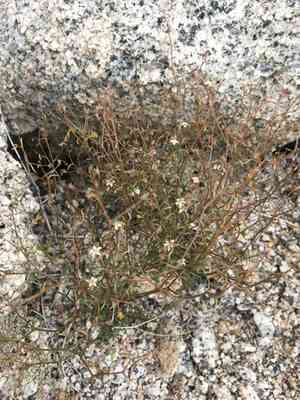
This annual herb features a branching stem that reaches up to 25 cm in height and has a purplish or brownish-green hue. The plant has small, oval leaves primarily located at its base. The inflorescence consists of zigzagging branches that bear sporadic flowers on slender, upright pedicels. Each pedicel is accompanied by a single small bract at its base. The flowers, found at the curved tips of the pedicels, measure just a few millimeters across. They have five pointed sepals and five white corolla lobes, typically arranged with three lobes forming the upper lip and two forming the lower lip.
In This Article
Attributes of Eastern glandular nemacladus
Lifespan
Annual
Plant Type
Herb
Plant Height
5-30 cm
Spread
Not applicable
Leaf Color
Green
Flower Size
1-3 mm
Flower Color
White Purple Red
Images of Eastern glandular nemacladus
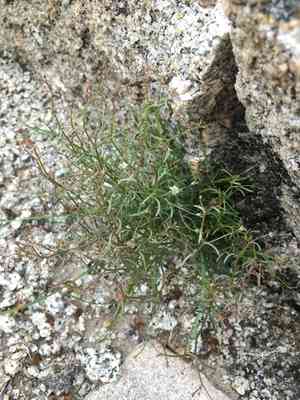
Quickly Identify Eastern glandular nemacladus
1
Identifying Nemacladus glanduliferus involves looking for its small, glandular-hairy stems and its delicate, thread-like inflorescence with tiny, white to pinkish flowers. The plant is commonly found in dry, open areas.
Scientific Classification of Eastern glandular nemacladus
Phylum
Vascular plants
Class
Dicotyledons
Order
Asterales
Family
Bellflower
Genus
Nemacladus
Species
Eastern glandular nemacladus
Planting and Growing of Eastern glandular nemacladus
Care Difficulty
Moderate
Watering Schedule
Every 2 days
Sunlight Requirements
Full sun
Sunshine Duration
4-8 hours
Ideal Temperature
60-75℉
Soil Type
Potting Mix, Peat Mix
Soil pH
6.5-7.5
Fertilizer Type
Balanced
Pruning Season
Spring, Summer
Pruning Area
Branches, Leaves
Pruning Frequency
2 times a year
Repotting Season
Spring
Pot Type
Plastic, Ceramic
 How to Water Eastern glandular nemacladus?
For Nemacladus glanduliferus, a careful balance in watering is essential. Aim to provide approximately 100 ml of water each session. Make sure that the soil is evenly moist without becoming waterlogged. The water should penetrate the soil, reaching the root zone, while allowing excess to drain away.
What are the symptoms of an underwatered Eastern glandular nemacladus?
›
What should I do if my Eastern glandular nemacladus is not getting enough water?
›
What are the symptoms of an overwatered Eastern glandular nemacladus?
›
How to save an overwatered Eastern glandular nemacladus?
›
 What Are the Sunlight Requirements for Eastern glandular nemacladus?
Nemacladus glanduliferus flourishes in full sun to partial sun, benefiting from consistent exposure to direct sunlight. Ideal light conditions foster optimal growth and flowering, showcasing the plant's full potential through healthy foliage and prolific blooms.
What is the best lighting condition for Nemacladus glanduliferus?
›
How can I ensure ideal lighting for nemacladus glanduliferus?
›
What happens if nemacladus glanduliferus gets ideal lighting?
›
 What Is the Ideal Temperature Range for Eastern glandular nemacladus?
The ideal temperature range for Nemacladus glanduliferus is between 60°F and 75°F. This range provides optimal conditions for growth and development. Maintaining this temperature range encourages proper metabolic processes within the plant, ensuring vibrant foliage and robust health.
 What Soil is Best for Eastern glandular nemacladus?
Nemacladus glanduliferus thrives best in well-drained soils that prevent waterlogging. This condition is crucial as it helps to avoid root rot and allows the plant roots to access oxygen and nutrients effectively, ensuring healthy growth. While not overly demanding, Nemacladus glanduliferus does benefit from soils with moderate organic matter. This ensures that the plant has access to essential nutrients, promoting sturdy stems and vibrant growth without the risk of nutrient burn. This plant prefers slightly alkaline conditions, which can enhance certain nutrient availabilities and improve overall health and flowering ability. This condition supports the plant’s physiological processes and sustains its natural ecosystem.
 How to Fertilize Eastern glandular nemacladus?
For Nemacladus glanduliferus, a moderate amount of fertilizer is recommended. Use approximately half a teaspoon of liquid fertilizer per gallon of water, ensuring this is applied evenly around the base of the plant.
 How to Prune Eastern glandular nemacladus?
First, inspect the plant for any dead or decaying stems and remove them. This will not only improve the plant's appearance but also prevent disease spread and provide room for healthier growth. Gently trim any unruly stems to maintain a compact, attractive shape. Focus on cutting just above a leaf node to encourage bushier growth, enhancing the plant's natural form and flower production. Remove any spent flowers regularly during the growing seasons, which will encourage Nemacladus glanduliferus to focus on producing more blooms rather than seed development.
More About Pruning Techniques→
 How to Propagate Eastern glandular nemacladus plant?
1
Fill the seed tray with a well-draining potting mix, leaving a small gap at the top to allow for easy watering. Make sure the mix is evenly distributed to support uniform seed germination.
2
Scatter the Nemacladus glanduliferus seeds over the surface of the potting mix, lightly pressing them into the soil. Do not bury the seeds too deeply, as this can hinder their ability to germinate.
3
Gently water the seeds with a spray bottle to avoid dislodging them. Keep the soil consistently moist but not waterlogged, as this helps maintain the humidity necessary for seed germination.
 How to Repot Eastern glandular nemacladus plant?
1
Look for signs like roots growing out of the drainage holes or the plant appearing top-heavy. These are clear signals that Nemacladus glanduliferus needs more room to grow. Best done in spring or summer when the plant is actively growing.
2
Select a pot that is 1-2 inches larger in diameter than the current one. It should have ample drainage holes to prevent waterlogging, which can lead to root rot. A breathable material like terracotta can also aid in keeping soil moisture balanced.
3
Opt for a well-draining mix, enriched with sand to mimic the plant's natural habitat. This type of soil prevents excess moisture retention, ensuring the roots never sit in water and thus promoting healthy growth.
Learn More About Eastern glandular nemacladus Diseases
Anthracnose
Bacterial Leaf Spot
Bacterial Soft Rot
Bacterial Wilt
Chemical Injury
Crown Gall
Cyst Nematode
Damping-off
Downy Mildew
Drought Stress
Fusarium Wilt
Gray Mold
Leaf Curl
Leaf Spot
Mosaic
Nutrient Deficiency
Nutrient Toxicity
Powdery Mildew
Root Rot
Root-knot Nematode
Rusts
Sooty Mold
Spider Mites
Temperature Stress
Thrips Damage
White Mold



