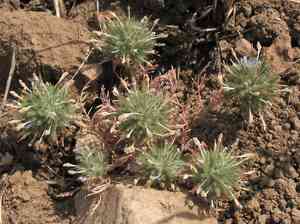
Downy pincushionplant (Navarretia pubescens)
Also known as: None
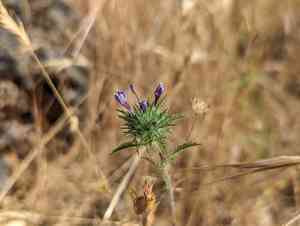
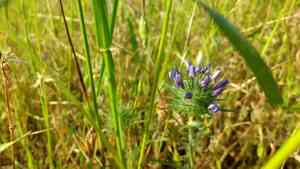
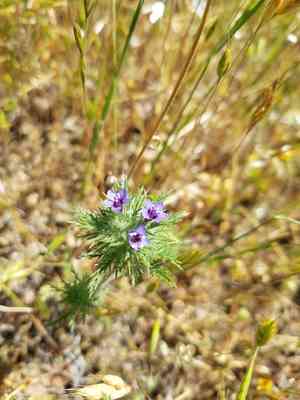
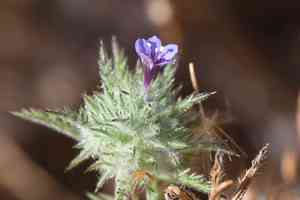
The downy pincushionplant (Navarretia pubescens) is a small, herbaceous flowering plant that thrives in dry, open environments. It features fine, hairy leaves that form a dense, green cushion, topped with clusters of small, trumpet-shaped flowers. These blossoms, typically pale to bright blue with intricate white centers, attract various pollinators. The plant prefers lean, well-drained soils and flourishes in full sunlight.
In This Article
Attributes of Downy pincushionplant
Lifespan
Annual
Plant Type
Herb
Plant Height
10-50 cm
Spread
Approximately 20-30 cm
Leaf Color
Green
Flower Size
1-2 cm
Flower Color
Blue or Purple
Images of Downy pincushionplant
Quickly Identify Downy pincushionplant
1
Navarretia pubescens can be identified by its glandular, hairy stems and leaves, as well as its dense, spiny clusters of small blue or purple flowers. The plant\'s aroma and the sticky nature of its leaves and stems are also distinctive.
Scientific Classification of Downy pincushionplant
Phylum
Vascular plants
Class
Dicotyledons
Order
Ericales
Family
Phlox
Genus
Navarretia
Species
Downy pincushionplant
Planting and Growing of Downy pincushionplant
Care Difficulty
Moderate
Watering Schedule
Every 2 days
Sunlight Requirements
Full sun
Sunshine Duration
6-10 hours
Ideal Temperature
65-75℉
Soil Type
Potting Mix, Peat Mix
Soil pH
6.5-7.5
Fertilizer Type
Balanced
Pruning Season
Spring, Summer
Pruning Area
Branches, Leaves
Pruning Frequency
2 times a year
Repotting Season
Spring
Pot Type
Plastic, Ceramic
 How to Water Downy pincushionplant?
For Navarretia pubescens, it's crucial to ensure the soil is adequately moist but never waterlogged. A typical amount of 200 ml per session should suffice, depending on the soil's current moisture level. It's recommended to allow the top layer of soil to dry out completely between waterings, ensuring you're not drowning the roots.
What are the symptoms of an underwatered Downy pincushionplant?
›
What should I do if my Downy pincushionplant is not getting enough water?
›
What are the symptoms of an overwatered Downy pincushionplant?
›
How to save an overwatered Downy pincushionplant?
›
 What Are the Sunlight Requirements for Downy pincushionplant?
Navarretia pubescens prefers full to partial sun, ideally receiving around 6 to 8 hours of sunlight. Such conditions enhance its photosynthetic efficiency and improve its overall health.
What is the best light condition?
›
How can you achieve ideal lighting?
›
What are the benefits of ideal light?
›
 What Is the Ideal Temperature Range for Downy pincushionplant?
The ideal temperature range for Navarretia pubescens is between 65°F and 75°F. Maintaining temperatures within this range promotes optimal growth by supporting essential physiological processes. This range mimics the natural conditions in its native habitat, providing a balance between warmth and ambient humidity.
 What Soil is Best for Downy pincushionplant?
Navarretia pubescens prospers in well-drained soil as it prevents waterlogging, which could otherwise cause root rot. Ensuring drainage mimics the plant's natural habitat, promoting healthy root development and robust growth. A soil that is rich in organic matter provides essential nutrients needed for Navarretia pubescens to thrive. This enriched substrate supports flowering and enhances the plant’s innate resilience to environmental stressors. The ideal soil has a moderately fine texture, allowing for adequate retention of essential water and nutrients without becoming compacted. This balance is crucial for the plant’s nutrient uptake and overall vigor.
 How to Fertilize Downy pincushionplant?
Navarretia pubescens typically requires light fertilization because it naturally thrives in nutrient-poor soils. When applying fertilizer, use a balanced formula, such as a 10-10-10 NPK, at a rate of no more than 1 teaspoon (approximately 5 grams) per square foot. This ensures that the plant receives adequate nutrients without risking over-fertilization.
 How to Prune Downy pincushionplant?
First, inspect your Navarretia pubescens to find any dead, damaged, or overcrowded stems. These are the primary candidates for pruning. Removing them helps direct the plant's energy toward healthy growth. When making cuts, angle your shears to make a clean, swift cut just above a leaf node. This technique ensures that new growth emerges properly and prevents dieback, which can occur when cuts are made too far from the node. Aim to maintain a balanced structure by evenly pruning around the plant's shape. This not only improves aesthetics but also enhances light penetration throughout the plant, which boosts photosynthesis rates for healthier growth.
More About Pruning Techniques→
 How to Propagate Downy pincushionplant plant?
1
Fill your seed trays with appropriate potting mix, leaving a slight gap at the top. This will provide a stable environment for the seeds to germinate.
2
Sow the seeds thinly across the surface of the potting mix. Cover them lightly with a thin layer of soil to ensure good contact with the medium.
3
Gently water the seeds using a fine spray or a watering can. Ensure the soil is moist but not waterlogged, which could drown the seeds.
 How to Repot Downy pincushionplant plant?
1
Repot Navarretia pubescens when you notice roots protruding from the drainage holes or if the growth of the plant has significantly slowed down, suggesting it’s root-bound.
2
Choose a pot that is slightly larger than the current one, with good drainage holes at the bottom. A size up by 2 inches allows room for root expansion without overwhelming the plant, preventing waterlogging.
3
Select a well-draining sandy soil mix to ensure that the roots do not sit in water, minimizing the risk of root rot. The texture of this mix supports healthy aeration and moisture regulation.



