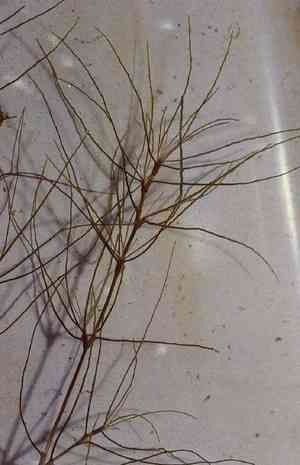
Southern naiad (Najas guadalupensis)
Also known as: Aquatic moss, Guadalupe waternymph
The Southern naiad is an aquatic plant that primarily inhabits freshwater environments like ponds, lakes, and slow-moving rivers. This submerged species thrives in calm or gently flowing waters, where it anchors itself in soft sediment with its slender stems and roots. Its narrow, translucent leaves grow in dense clusters, offering shelter to various aquatic organisms. Its adaptability to different light conditions allows it to flourish in diverse water bodies.
In This Article
Attributes of Southern naiad
Lifespan
Annual
Plant Type
Herb
Plant Height
10 cm to 91 cm
Spread
N/A
Leaf Color
Green
Flower Size
Very small, less than 1 mm
Flower Color
Inconspicuous, often greenish or translucent
Images of Southern naiad
Quickly Identify Southern naiad
1
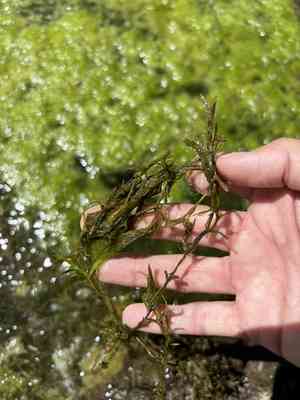
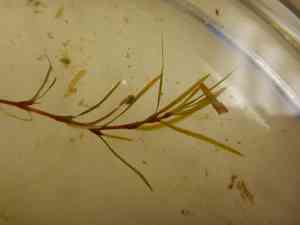
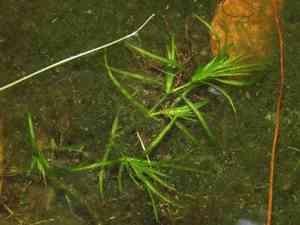
Najas guadalupensis can be identified by its slender stems that can grow up to 1 meter long, with leaves that are linear and finely toothed along the edges. The leaves are typically arranged in whorls or opposite pairs along the stem. The plant produces tiny, inconspicuous flowers that are often hidden among the leaves.
Scientific Classification of Southern naiad
Phylum
Vascular plants
Class
Monocotyledons
Order
Alismatales
Family
Tape-grass
Genus
Water-nymphs
Species
Southern naiad
Planting and Growing of Southern naiad
Care Difficulty
Moderate
Watering Schedule
Every 4 days
Sunlight Requirements
Full sun
Sunshine Duration
4-12 hours
Ideal Temperature
68-77℉
Soil Type
Potting Mix, Peat Mix
Soil pH
6.5-7.5
Fertilizer Type
Balanced
Pruning Season
Spring, Summer
Pruning Area
Branches, Leaves
Pruning Frequency
2 times a year
Repotting Season
Spring
Pot Type
Plastic, Ceramic
 How to Water Southern naiad?
Najas guadalupensis thrives in consistently wet conditions. Water should be added until the environment replicates a natural aquatic setting, ensuring that the roots are fully submerged but not overly soaked, promoting healthy growth without over-saturation.
What are the symptoms of an underwatered Southern naiad?
›
What should I do if my Southern naiad is not getting enough water?
›
What are the symptoms of an overwatered Southern naiad?
›
How to save an overwatered Southern naiad?
›
 What Are the Sunlight Requirements for Southern naiad?
Najas guadalupensis thrives best in full to partial sun conditions. Optimal lighting ensures that it maintains its vivid color and vigorous growth, contributing positively to the aquatic ecosystem it inhabits.
How much light does Najas guadalupensis need daily?
›
What are some solutions to provide optimal light for Najas guadalupensis?
›
What are the benefits of providing ideal lighting to Najas guadalupensis?
›
 What Is the Ideal Temperature Range for Southern naiad?
Najas guadalupensis thrives best in water temperatures between 68 and 77 degrees Fahrenheit. This range provides the optimal conditions for its growth, ensuring proper nutrient uptake and photosynthesis. Maintaining such temperatures will allow the plant to flourish and display its best growth characteristics.
 What Soil is Best for Southern naiad?
This plant thrives in soil that ensures high nutrient accessibility, which is often achieved in sandy and loamy soils. The optimal nutrient flow supports healthy growth and vibrant coloration, essential for Najas guadalupensis. Peaty soil provides excellent water retention, crucial for sustaining the aquatic nature of Najas guadalupensis. Adequate water retention prevents dehydration and ensures steady growth. Loamy soil provides the best aeration for this plant. Proper aeration aids in root respiration and facilitates the decomposition of organic matter, enhancing root health and growth.
 How to Fertilize Southern naiad?
For Najas guadalupensis, apply a moderate amount of fertilizer, ensuring not to exceed the recommended dosage. A general guideline is to use 5 grams of a water-soluble fertilizer per 10 gallons of water. This provides enough nutrients without risking over-fertilization, which can be harmful. Adjust amounts based on plant response and test results for optimal growth.
 How to Prune Southern naiad?
Start by identifying the longest and overreaching stems in your Najas guadalupensis. Taming the sprawling parts prevents them from overtaking the tank, giving space for other aquatic flora to thrive and ensures aesthetic balance in your aquarium. Carefully trim the longest stems at their base, near the substrate. This method encourages new shoots to grow from the trimmed areas and helps maintain a neat appearance. Make sure to remove any cuttings from the water to prevent decay and nutrient overload.
More About Pruning Techniques→
 How to Propagate Southern naiad plant?
1
Choose healthy stems from the parent plant, preferably those that are free from any pests or diseases. It is vital to select a stem with several nodes as this is where roots are most likely to develop.
2
Use a sharp pair of pruning shears to make a clean cut below a node on the chosen stem. Ensure that the cutting is approximately 10-15 centimeters in length for optimal rooting potential.
3
Place the cuttings in a container filled with water or a well-draining potting mix. Ensure that at least one node is submerged in the medium to encourage root development.
 How to Repot Southern naiad plant?
1
Signs that Najas guadalupensis needs repotting include stunted growth, roots growing out of the drainage holes, or a crowded appearance. Ideally, repotting is best done in spring or summer when the plant is actively growing, allowing it to recover swiftly.
2
Select a pot that is slightly larger than the current one with adequate drainage holes. A wider pot is preferable to a deeper one, as it accommodates the plant's horizontal growth pattern and provides stability, reducing the risk of tipping over.
3
Opt for a rich, loose aquatic soil that retains moisture yet drains adequately. Such soil enables Najas guadalupensis to absorb necessary nutrients swiftly while preventing waterlogging that could lead to root rot, promoting robust growth.


