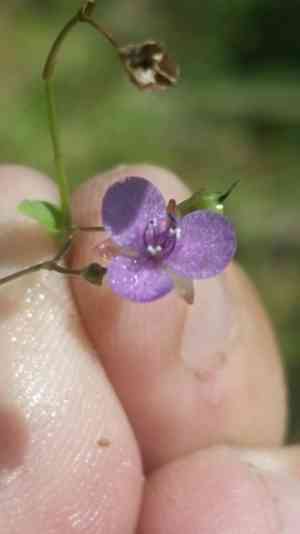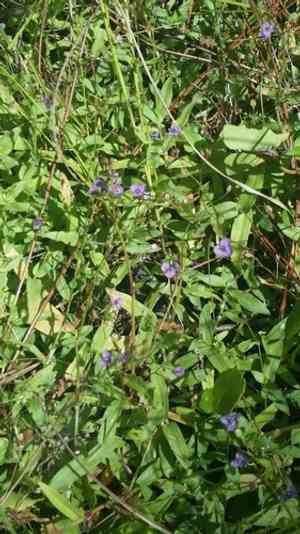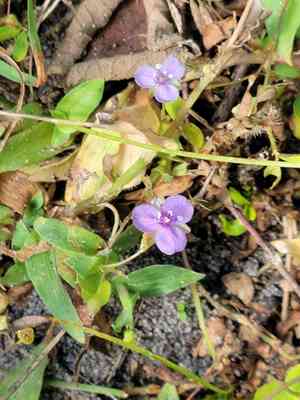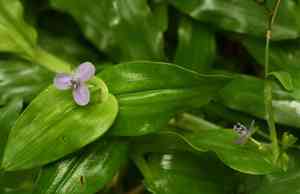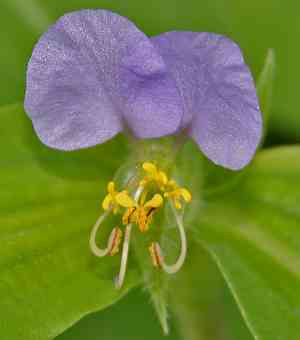
Asiatic dewflower(Murdannia spirata)

Asiatic dewflower (Murdannia spirata)

Also known as: Whiskerbrush

The Asiatic dewflower (Murdannia keisak) is a hardy, herbaceous plant that excels in moist, marshy environments. Its resilience is attributed to several adaptations:

1. **Growth Form**: The plant features creeping, fleshy stems that can float or trail, aiding in stabilization and spread in wet conditions.

2. **Leaf Structure**: It has narrow, lance-shaped leaves that are arranged in a spiral pattern, optimizing light capture and minimizing water loss.

3. **Flowering**: The plant produces small, delicate blue flowers, which contribute to its ability to reproduce effectively in its habitat.

4. **Water Adaptation**: High tolerance for saturated soils and fluctuating water levels allows it to thrive where other plants might fail.

5. **Reproduction**: It reproduces both through seeds and vegetatively via stem fragments, ensuring its persistence and spread in favorable conditions.

These adaptations enable the Asiatic dewflower to effectively colonize and dominate moist, marshy environments.

Attributes of Asiatic dewflower

Lifespan
Perennial
Plant Type
Herb
Plant Height
15-50 cm
Spread
Not typically applicable due to its herbaceous nature.
Leaf Color
Green
Flower Size
1-2 cm
Flower Color
Blue-Purple

ForwardPlant - Identify plants with a snap

Identify and diagnose plants, get toxicity alerts, and explore safety guides for all types of fungi.

Try for Free

Images of Asiatic dewflower

Asiatic dewflower(Murdannia spirata)

Quickly Identify Asiatic dewflower

1
Murdannia spirata can be identified by its lanceolate leaves, delicate blue-purple flowers, and slender, creeping stem. The plant often forms dense clumps in shaded, moist environments.

Scientific Classification of Asiatic dewflower

Phylum
Vascular plants
Class
Monocotyledons
Order
Commelinales
Family
Spiderwort
Genus
Dewflowers
Species
Asiatic dewflower

Planting and Growing of Asiatic dewflower

Care Difficulty
Easy
Watering Schedule
Every 8 days
Sunlight Requirements
Partial sun
Sunshine Duration
4-8 hours
Ideal Temperature
68-75℉
Soil Type
Potting Mix, Peat Mix
Soil pH
6-7
Fertilizer Type
Balanced
Pruning Season
Spring, Summer
Pruning Area
Branches, Leaves
Pruning Frequency
2 times a year
Repotting Season
Spring
Pot Type
Plastic, Ceramic

water icon How to Water Asiatic dewflower?

When watering Murdannia spirata, ensure that the water penetrates deeply into the soil but avoid waterlogging. The goal is to keep the soil evenly moist but never waterlogged. Ideally, 200ml per session should suffice, allowing the potting mix to feel damp to the touch but never soggy.
What are the symptoms of an underwatered Asiatic dewflower? ›
What should I do if my Asiatic dewflower is not getting enough water? ›
What are the symptoms of an overwatered Asiatic dewflower? ›
How to save an overwatered Asiatic dewflower? ›

sunlight icon What Are the Sunlight Requirements for Asiatic dewflower?

Sunlight Requirements: Partial sun
Duration of light: 3-5 hours daily
The ideal light range for Murdannia spirata is partial sun. This condition supports vibrant growth and resistance to issues, promoting lush foliage and overall plant vitality.
What is the ideal light level for Murdannia spirata? ›
How can I ensure adequate light for Murdannia spirata? ›
What benefits does ideal lighting bring to Murdannia spirata? ›

temperature icon What Is the Ideal Temperature Range for Asiatic dewflower?

Ideal Temperature: 68 ~ 75℉
Murdannia spirata thrives best within an ideal temperature range of 68°F to 75°F. This range ensures optimal growth by providing sufficient warmth to promote cellular activities and vital processes that contribute to the plant's overall health and vigor.

soil icon What Soil is Best for Asiatic dewflower?

Soil type: Loam, Sandy loam
Soil PH: 6 ~ 7
Murdannia spirata thrives in soil that retains moisture well, providing a consistent environment vital for its growth. Such conditions help the plant to access water consistently, which promotes healthy and vibrant foliage. This plant flourishes in soil that is rich in organic matter, which supplies essential nutrients for robust growth. The presence of nutrients supports flowering and enhances overall plant vigor. While moisture retention is essential, Murdannia spirata also requires well-draining soil to prevent waterlogging. This balance helps avoid root rot, leading to a healthier root system.

fertilize icon How to Fertilize Asiatic dewflower?

Fertilizer type: Balanced
For Murdannia spirata, it is crucial to apply fertilizer in moderation. A general guideline is to use a balanced 10-10-10 liquid fertilizer, diluted to half strength. Apply approximately 250 ml per application depending on the plant size, ensuring the soil is evenly moist but not waterlogged.

prune icon How to Prune Asiatic dewflower?

Pruning Time: Spring, Summer
Start by sterilizing your pruning shears to prevent disease spread. Identify any dead or damaged stems and cut them close to the base. Trim back any leggy or overgrown shoots to maintain a compact shape. Regularly clear away fallen leaves and debris around the plant to reduce pest and disease risks. For aesthetic purposes and to encourage fuller growth, prune the stems to maintain a desired shape. Focus on cutting just above a leaf node to promote new branch growth. Ensure the plant remains balanced and not top-heavy to prevent leaning or breaking. More About Pruning Techniques→

propagate icon How to Propagate Asiatic dewflower plant?

Propagate Time: Spring, Early summer
1
Collect seeds from mature plants, allow them to dry, and store in a cool location if not planting immediately. Ensure seeds are free from pests and debris.
2
Choose healthy, non-flowering stems about 8-10 cm long for cuttings. Make clean cuts below a node to encourage root growth.
3
Gently remove the plant from its pot, separate the roots and shoots, ensuring each division has sufficient roots and shoots for successful growth.
More About Propagating Techniques→

repot icon How to Repot Asiatic dewflower plant?

Repotting frequency: Every 1-2 years
1
Signs that Murdannia spirata needs repotting include roots growing out of drainage holes and depleted soil nutrition. If you notice the plant exhibiting slowed growth or wilting despite proper watering, it might be time for new soil and space. Spring and autumn offer optimal conditions for this change, minimizing transplant shock and promoting adaptation.
2
Choosing the right pot is crucial for a healthy Murdannia spirata. Opt for a container that's 1-2 inches larger in diameter than the current pot, ensuring ample room for root growth. Materials like terracotta provide excellent breathability, preventing overwatering issues. Drainage is essential, so ensure the pot has sufficient drainage holes to allow excess water to escape.
3
Selecting the right soil for Murdannia spirata is all about balance. A well-draining potting mix with a blend of peat, perlite, and bark works effectively by retaining necessary moisture while also allowing excess water to escape. This reduces the risk of root rot and offers a balanced environment for the plant’s roots.

ForwardPlant - Identify plants with a snap

Find the best spots for them to optimize their health, simply using your phone.

Try for Free