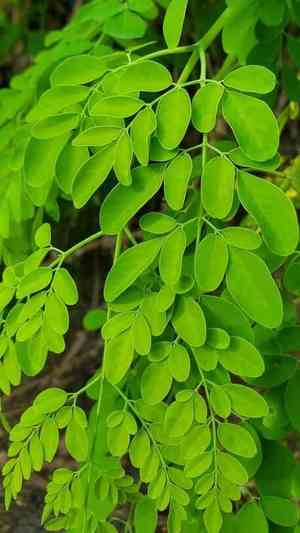
Moringa(Moringa oleifera)

Moringa (Moringa oleifera)

Also known as: Drumstick tree, Benzoil tree, Never-die

The Moringa tree (Moringa oleifera), a fast-growing deciduous tree native to India, is valued for its numerous beneficial components:

1. **Leaves**: Packed with nutrients, they are consumed as vegetables, made into supplements, and brewed into teas.

2. **Seeds**: Yield ben oil, useful for cooking, cosmetics, and mechanical lubrication. The remaining seed cake purifies water.

3. **Pods**: Known as drumsticks in culinary contexts, they are commonly used in South Asian dishes.

4. **Flowers**: Edible and used in salads and teas, they also possess medicinal benefits.

5. **Roots**: Utilized in traditional medicine with caution due to possible toxicity.

6. **Bark**: Employed in traditional medicinal practices.

7. **Gum**: Applied in textiles and as a food stabilizer.

These diverse uses make the Moringa tree highly versatile and valuable for nutritional, medicinal, and industrial applications.

Attributes of Moringa

Lifespan
Perennial
Plant Type
Tree, Shrub
Plant Height
3 m to 12 m
Spread
45 cm
Leaf Color
Green Blue White Red
Flower Size
2 cm
Flower Color
White Yellow

ForwardPlant - Identify plants with a snap

Identify and diagnose plants, get toxicity alerts, and explore safety guides for all types of fungi.

Try for Free

Images of Moringa

Moringa(Moringa oleifera)

Quickly Identify Moringa

1
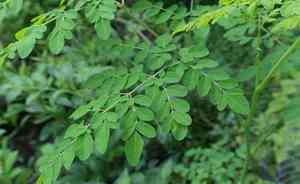
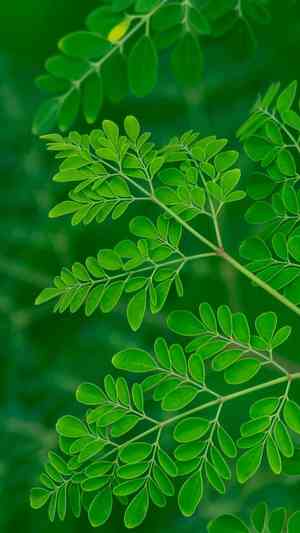
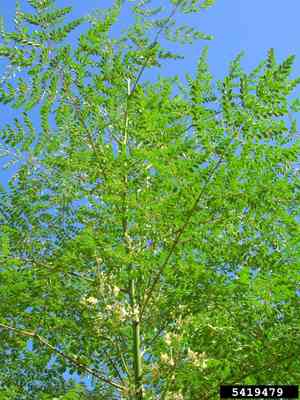
Moringa oleifera can be identified by its compound leaves, characterized by numerous small leaflets, and long drumstick-like pods that contain seeds. The tree also produces small, fragrant white flowers.

Scientific Classification of Moringa

Phylum
Vascular plants
Class
Dicotyledons
Order
Brassicales
Family
Horse-radish tree
Genus
Moringa
Species
Moringa

Planting and Growing of Moringa

Care Difficulty
Easy
Watering Schedule
Every 4 days
Sunlight Requirements
Full sun
Sunshine Duration
4-6 hours
Ideal Temperature
75-95℉
Soil Type
Potting Mix, Peat Mix
Soil pH
6.5-7.5
Fertilizer Type
Balanced
Pruning Season
Spring, Summer
Pruning Area
Branches, Leaves
Pruning Frequency
2 times a year
Repotting Season
Spring
Pot Type
Plastic, Ceramic

water icon How to Water Moringa?

Moringa oleifera thrives with moderate watering, necessitating around 500ml per session. This should moisten the top inch of the soil but avoid complete saturation. Consistent moisture without waterlogging ensures thriving growth.
What are the symptoms of an underwatered Moringa?
What should I do if my Moringa is not getting enough water?
What are the symptoms of an overwatered Moringa?
How to save an overwatered Moringa?
More About Watering Techniques

sunlight icon What Are the Sunlight Requirements for Moringa?

Sunlight Requirements: Full sun, Partial sun
Duration of light: 6 to 8 hours
Moringa oleifera thrives optimally in full to partial sun, requiring at least six to eight hours of sunlight daily. This range promotes robust growth and maximizes its nutritional development.
What is the optimal lighting condition for Moringa oleifera?
How can I achieve ideal lighting for Moringa oleifera indoors?
What benefits can Moringa oleifera gain from ideal lighting?
More About Sunlight Requirements Techniques

temperature icon What Is the Ideal Temperature Range for Moringa?

Ideal Temperature: 75 ~ 95℉
For optimal growth, Moringa oleifera thrives best in a warm environment with temperatures ranging from 75 to 95 degrees Fahrenheit. These conditions allow for strong root development and robust leaf production, ensuring that the plant can reach its full potential. Maintaining these ideal conditions can prevent stress and further enhance the plant's resistance to pests and diseases.

soil icon What Soil is Best for Moringa?

Soil type: Sandy soil, Loam, Sandy loam
Soil PH: 6.5 ~ 7.5
Moringa oleifera thrives in soil that is rich in essential nutrients. The presence of nutrients like nitrogen and phosphorus boosts leaf growth and overall plant health, resulting in lush foliage and increased productivity of this highly valued tree. Well-drained soil is crucial for Moringa's root health, preventing root rot and other issues that stagnant water might cause. By facilitating quick drainage, it ensures the roots receive adequate oxygen, promoting healthy root development and plant stability. While Moringa can tolerate dry conditions, soil that retains moderate moisture without waterlogging supports continuous water supply during dry spells. This balance maximizes growth and maintains steady development, even in less than ideal weather conditions. More About Soil

fertilize icon How to Fertilize Moringa?

Fertilizer type: Balanced
Moringa oleifera requires balanced fertilization to ensure healthy growth and abundant leaf production. It is essential to use a fertilizer with a ratio of 3-1-2 NPK, applying 50 grams per plant per application. This amount is vital to provide the necessary nutrients without overfeeding the plant. More About Fertilizing Techniques

prune icon How to Prune Moringa?

Pruning Time: Spring, Summer
Begin by selecting a sharp pair of pruning shears and identify branches that are dead, damaged, or crossing. Cut these unwanted branches back to the base. Make sure to leave the main stem and primary branches intact to ensure strong growth. Prune the tree to a shape that allows sunlight to penetrate through the branches, which aids in fruit production and improves air circulation. To encourage Moringa to grow bushier rather than taller, it's essential to cut back the central leader or main shoot. Doing so will stimulate the tree to produce more lateral branches, giving it a denser and more compact form. Target shoots that extend beyond the desired shape or height to maintain a manageable size and shape for easier harvesting. More About Pruning Techniques

propagate icon How to Propagate Moringa plant?

Propagate Time: Early summer, Late spring
1
Select healthy stems from a mature Moringa oleifera plant. Cuttings should be around 1 foot long and free from diseases or pests, ensuring the best chance for successful rooting.
2
Fill containers with well-draining potting mix. If propagating via seed, slightly dampen the soil, while for cutting propagation, make a hole in the mix for the stem insertions.
3
For seeds, plant them about 1 inch deep and cover lightly with soil. For cuttings, insert them into the prepared holes, ensuring they are upright and stable. Press the soil gently around them.
More About Propagating Techniques

repot icon How to Repot Moringa plant?

Repotting frequency: Every 2-3 years
1
Moringa oleifera requires repotting when you notice it becoming root-bound—roots appearing at the drainage holes or the plant's growth slowing significantly. Spring and early summer are ideal as it allows the plant sufficient time to establish new roots.
2
Select a pot that is one size larger than the current one and provides excellent drainage. Pots made of materials like terra cotta are beneficial as they allow excess moisture to escape, preventing root rot, which is crucial for the wellbeing of Moringa oleifera.
3
Opt for well-draining soil composed of sand, perlite, and a bit of organic matter. This type of soil mimics Moringa oleifera's natural environment, ensuring its roots stay aerated and healthy, and preventing waterlogging.

ForwardPlant - Identify plants with a snap

Find the best spots for them to optimize their health, simply using your phone.

Try for Free