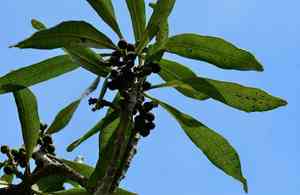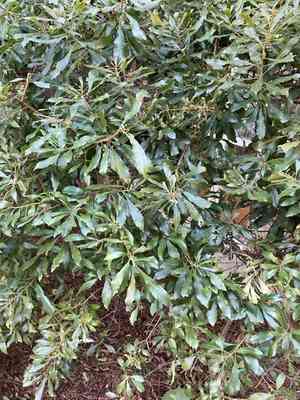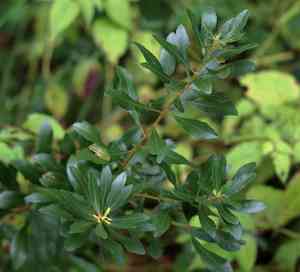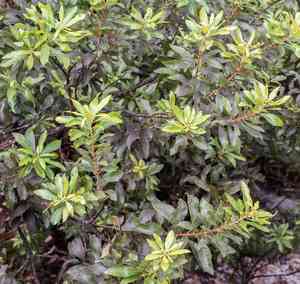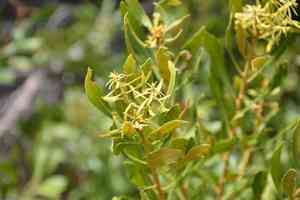
Wax myrtle(Morella cerifera)

Wax myrtle (Morella cerifera)

Also known as: Tallow shrub, Dwarf Wax-myrtle

The Wax myrtle (Morella cerifera) is an evergreen shrub native to North and Central America, as well as the Caribbean. It serves multiple purposes:

1. **Ornamental Use**: Often utilized in gardens for its aesthetic appeal and evergreen foliage, making it ideal for hedges.
2. **Culinary and Craft**: Berries are used in traditional candle-making due to their waxy coating.
3. **Erosion Control**: Effective in stabilizing soil near ponds and slopes, thanks to its robust root system.
4. **Wildfire Resilience**: Although it may appear to perish in wildfires, it has a remarkable ability to regenerate from its roots.
5. **Aromatic Properties**: Crushed leaves emit a pleasant fragrance, useful in potpourri and natural insect repellent.
6. **Wildlife Support**: Provides habitat and food for birds and insects.

This versatile shrub is valued for both its practical benefits and its ability to enhance landscapes.

Attributes of Wax myrtle

Lifespan
Perennial
Plant Type
Shrub
Plant Height
14 m
Spread
8 m
Leaf Color
Green Blue
Flower Size
4 mm to 1.9 cm
Flower Color
Yellow Green

ForwardPlant - Identify plants with a snap

Identify and diagnose plants, get toxicity alerts, and explore safety guides for all types of fungi.

Try for Free

Images of Wax myrtle

Wax myrtle(Morella cerifera)

Quickly Identify Wax myrtle

1
Identification of Morella cerifera can be done by examining its elongated, lance-shaped leaves that are leathery and aromatic when crushed. The plant produces small, grayish-white berries that are covered in a waxy coating.

Scientific Classification of Wax myrtle

Phylum
Vascular plants
Class
Dicotyledons
Order
Fagales
Family
Bayberry
Genus
Bayberry
Species
Wax myrtle

Planting and Growing of Wax myrtle

Care Difficulty
Easy
Watering Schedule
Every 4 days
Sunlight Requirements
Full sun
Sunshine Duration
4-8 hours
Ideal Temperature
65-77℉
Soil Type
Potting Mix, Peat Mix
Soil pH
6.5-7.5
Fertilizer Type
Balanced
Pruning Season
Spring, Summer
Pruning Area
Branches, Leaves
Pruning Frequency
2 times a year
Repotting Season
Spring
Pot Type
Plastic, Ceramic

water icon How to Water Wax myrtle?

Morella cerifera prefers a moderate watering approach. It's important to soak the root zone thoroughly, which usually requires about 1000 ml of water per session. The principle here is to let the soil dry slightly between waterings, ensuring that the top inch of soil is dry to the touch.
What are the symptoms of an underwatered Wax myrtle?
What should I do if my Wax myrtle is not getting enough water?
What are the symptoms of an overwatered Wax myrtle?
How to save an overwatered Wax myrtle?
More About Watering Techniques

sunlight icon What Are the Sunlight Requirements for Wax myrtle?

Sunlight Requirements: Full sun, Partial sun
Duration of light: 6 to 8 hours
Partial to full sun conditions are ideal for Morella cerifera, contributing to its lush growth and maximum berry yield. Adequate sunlight ensures efficient energy production necessary for healthy metabolic processes and vibrant foliage.
How much light does Morella cerifera ideally need?
How can I ensure Morella cerifera receives the ideal amount of light?
What are the benefits of providing Morella cerifera with its ideal light conditions?
More About Sunlight Requirements Techniques

temperature icon What Is the Ideal Temperature Range for Wax myrtle?

Ideal Temperature: 65 ~ 77℉
The ideal temperature range for Morella cerifera is between 65°F and 77°F. In this range, the plant thrives and exhibits optimal growth and development. Maintaining this temperature range ensures efficient photosynthesis, nutrient uptake, and overall plant health.

soil icon What Soil is Best for Wax myrtle?

Soil type: Sandy soil, Loam, Acidic soil
Soil PH: 6.5 ~ 7.5
Morella cerifera thrives best in well-drained soil conditions, which prevent the roots from becoming waterlogged and susceptible to root rot. Well-drained soil ensures the plant receives just the right amount of moisture while allowing excess water to escape. The plant prefers soil that is moderately rich in nutrients. Nutrient-rich soil enhances the growth and health of Morella cerifera by providing essential minerals and nutrients necessary for robust foliage and berry production. Morella cerifera is optimally grown in soil that has a slightly acidic to neutral pH level. This pH range allows the plant to effectively absorb necessary nutrients, promoting healthy and vigorous growth. More About Soil

fertilize icon How to Fertilize Wax myrtle?

Fertilizer type: Balanced
For Morella cerifera, use a balanced liquid fertilizer with an N-P-K ratio of 10-10-10. Apply 1 tablespoon of liquid fertilizer diluted in 1 gallon of water per plant. Ensure the soil is moist before applying fertilizers to minimize root burn risk. More About Fertilizing Techniques

prune icon How to Prune Wax myrtle?

Pruning Time: Spring, Summer
Start by removing any dead or damaged branches. Next, trim back any overreaching branches to maintain your desired shape and size. Focus on creating an even and natural shape, allowing sunlight to penetrate the inner parts of the plant. Use sharp, clean pruning shears to ensure smooth cuts and avoid damaging the plant. If needed, thin out crowded areas to improve air circulation, which can prevent disease. To shape Morella cerifera effectively, determine the overall form you want, such as a rounded or conical shape. Trim deeper into the plant where needed, ensuring the cuts are made just above a leaf node to promote new growth. Be mindful of maintaining the plant's natural aesthetic, and check the symmetry from different angles during pruning. Don’t over-prune, as this may stress the plant and reduce its vigor. More About Pruning Techniques

propagate icon How to Propagate Wax myrtle plant?

Propagate Time: Spring, Early summer, Late winter
1
Choose healthy, non-flowering branches that are approximately 4-6 inches long. Ensure the branches are disease-free and free of pests to increase the success rate of propagation.
2
Remove the leaves from the lower half of the stem cuttings, leaving only two to three nodes at the top. Dip the cut end in a rooting hormone to promote root development.
3
Insert the cut end into a well-draining rooting medium, such as a mix of sand and peat moss. Ensure the medium is moist but not waterlogged to avoid rotting.
More About Propagating Techniques

repot icon How to Repot Wax myrtle plant?

Repotting frequency: Every 2-3 years
1
Repot Morella cerifera when roots outgrow the pot, or water drains too quickly. This usually happens every 2-3 years. Look for roots circling the bottom of the pot or emerging from drainage holes as a clear sign that it's time to repot. Repot in spring or summer for optimal growth recovery.
2
Select a pot that's 1-2 inches larger in diameter than the current one to avoid excessive soil moisture. Choose pots with ample drainage holes to prevent root rot. Opt for unglazed clay pots for their breathability, aiding soil aeration and moisture control.
3
Use a well-draining sandy loam mixture that replicates Morella cerifera's natural habitat. This soil retains necessary moisture while allowing excess water to drain. Its structure prevents compaction, providing roots with oxygen and space to grow, promoting healthy plant development.

ForwardPlant - Identify plants with a snap

Find the best spots for them to optimize their health, simply using your phone.

Try for Free