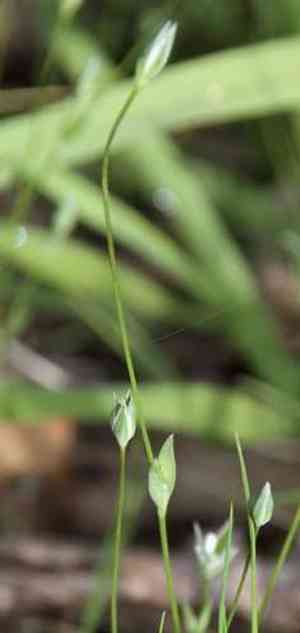
Upright chickweed (Moenchia erecta)
Also known as: Erect chickweed
In regions where it has been introduced, the plant often appears opportunistically in gardens, mowed fields, and other disturbed locations. It favors moist environments, including grassy floodplains near wetlands and coastal hills. The plant also thrives in bare, sandy, or gravelly soils, commonly found along shorelines or in overgrazed fields.
In This Article
Attributes of Upright chickweed
Lifespan
Annual
Plant Type
Herb
Plant Height
5-15 cm (2-6 inches)
Spread
Not applicable, as it does not form a canopy
Leaf Color
Green
Flower Size
0.5-1 cm (0.2-0.4 inches)
Flower Color
White
Images of Upright chickweed



Quickly Identify Upright chickweed
1
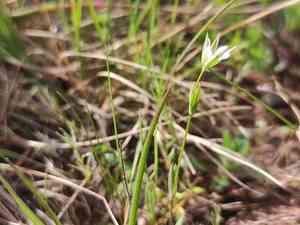
Moenchia erecta can be identified by its slender, erect stems which are branched at the base. The leaves are opposite, linear to lanceolate, and have a smooth edge. The flowers are small, star-shaped, white, and typically bloom in spring.
Scientific Classification of Upright chickweed
Phylum
Vascular plants
Class
Dicotyledons
Order
Caryophyllales
Family
Pink
Genus
Upright chickweed
Species
Upright chickweed
Planting and Growing of Upright chickweed
Care Difficulty
Easy
Watering Schedule
Every 3 days
Sunlight Requirements
Full sun
Sunshine Duration
6-10 hours
Ideal Temperature
50-68℉
Soil Type
Potting Mix, Peat Mix
Soil pH
6.5-7.5
Fertilizer Type
Balanced
Pruning Season
Spring, Summer
Pruning Area
Branches, Leaves
Pruning Frequency
2 times a year
Repotting Season
Spring
Pot Type
Plastic, Ceramic
 How to Water Upright chickweed?
The recommended watering amount for Moenchia erecta is about 150 milliliters per session. This plant prefers slightly moist soil but not overly saturated. Watering should be adjusted based on seasonal changes, as the plant may need less water during dormant periods. Ensure that the water penetrates the top 5 centimeters of soil to reach the root zone effectively.
What are the symptoms of an underwatered Upright chickweed?
›
What should I do if my Upright chickweed is not getting enough water?
›
What are the symptoms of an overwatered Upright chickweed?
›
How to save an overwatered Upright chickweed?
›
 What Are the Sunlight Requirements for Upright chickweed?
Moenchia erecta ideally flourishes in environments that offer full sun to partial sun. This optimal light range accelerates its growth cycle, encourages flowering, and maintains the plant's overall health and vitality.
What type of sunlight is best for Moenchia erecta?
›
How can I ensure Moenchia erecta gets its ideal light?
›
What benefits does ideal light bring to Moenchia erecta?
›
 What Is the Ideal Temperature Range for Upright chickweed?
For optimal growth, Moenchia erecta thrives best within temperatures ranging from 50 to 68 degrees Fahrenheit. This range provides the necessary warmth without imposing heat stress, ensuring efficient metabolic activity and overall plant health.
 What Soil is Best for Upright chickweed?
Moenchia erecta thrives best in well-drained soil, which prevents water from accumulating around the root zone. This environment mimics its natural habitat, reducing the risk of root rot and promoting healthy root system development. A soil rich in essential nutrients supports healthy growth of Moenchia erecta. It helps in sustaining vegetative growth, flowering, and overall plant vigor, ensuring the plant can withstand environmental stressors better. This plant prefers soil with moderate fertility, as excessively fertile soil can lead to weak, leggy growth. Balanced fertility levels contribute to robust forms and vibrant foliage, enhancing the plant’s ornamental appeal.
 How to Fertilize Upright chickweed?
Moenchia erecta requires a balanced approach to fertilization. Use a liquid fertilizer diluted to half strength, applying approximately 100 ml per plant in each session. For solid fertilizers, apply about 30 grams per square meter annually, split over the dormant season.
 How to Prune Upright chickweed?
Start by locating and removing any dead or damaged leaves and stems to keep the plant healthy. Use sharp, clean scissors or pruning shears to cut back any overgrown parts, ensuring you trim just above a leaf node to stimulate new growth. Focus on shaping Moenchia erecta to maintain its compact structure. Trim the outer edges by cutting back longer stems to create symmetry, enhancing the natural beauty while promoting even growth.
More About Pruning Techniques→
 How to Propagate Upright chickweed plant?
1
Fill the seed tray with potting soil. Ensure the soil is evenly spread and lightly pressed down to remove air pockets, which can hinder root growth.
2
Scatter the seeds of Moenchia erecta evenly over the soil surface. Gently press them down to ensure contact with the soil, enhancing their ability to take up moisture and nutrients during germination.
3
Water the seeds gently to avoid dislodging them. Use a misting bottle to achieve an even moistness without overwatering. Cover the tray with a plastic dome to maintain humidity, necessary for successful germination.
 How to Repot Upright chickweed plant?
1
Moenchia erecta should be repotted when you notice that the roots are becoming cramped within their current pot. This often results in roots visibly winding around the inside of the pot and water drainage becoming less efficient. Ideally, repotting is best done when the plant is not actively growing in early spring or late summer, ensuring minimal stress to the plant.
2
Choose a pot that is slightly larger than the current one, ideally 1-2 inches wider in diameter. The pot should have good drainage holes to prevent excess water from accumulating at the bottom, which could result in root rot. Using a pot of the right size allows for healthy root expansion and optimal growth conditions without overwhelming the plant with excess soil.
3
Select a well-draining, sandy soil, as Moenchia erecta thrives in conditions that mimic its natural habitat. A mixture including perlite or sand can improve aeration and drainage, preventing water from stagnating around the roots. Good drainage is crucial to avoiding waterlogged conditions and promoting healthy root development.
Learn More About Upright chickweed Diseases
Anthracnose
Bacterial Leaf Spot
Bacterial Soft Rot
Bacterial Wilt
Chemical Injury
Cyst Nematode
Damping-off
Downy Mildew
Drought Stress
Fusarium Wilt
Gray Mold
Leaf Curl
Leaf Spot
Mosaic
Nutrient Deficiency
Nutrient Toxicity
Powdery Mildew
Root Rot
Root-knot Nematode
Rusts
Sooty Mold
Spider Mites
Temperature Stress
Thrips Damage
White Mold



