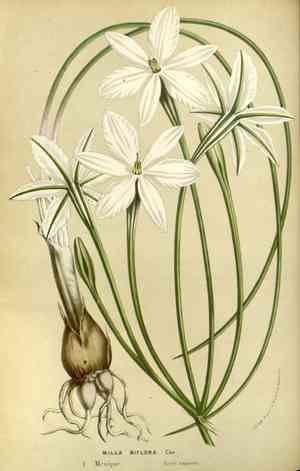
Mexican star (Milla biflora)
Also known as: Two-flowered milkmans, Star of Bethlehem
Spotting a Mexican star (Milla biflora) in the wild in the United States is quite rare. In Arizona, it is classified as Salvage Restricted, making it a protected species. This plant is more frequently found in Mexico, thriving on dry hillsides and in open woodland areas.
In This Article
Attributes of Mexican star
Lifespan
Perennial
Plant Type
Herb
Plant Height
30 cm to 70 cm
Spread
N/A
Leaf Color
Green
Flower Size
2.5 cm to 4 cm
Flower Color
White
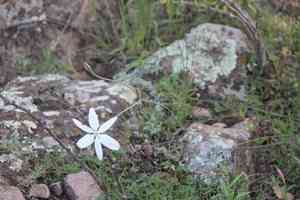
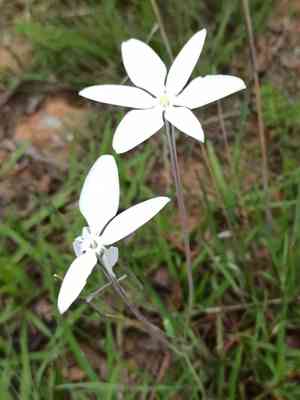
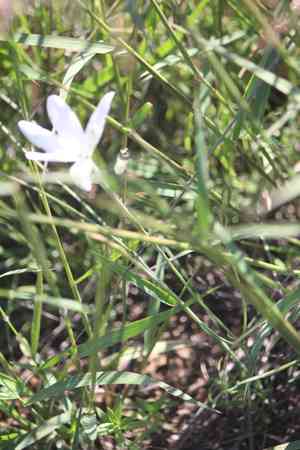
Images of Mexican star
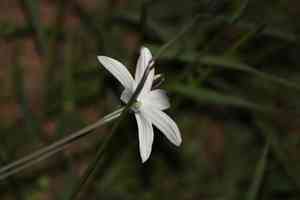
Quickly Identify Mexican star
1
Look for clusters of white, star-shaped flowers with a span of about 4 cm each. The flowers are usually paired (hence the name \'biflora\'), and the plant has long, slender leaves.
Scientific Classification of Mexican star
Phylum
Vascular plants
Class
Monocotyledons
Order
Asparagales
Family
Asparagus
Genus
Mexican star
Species
Mexican star
Planting and Growing of Mexican star
Care Difficulty
Easy
Watering Schedule
Every 3 days
Sunlight Requirements
Partial sun
Sunshine Duration
4-8 hours
Ideal Temperature
60-75℉
Soil Type
Potting Mix, Peat Mix
Soil pH
6.5-7.5
Fertilizer Type
Balanced
Pruning Season
Spring, Summer
Pruning Area
Branches, Leaves
Pruning Frequency
2 times a year
Repotting Season
Spring
Pot Type
Plastic, Terracotta
 How to Water Mexican star?
Milla biflora prefers its soil to be evenly moist but not waterlogged. A good rule of thumb is to let the top 1-2 inches of soil dry out before watering it again. When watering, ensure the soil is soaked but avoid excess water that might lead to standing water.
What are the symptoms of an underwatered Mexican star?
›
What should I do if my Mexican star is not getting enough water?
›
What are the symptoms of an overwatered Mexican star?
›
How to save an overwatered Mexican star?
›
 What Are the Sunlight Requirements for Mexican star?
Partial sun exposure is optimal, allowing access to gentle morning and late afternoon light. This range supports photosynthesis and prevents stress from excessive heat.
How much sunlight is ideal for Milla biflora?
›
What location is ideal for growing Milla biflora?
›
How can I enhance light exposure without causing stress?
›
 What Is the Ideal Temperature Range for Mexican star?
The ideal temperature range for Milla biflora is between 60°F and 75°F. This range supports optimal growth and flowering, providing a warm yet stable environment that mimics their natural habitat. Maintaining temperatures within this range ensures that the plant's metabolic processes can function effectively, leading to healthy growth and vigor.
 What Soil is Best for Mexican star?
Milla biflora thrives in well-drained soil conditions, which allow for optimal root aeration and prevent waterlogging. This requirement ensures that the plant receives adequate oxygen at the root level, facilitating healthy growth and vibrant blooms. A nutrient-rich soil is vital for Milla biflora, providing essential minerals like nitrogen, phosphorus, and potassium. These nutrients fuel the plant's metabolic processes, supporting robust growth and enhancing flowering potential. While Milla biflora prefers not to sit in water, the soil should retain a moderate amount of moisture. This balance prevents dehydration without leading to root rot, ensuring the plant remains hydrated during dry spells.
 How to Fertilize Mexican star?
Milla biflora benefits from a moderate fertilization approach. Use a balanced liquid fertilizer, applying at a dilution rate of 50% of the recommended label dosage. This ensures nutrients are supplied without risking root burn. When using slow-release granules, 1 tablespoon per square foot is sufficient for each application.
 How to Prune Mexican star?
Begin by inspecting the plant for any dead or diseased stems and leaves. These should be removed to promote healthy growth and prevent the spread of disease throughout the plant. Cut back these parts to the nearest healthy node. Trim back leggy stems to encourage a more compact growth habit. This can also encourage the plant to produce more flowers. Aim to cut just above a node to stimulate new stems or flowers to grow.
More About Pruning Techniques→
 How to Propagate Mexican star plant?
1
Start by filling a seed tray with a well-draining potting mix. Sow Milla biflora seeds thinly and cover them lightly with soil. Place the tray in a warm, bright location but away from direct sunlight. Water gently to keep the soil consistently moist.
2
Division involves separating a mature plant into smaller sections. This is best done in spring when the plant starts growing. Carefully dig up the plant, ensuring you lift out the entire root system. Gently separate the clumps and replant each section in a prepared area.
3
After sowing seeds or replanting divisions, it is important to maintain proper moisture levels. Water them regularly but avoid over-watering. Fertilize lightly with a balanced fertilizer once new growth appears.
 How to Repot Mexican star plant?
1
Signs that Milla biflora needs repotting include roots beginning to grow out of the drainage holes, soil that drains water too quickly or clumps together, or overall reduced plant growth. Anytime you notice these signs, especially in spring or summer, it's an ideal time to repot.
2
Select a pot that is only slightly larger than the current one, ideally 1-2 inches larger in diameter. A pot with good drainage holes is essential to prevent waterlogging, which can cause root rot. The right pot size helps maintain balanced moisture and nutrient levels for the plant.
3
Choose a well-draining sandy soil mix, as this is crucial for Milla biflora to maintain its health. The sandy component ensures adequate drainage, reducing the risk of root rot and providing aeration, thus supporting robust root development and overall plant vitality.
Toxicity
Ingestion, Contact
WARNING
The judgment on toxicity and danger is for reference only. We DO NOT GUARANTEE any accuracy of such judgment. Therefore, you SHALL NOT rely on such judgment. It is IMPORTANT TO SEEK PROFESSIONAL ADVICE in advance when necessary.
Learn More About Mexican star Diseases
Anthracnose
Bacterial Leaf Spot
Bacterial Soft Rot
Bacterial Wilt
Chemical Injury
Crown Gall
Cyst Nematode
Damping-off
Downy Mildew
Drought Stress
Fusarium Wilt
Gray Mold
Leaf Curl
Leaf Spot
Mosaic
Nutrient Deficiency
Nutrient Toxicity
Powdery Mildew
Root Rot
Root-knot Nematode
Rusts
Sooty Mold
Spider Mites
Temperature Stress
Thrips Damage
White Mold



