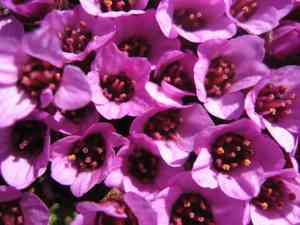
Michaux's saxifrage (Micranthes petiolaris)
Also known as: Rock Saxifrage
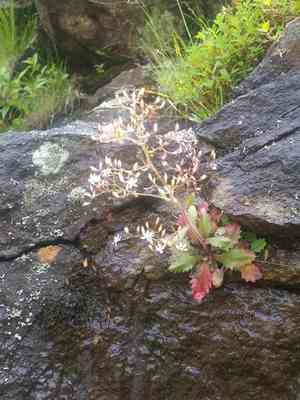
Michaux's saxifrage is a small, perennial flowering plant. It likely migrated from the north and typically grows on boulders in the higher elevations of the Appalachian Mountains.
In This Article
Attributes of Michaux's saxifrage
Lifespan
Perennial
Plant Type
Herb
Plant Height
15 cm to 46 cm
Spread
N/A
Leaf Color
Green Red
Flower Size
2.5 cm
Flower Color
White Yellow
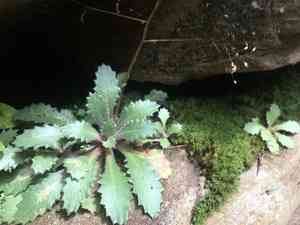
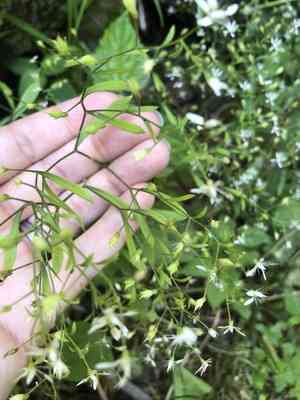
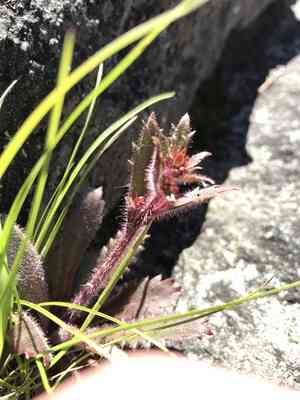
Images of Michaux's saxifrage
Quickly Identify Michaux's saxifrage
1
Basal rosette of round leaves with heart-shaped bases and finely toothed edges.
2
Small white flowers with star-like shape, green or red center, and scale-like bracts.
3
Distinctive lance-shaped leaves, hairy, rough texture, and deep green upper surface.
4
Flowers with five petals, three larger with yellow spots, two smaller unspotted.
5
Clusters of dainty white flowers measuring 0.2 inches (5 mm) in diameter.
Scientific Classification of Michaux's saxifrage
Phylum
Vascular plants
Class
Dicotyledons
Order
Saxifragales
Family
Saxifrage
Genus
Micranthes
Species
Michaux's saxifrage
Planting and Growing of Michaux's saxifrage
Care Difficulty
Easy
Watering Schedule
Every 3 days
Sunlight Requirements
Partial sun
Sunshine Duration
4-8 hours
Ideal Temperature
60-75℉
Soil Type
Potting Mix, Peat Mix
Soil pH
6.5-7.5
Fertilizer Type
Balanced
Pruning Season
Spring, Summer
Pruning Area
Branches, Leaves
Pruning Frequency
2 times a year
Repotting Season
Spring
Pot Type
Plastic, Ceramic
 How to Water Michaux's saxifrage?
The amount of water Micranthes petiolaris needs can vary, but typically it requires about 500 milliliters per watering. Ensure the soil is moist but not waterlogged. This plant favors a consistent moisture level, mimicking its natural habitat of moist, well-drained soils.
What are the symptoms of an underwatered Michaux's saxifrage?
›
What should I do if my Michaux's saxifrage is not getting enough water?
›
What are the symptoms of an overwatered Michaux's saxifrage?
›
How to save an overwatered Michaux's saxifrage?
›
 What Are the Sunlight Requirements for Michaux's saxifrage?
Partial sun to full shade is ideal for Micranthes petiolaris. In these conditions, it flourishes, displaying lush growth and resilience against pests, adding to its ornamental value.
More About Sunlight Requirements Techniques→
How much shade is ideal?
›
What should you do to achieve optimal lighting?
›
What are the benefits of ideal lighting conditions?
›
 What Is the Ideal Temperature Range for Michaux's saxifrage?
For Micranthes petiolaris, maintaining an environment between 60°F and 75°F is crucial for optimal growth. This range allows the plant to thrive, encouraging healthy foliage and blooms. Within this spectrum, temperatures support metabolic processes and help sustain the plant's overall vitality.
 What Soil is Best for Michaux's saxifrage?
Micranthes petiolaris thrives best in well-draining soil. The roots of this plant prefer environments where water does not linger, reducing the risk of root rot and enhancing overall health. This plant benefits greatly from soil rich in organic matter. Compost or well-decomposed leaf litter can provide the necessary nutrients, promoting healthier growth and vibrant foliage. Maintaining a soil pH between 6.5 and 7.5 is ideal for Micranthes petiolaris. This pH range ensures optimal nutrient availability and uptake, facilitating robust growth and flowering.
 How to Fertilize Michaux's saxifrage?
For Micranthes petiolaris, an optimal fertilizer amount is crucial for balanced growth. Use a half-strength liquid fertilizer every two weeks during growing seasons, avoiding over-fertilization. Ensure even coverage for consistent nutrient uptake.
 How to Prune Michaux's saxifrage?
Begin by sterilizing your pruning shears with rubbing alcohol to prevent disease spread. Identify damaged, dead, or diseased leaves and stems, and cut them back to the base. Focus on cutting at a 45-degree angle to encourage water runoff and faster healing. Remove any crossing branches to open up the plant's structure, enhancing light penetration and air circulation. Regularly inspect for overgrowth, and lightly trim overcrowded areas to maintain a balanced shape.
More About Pruning Techniques→
 How to Propagate Michaux's saxifrage plant?
1
Before beginning propagation, it’s crucial to identify healthy sections of Micranthes petiolaris for either seed collection or division. Ensure the mother plant is disease-free and well-watered to reduce transplant shock.
2
Collect seeds during late spring and plant them in a seed tray with well-draining soil. Cover the seeds lightly and maintain consistent moisture, ensuring they do not dry out. Place the tray in an area with indirect sunlight.
3
For division propagation, carefully excavate the plant and separate root sections with shoots using a sharp knife. Replant the divisions immediately, ensuring that each piece has roots and foliage growth.
 How to Repot Michaux's saxifrage plant?
1
It's time to repot Micranthes petiolaris when you notice roots growing out of the drainage holes or if the plant becomes top-heavy. Additionally, if the soil seems compacted or waterlogged, it's a good indicator that repotting is necessary to refresh the soil and provide more room for root growth.
2
Select a pot that's one size larger than the current one, ensuring it has drainage holes to prevent waterlogging. Opt for materials like terracotta or ceramic that allow for airflow and prevent excess moisture buildup, which is beneficial for healthy root development.
3
Choose a well-draining potting mix that mimics the plant's natural habitat. A blend containing peat, perlite, and coarse sand is ideal as it provides aeration and prevents root rot, promoting strong growth for Micranthes petiolaris.



