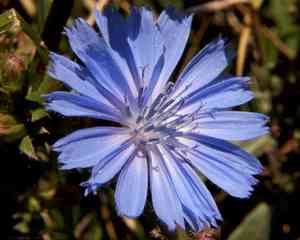
Cliff desert dandelion (Malacothrix saxatilis)
Also known as: Carmel valley malacothrix, White chicory
The Matilija poppy, exclusive to California, is a tall perennial that can reach heights of 1.8 meters. This striking flower features golden centers that gradually transition into white petals.
In This Article
Attributes of Cliff desert dandelion
Lifespan
Perennial
Plant Type
Herb
Plant Height
20 cm to 2 m
Spread
90 cm to 1.5 m
Leaf Color
Green
Flower Size
3 cm to 5 cm
Flower Color
White Yellow Purple
Images of Cliff desert dandelion
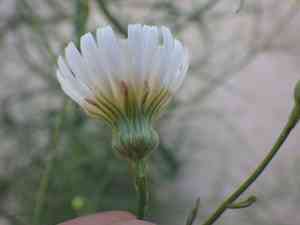
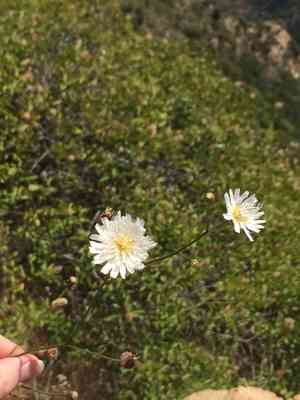
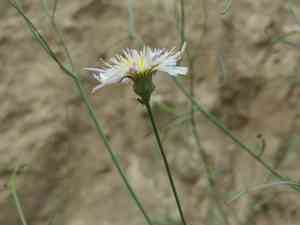
Quickly Identify Cliff desert dandelion
1
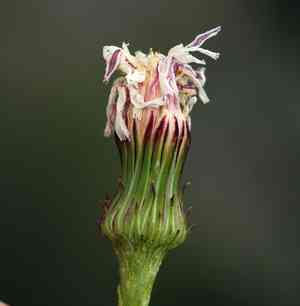
Malacothrix saxatilis can be identified by its bright yellow, daisy-like flowers and its coarse, jagged leaves. It typically grows in rocky cliffs and hillsides, and its stems may be somewhat hairy or woolly.
Scientific Classification of Cliff desert dandelion
Phylum
Vascular plants
Class
Dicotyledons
Order
Asterales
Family
Daisy
Genus
Desert dandelions
Species
Cliff desert dandelion
Planting and Growing of Cliff desert dandelion
Care Difficulty
Easy
Watering Schedule
Every 2 days
Sunlight Requirements
Full sun
Sunshine Duration
4-8 hours
Ideal Temperature
60-75℉
Soil Type
Potting Mix, Peat Mix
Soil pH
6.5-7.5
Fertilizer Type
Balanced
Pruning Season
Spring, Summer
Pruning Area
Branches, Leaves
Pruning Frequency
2 times a year
Repotting Season
Spring
Pot Type
Plastic, Terracotta
 How to Water Cliff desert dandelion?
When watering Malacothrix saxatilis, aim to saturate the soil moderately, so it feels damp to touch but not waterlogged. The idea is to mimic light rain, ensuring the roots get sufficient hydration without drowning them.
What are the symptoms of an underwatered Cliff desert dandelion?
›
What should I do if my Cliff desert dandelion is not getting enough water?
›
What are the symptoms of an overwatered Cliff desert dandelion?
›
How to save an overwatered Cliff desert dandelion?
›
 What Are the Sunlight Requirements for Cliff desert dandelion?
The ideal lighting conditions for Malacothrix saxatilis are full sun to partial sun, providing around ten to twelve hours of light daily. Full sun encourages optimal flowering and enhances plant vigor, ensuring healthy and sustained development.
Optimal Sun Exposure
›
Solutions for Ideal Light
›
Benefits of Ideal Light
›
 What Is the Ideal Temperature Range for Cliff desert dandelion?
The ideal temperature range for growing Malacothrix saxatilis is typically between 60°F and 75°F. This range supports optimal growth, allowing the plant to carry out essential physiological processes such as photosynthesis and respiration effectively. These temperate conditions ensure that the plant's metabolic activities are at their best, promoting healthy foliage and potentially boosting its flowering capacity.
 What Soil is Best for Cliff desert dandelion?
Malacothrix saxatilis thrives in soil that offers excellent drainage, which prevents root rot by ensuring that water does not accumulate around its roots. This feature is crucial for its healthy growth. This plant flourishes in soils that do not have high nutrient content. Its native habitat often features nutrient-poor conditions, so minimal fertilization is typically necessary and even beneficial. Preferring dry soil, Malacothrix saxatilis can endure periods of drought, which mirrors the arid environments in which it naturally occurs. This makes it an excellent choice for xeriscaping.
 How to Fertilize Cliff desert dandelion?
Malacothrix saxatilis generally benefits from a balanced fertilizer regime. For liquid fertilizers, use about 1/4 strength of an all-purpose formula every month during the growing season. For solid fertilizers, such as slow-release granules, an application in early spring and again in mid-summer is often adequate. Avoid over-fertilizing as it can lead to lush foliage with fewer flowers.
 How to Prune Cliff desert dandelion?
Always use sharp, clean pruning shears to make neat cuts and avoid crushing stems. Sanitize your tools between plants to prevent the spread of diseases. Avoid pruning during drought conditions, as the plant is already stressed. If necessary, ensure the plant is well-watered before and after pruning to help it recover.
More About Pruning Techniques→
 How to Propagate Cliff desert dandelion plant?
1
Collect seeds from ripe flowers and allow them to dry naturally. Once dried, store them in a cool, dry place until they're ready to be planted in seed trays with a suitable soil mix.
2
Select a healthy stem from the parent plant and cut a 4-6 inch segment using sterilized pruning shears. Remove the lower leaves, leaving a couple of leaves toward the top.
3
Dip the cut end of the stem into rooting hormone and plant it in a well-draining potting mix. Keep the soil moist but not waterlogged to encourage root development.
 How to Repot Cliff desert dandelion plant?
1
Repotting Malacothrix saxatilis is best done when you observe roots coming out of the drainage holes or if the plant seems to be suffering despite regular care. Typically, this would occur in early spring or autumn, when the plant is no longer dormant but not actively flowering either. Look for signs of root-binding—twisted or overcrowded roots, which indicate the need for a larger pot to enable further growth.
2
Selecting the right pot for Malacothrix saxatilis involves choosing one that is one or two sizes larger than the current one. It should have ample drainage holes to prevent waterlogging, which could lead to root rot. A terracotta pot might be ideal, as it allows moisture to evaporate, helping to maintain the right humidity levels for your plant's health.
3
For Malacothrix saxatilis, a well-draining, sandy soil mixture mimics its natural environment and promotes healthy growth. This type of soil prevents excess moisture retention, minimizing the risk of root rot while offering excellent aeration, which encourages robust root development. A mix of cactus potting mix with added perlite would be an ideal choice.
Learn More About Cliff desert dandelion Diseases
Anthracnose
Bacterial Leaf Spot
Bacterial Soft Rot
Bacterial Wilt
Chemical Injury
Crown Gall
Cyst Nematode
Damping-off
Downy Mildew
Drought Stress
Fusarium Wilt
Gray Mold
Leaf Spot
Mosaic
Nutrient Deficiency
Nutrient Toxicity
Powdery Mildew
Root Rot
Root-knot Nematode
Rusts
Sooty Mold
Spider Mites
Temperature Stress
Thrips Damage
White Mold



