Large-flower primrose-willow(Ludwigia grandiflora)

Large-flower primrose-willow (Ludwigia grandiflora)

Also known as: Uruguay water primrose, Perennial water primrose, Large-flowered primrose-willow

Large-flower primrose-willow (Ludwigia grandiflora) originates from South America and certain regions of North America. When introduced to non-native areas, it becomes highly invasive and can lead to severe ecological consequences. The plant exhibits rapid growth and can form extremely dense mats, which tend to overpower and suffocate local vegetation. This aggressive spread not only reduces native biodiversity but also disrupts aquatic ecosystems by altering habitat structures and obstructing waterways. These changes can have cascading effects on water quality and availability, further impacting native wildlife and human activities.

Attributes of Large-flower primrose-willow

Lifespan
Perennial
Plant Type
Herb, Shrub
Plant Height
1.4 m to 4.5 m
Spread
Not typically applicable as it is more often a mat-forming plant covering large areas of water surfaces.
Leaf Color
Green
Flower Size
2 cm to 5 cm
Flower Color
Yellow

ForwardPlant - Identify plants with a snap

Identify and diagnose plants, get toxicity alerts, and explore safety guides for all types of fungi.

Try for Free

Images of Large-flower primrose-willow
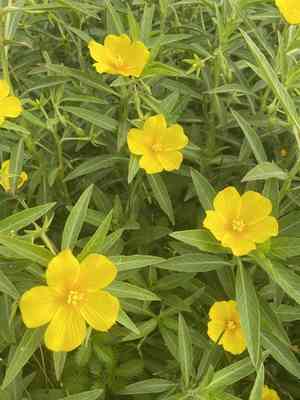
Large-flower primrose-willow(Ludwigia grandiflora)

Quickly Identify Large-flower primrose-willow

1
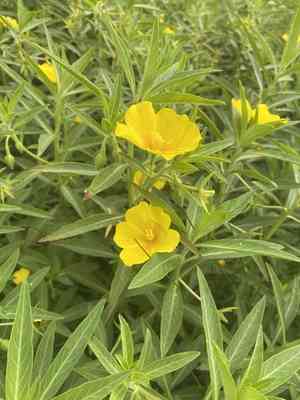
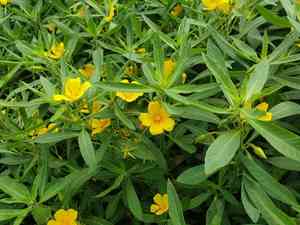
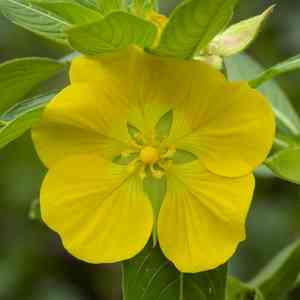
Ludwigia grandiflora can be identified by its large, bright yellow flowers with five petals. The leaves are lance-shaped and alternately arranged. The plant often forms dense mats on the water’s surface.

Scientific Classification of Large-flower primrose-willow

Phylum
Vascular plants
Class
Dicotyledons
Order
Myrtales
Family
Evening primrose
Genus
Primrose-Willow
Species
Large-flower primrose-willow

Planting and Growing of Large-flower primrose-willow

Care Difficulty
Easy
Watering Schedule
Every 8 days
Sunlight Requirements
Full sun
Sunshine Duration
6-10 hours
Ideal Temperature
65-77℉
Soil Type
Potting Mix, Peat Mix
Soil pH
5.5-7.5
Fertilizer Type
Balanced
Pruning Season
Spring, Summer
Pruning Area
Branches, Leaves
Pruning Frequency
2 times a year
Repotting Season
Spring
Pot Type
Plastic, Ceramic

water icon How to Water Large-flower primrose-willow?

Ludwigia grandiflora requires a decent soaking to thrive. Ideally, you should water the plant until the soil is evenly moist yet not waterlogged. Ensure that water reaches a depth of about 2-3 inches (5-7 cm) in the soil to keep the roots adequately hydrated without drowning them.
What are the symptoms of an underwatered Large-flower primrose-willow? ›
What should I do if my Large-flower primrose-willow is not getting enough water? ›
What are the symptoms of an overwatered Large-flower primrose-willow? ›
How to save an overwatered Large-flower primrose-willow? ›

sunlight icon What Are the Sunlight Requirements for Large-flower primrose-willow?

Sunlight Requirements: Full sun, Partial sun
Duration of light: 6-8 hours of sunlight
Ludwigia grandiflora flourishes in full to partial sun conditions, ideally within 6-8 hours of sunlight. Ample light encourages lush, vibrant foliage and robust stem development, enhancing the plant's overall vitality and visual appeal.
Question: What is the ideal placement for Ludwigia grandiflora? ›
Question: How to ensure Ludwigia grandiflora gets consistent light? ›
Question: Is supplemental lighting necessary for Ludwigia grandiflora? ›
More About Sunlight Requirements Techniques→

temperature icon What Is the Ideal Temperature Range for Large-flower primrose-willow?

Ideal Temperature: 65 ~ 77℉
The ideal temperature range for Ludwigia grandiflora is between 65°F to 77°F. In this range, the plant can perform optimal growth and produce vibrant foliage. Such conditions also promote efficient photosynthesis, ensuring the plant draws the necessary nutrients and sustenance for its overall development.

soil icon What Soil is Best for Large-flower primrose-willow?

Soil type: Loam, Sandy loam
Soil PH: 5.5 ~ 7.5
Ludwigia grandiflora thrives in soils that can retain moisture without becoming waterlogged. Adequate moisture is crucial for its growth, supporting vibrant foliage and ensuring sustainability in diverse environments. A nutrient-rich environment enhances the health and growth of Ludwigia grandiflora. Ensuring the soil contains essential nutrients boosts its resilience and flowering capabilities, making it an attractive addition to any landscape. Well-aerated soil supports healthy root development for Ludwigia grandiflora. Proper aeration facilitates oxygen exchange, reducing root diseases and promoting robust plant growth.

fertilize icon How to Fertilize Large-flower primrose-willow?

Fertilizer type: Balanced
Ludwigia grandiflora requires a moderate amount of fertilizer. Too little and the plant may not grow as vibrantly; too much and it might suffer from nutrient burn. A liquid fertilizer at full strength every fortnight, or half strength weekly, is typically sufficient.

prune icon How to Prune Large-flower primrose-willow?

Pruning Time: Spring, Summer, Autumn
Begin by identifying the stems that are overgrown or unhealthy, using clean, sharp scissors to cut them back. Aim to trim about a third of the plant's total height, focusing on maintaining an attractive, balanced shape. Remove any dead or yellowing leaves to encourage new growth. It's crucial to remove stems at their base without leaving stubs, which can become sites for disease. More About Pruning Techniques→

propagate icon How to Propagate Large-flower primrose-willow plant?

Propagate Time: Spring, Early summer
1
Harvest seeds from mature Ludwigia grandiflora plants when seed pods are dry and brown for the highest germination success.
2
Select healthy stem sections from the plant, about 10-15 cm in length, and remove the lower leaves to minimize moisture loss.
3
Carefully dig up the plant and divide the root mass into smaller sections, ensuring each has healthy roots and shoots.

repot icon How to Repot Large-flower primrose-willow plant?

Repotting frequency: Every 2 years
1
Ludwigia grandiflora should be repotted when its roots start to encircle the pot's interior or protrude from drainage holes. Reduced growth or leaf yellowing can also indicate it's time for a bigger pot. Observing these signs ensures the plant has adequate space for nutrient uptake and growth.
2
Select a pot that's just a couple of inches wider in diameter than the current one. Clay pots are advantageous as they provide breathability and excess moisture regulation. Ensure it has adequate drainage holes to prevent water stagnation and root rot.
3
Opt for a well-draining loamy mix, which aids in moisture retention while also allowing excess water to escape. This balance is crucial for promoting a healthy root environment and preventing waterlogging, which Ludwigia grandiflora is sensitive to.

ForwardPlant - Identify plants with a snap

Find the best spots for them to optimize their health, simply using your phone.

Try for Free