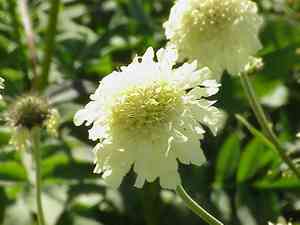
Southern honeysuckle (Lonicera subspicata)
Also known as: White chaparral honeysuckle, Johnston's honeysuckle
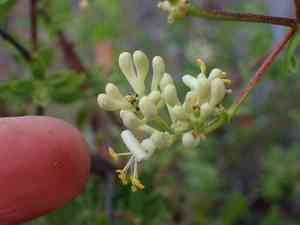
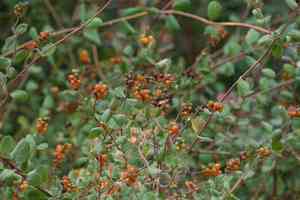
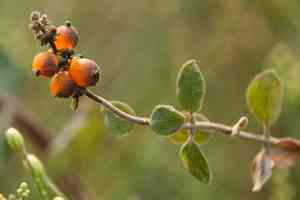
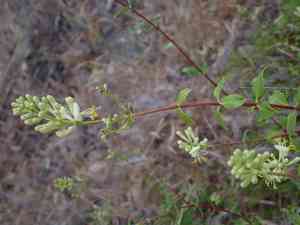
A vining shrub often relies on other plants for support to achieve vertical growth. Typically, it can extend beyond two meters in length. The shrub features oval-shaped leaves that can grow up to 4 centimeters in length. Its flowers are arranged in long, fuzzy spikes, showcasing light yellow blooms approximately one centimeter in size. The plant uses these characteristics to climb and thrive in its environment.
In This Article
Attributes of Southern honeysuckle
Lifespan
Perennial
Plant Type
Shrub
Plant Height
1 to 5 meters
Spread
1 to 3 meters
Leaf Color
Green
Flower Size
1 to 2 cm
Flower Color
Yellowish-White
Images of Southern honeysuckle
Quickly Identify Southern honeysuckle
1
Lonicera subspicata can be identified by its deciduous, opposite leaves, its twining stems, and its distinctive yellowish-white, tubular flowers. The flowers are typically found in pairs and give way to small black berries.
Scientific Classification of Southern honeysuckle
Phylum
Vascular plants
Class
Dicotyledons
Order
Dipsacales
Family
Honeysuckle
Genus
Honeysuckles
Species
Southern honeysuckle
Planting and Growing of Southern honeysuckle
Care Difficulty
Easy
Watering Schedule
Every 4 days
Sunlight Requirements
Full sun
Sunshine Duration
4-8 hours
Ideal Temperature
60-75℉
Soil Type
Potting Mix, Peat Mix
Soil pH
6.5-7.5
Fertilizer Type
Balanced
Pruning Season
Spring, Summer
Pruning Area
Branches, Leaves
Pruning Frequency
2 times a year
Repotting Season
Spring
Pot Type
Plastic, Ceramic
 How to Water Southern honeysuckle?
Lonicera subspicata requires a balanced watering approach. Water the soil evenly until it is moderately moist but not soaked. Aim for about 300 ml per watering, allowing the topsoil to dry slightly between sessions.
What are the symptoms of an underwatered Southern honeysuckle?
›
What should I do if my Southern honeysuckle is not getting enough water?
›
What are the symptoms of an overwatered Southern honeysuckle?
›
How to save an overwatered Southern honeysuckle?
›
 What Are the Sunlight Requirements for Southern honeysuckle?
Partial to full sun is ideal. Ensuring Lonicera subspicata gets adequate sunlight enhances its flowering potential, boosts its energy, and promotes vigorous growth.
Optimal Duration
›
Solution for Ideal Light
›
Benefits of Ideal Light
›
 What Is the Ideal Temperature Range for Southern honeysuckle?
Lonicera subspicata thrives best in moderate temperatures ranging from 60°F to 75°F. These conditions allow the plant to maintain its physiological processes optimally, promoting healthy growth and vibrant flowering. By providing this range, the plant can efficiently photosynthesize and stave off temperature-induced stress.
 What Soil is Best for Southern honeysuckle?
Lonicera subspicata thrives best in nutrient-rich loam that provides a balanced supply of essential nutrients. This nutrient availability supports vigorous growth and lush foliage, ensuring the plant stays healthy and blooms beautifully. The plant prefers well-draining soil to prevent waterlogged conditions, which can lead to root rot. Proper drainage helps maintain the right moisture balance, promoting robust root development and reducing susceptibility to diseases. Soil that offers good aeration is ideal for Lonicera subspicata, as it allows roots to breathe. Improved soil aeration facilitates better oxygen exchange, supporting root health and overall plant vitality.
 How to Fertilize Southern honeysuckle?
When fertilizing Lonicera subspicata, be sure to apply just enough to provide essential nutrients without overwhelming the plant. Use approximately half the recommended amount on the package for general plants, as this plant benefits from a more moderate feeding approach.
 How to Prune Southern honeysuckle?
Begin by identifying any dead or damaged branches, removing them at their base with clean, sharp pruners. Focus on cutting back overgrown stems by about one-third of their length, making angled cuts just above a bud. This encourages the plant to produce new growth. Make sure to space your cuts evenly around the plant to maintain a balanced appearance. Remove any branches that crisscross or grow inward to increase airflow and exposure to sunlight.
More About Pruning Techniques→
 How to Propagate Southern honeysuckle plant?
1
Choose strong, disease-free stems from the current year's growth. They should be around 4 to 6 inches long for optimal propagation success.
2
Use pruning shears to cut the stems at a 45-degree angle. Strip the leaves from the lower half to reduce transpiration and dip the cut end into rooting hormone.
3
Insert the treated cuttings into a well-draining mix of peat and sand or a soilless seed-starting mix. Maintain high humidity and consistent moisture levels.
 How to Repot Southern honeysuckle plant?
1
Lonicera subspicata should be repotted when roots begin to creep out of the drainage holes or the plant shows signs of stunted growth. These indicators suggest that the roots have outgrown the current pot and it's time to move to a larger space.
2
Select a pot that is slightly larger than the current one, ensuring it has good drainage holes. A slightly bigger pot prevents waterlogging issues and supports healthy root expansion, crucial for the plant's overall vitality.
3
Opt for a well-draining potting mix, rich in organic matter. This type of soil promotes proper drainage and aeration, essential for preventing root rot and encouraging vigorous growth.
Learn More About Southern honeysuckle Diseases
Anthracnose
Bacterial Leaf Spot
Black Spot
Chemical Injury
Crown Gall
Damping-off
Downy Mildew
Drought Stress
Fusarium Wilt
Gray Mold
Leaf Curl
Leaf Spot
Mosaic
Nutrient Deficiency
Nutrient Toxicity
Powdery Mildew
Root Rot
Root-knot Nematode
Rusts
Sooty Mold
Spider Mites
Temperature Stress
Thrips Damage
White Mold



