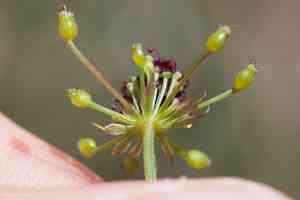
Butte desertparsley (Lomatium marginatum)
Also known as: Grasstips lomatium, Gairdner's lomatium
Butte desertparsley is a resilient perennial herb adapted to thrive in rocky and well-drained soils. It features fern-like, pinnately compound leaves and small white flowers atop a tall stem. Its ability to endure arid conditions is largely due to its deep taproot system, which effectively reaches underground water sources.
In This Article
Attributes of Butte desertparsley
Lifespan
Perennial
Plant Type
Herb
Plant Height
5-15 cm
Spread
10-20 cm
Leaf Color
Green
Flower Size
2-4 cm
Flower Color
Yellow
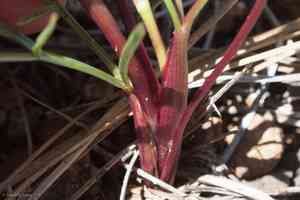
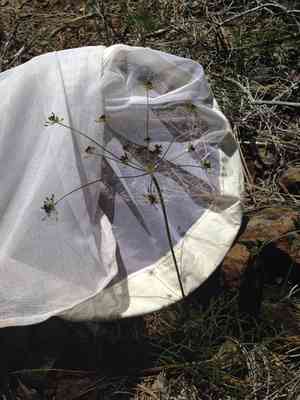
Images of Butte desertparsley
Quickly Identify Butte desertparsley
1
Look for finely divided, pinnate leaves resembling ferns, and small yellow flowers arranged in umbels. The plant usually grows low to the ground in rocky soils.
Scientific Classification of Butte desertparsley
Phylum
Vascular plants
Class
Dicotyledons
Order
Apiales
Family
Umbellifers
Genus
Biscuitroots
Species
Butte desertparsley
Planting and Growing of Butte desertparsley
Care Difficulty
Moderate
Watering Schedule
Every 2 days
Sunlight Requirements
Full sun
Sunshine Duration
4-8 hours
Ideal Temperature
60-75℉
Soil Type
Potting Mix, Peat Mix
Soil pH
6.5-7.5
Fertilizer Type
Balanced
Pruning Season
Spring, Summer
Pruning Area
Branches, Leaves
Pruning Frequency
Once a year
Repotting Season
Spring
Pot Type
Plastic, Ceramic
 How to Water Butte desertparsley?
Lomatium marginatum prefers moderate watering. Aim for about 250 ml per session, ensuring the soil is moist but well-drained. The key is to avoid waterlogging while keeping the roots sufficiently hydrated.
What are the symptoms of an underwatered Butte desertparsley?
›
What should I do if my Butte desertparsley is not getting enough water?
›
What are the symptoms of an overwatered Butte desertparsley?
›
How to save an overwatered Butte desertparsley?
›
 What Are the Sunlight Requirements for Butte desertparsley?
Lomatium marginatum flourishes with six to eight hours of sunlight daily. Ideal light supports photosynthesis, enabling efficient nutrient production and strengthening plant tissues against adverse conditions.
What kind of sunlight does Lomatium marginatum prefer?
›
How can you achieve ideal lighting for Lomatium marginatum?
›
What effects does ideal lighting have on Lomatium marginatum?
›
 What Is the Ideal Temperature Range for Butte desertparsley?
For optimal growth of Lomatium marginatum, it is crucial to maintain a temperature range between 60°F and 75°F. This range ensures that the plant can photosynthesize efficiently and grow steadily without being subjected to temperature stress.
 What Soil is Best for Butte desertparsley?
Lomatium marginatum thrives in well-drained soil, preventing root rot and promoting healthy growth. This soil condition allows air and nutrients to reach the roots efficiently. Rich nutrients in the soil support robust growth and vibrant blooms, ensuring that the plant has the necessary resources for optimal health throughout the growing season. Soil that retains moderate moisture prevents both drying out and waterlogging, supporting consistent growth and reducing stress on the plant.
 How to Fertilize Butte desertparsley?
For Lomatium marginatum, a light touch with fertilizers is necessary. Use a quarter-strength liquid fertilizer every fortnight during the growing season. Don't exceed more than 1/4 teaspoon per gallon of water to avoid damaging the plant.
 How to Prune Butte desertparsley?
Start by identifying dead or diseased branches and those that are crossing or rubbing against others. Remove these to improve air circulation and light penetration. Begin by cutting away small, weak, or spindly branches, followed by any that are dead or discolored. Make cuts at a 45-degree angle just above a bud or lateral branch. After initial pruning, step back and look at the plant's overall shape. Trim lightly to maintain its natural, bushy form but avoid cutting too much at once.
More About Pruning Techniques→
 How to Propagate Butte desertparsley plant?
1
Before planting, scarify and soak the seeds for 24 hours to enhance germination rates. This mimics natural processes like passing through animal digestive systems or weathering.
2
Choose healthy, disease-free plants and cut a 4-6 inch section just below a node. The best time to collect cuttings is in the early morning when the plant is turgid.
3
Plant seeds or cuttings in well-draining soil with a light covering. Keep the soil evenly moist and place them in a warm, indirect light location until roots establish.
 How to Repot Butte desertparsley plant?
1
Lomatium marginatum shows signs of needing repotting when there is decreased growth or roots peeping out of its current container. Opt for spring or autumn; these seasons offer optimal conditions for the plant’s recuperation post-repotting.
2
Select a pot only slightly larger than the current one. This encourages healthy root growth without overwhelming the plant with too much extra space. Ensure it has ample drainage holes to prevent waterlogging, which could lead to root rot.
3
A well-draining gritty mix is essential for Lomatium marginatum. Such soil mimics the plant's native conditions, allowing excess water to escape and preventing root rot. It offers the right balance of moisture retention and drainage.
Learn More About Butte desertparsley Diseases
Anthracnose
Bacterial Leaf Spot
Bacterial Soft Rot
Bacterial Wilt
Chemical Injury
Damping-off
Downy Mildew
Drought Stress
Fusarium Wilt
Gray Mold
Leaf Spot
Mosaic
Nutrient Deficiency
Nutrient Toxicity
Powdery Mildew
Root Rot
Root-knot Nematode
Rusts
Sooty Mold
Spider Mites
Temperature Stress
Thrips Damage
White Mold



