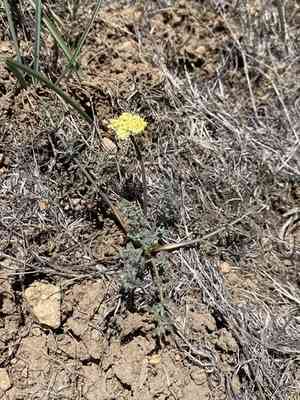
Austin's desert parsley (Lomatium austiniae)
Also known as: Austin's biscuitroot
Austin's desert parsley, a resilient perennial herb native to the western U.S., thrives in arid, rocky, or sandy soils. This plant is distinguished by its tall, slender stems topped with clusters of small, pale-yellow flowers. Its finely dissected, feathery leaves help minimize water loss, an essential adaptation for survival in dry conditions. Belonging to the carrot family, Austin's desert parsley is equipped with a deep taproot system that allows it to access water from deep underground, making it well-suited for harsh, unpredictable environments.
In This Article
Attributes of Austin's desert parsley
Lifespan
Perennial
Plant Type
Herb
Plant Height
0.3 - 0.5 meters
Spread
0.2 - 0.4 meters
Leaf Color
Green
Flower Size
0.5 - 1.5 centimeters
Flower Color
Yellow
Images of Austin's desert parsley
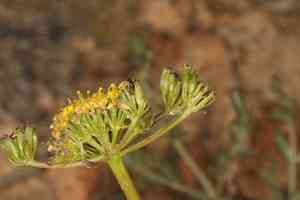

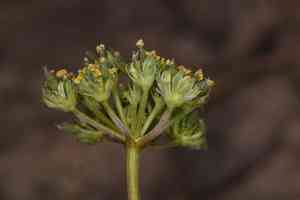
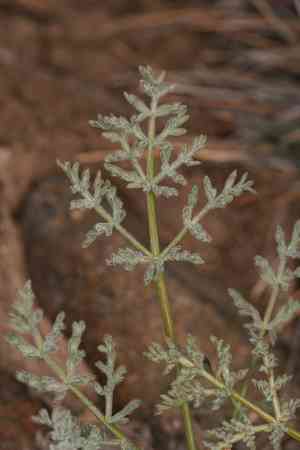
Quickly Identify Austin's desert parsley
1
To identify Lomatium austiniae, look for its finely divided, fern-like leaves and the characteristic small yellow flowers that form in umbels. The plant often grows in rocky or sandy soils and can be found in open, dry habitats.
Scientific Classification of Austin's desert parsley
Phylum
Vascular plants
Class
Dicotyledons
Order
Apiales
Family
Umbellifers
Genus
Biscuitroots
Species
Austin's desert parsley
Planting and Growing of Austin's desert parsley
Care Difficulty
Moderate
Watering Schedule
Every 2 days
Sunlight Requirements
Full sun
Sunshine Duration
6-10 hours
Ideal Temperature
60-75℉
Soil Type
Potting Mix, Peat Mix
Soil pH
6.5-7.5
Fertilizer Type
Balanced
Pruning Season
Spring, Summer
Pruning Area
Branches, Leaves
Pruning Frequency
2 times a year
Repotting Season
Spring
Pot Type
Plastic, Ceramic
 How to Water Austin's desert parsley?
For Lomatium austiniae, a general rule of thumb is to water deeply but infrequently. This means applying about 200 milliliters of water per session, ensuring the water reaches the roots without drowning them. The soil should become moist but not waterlogged to mimic its native habitat's conditions.
What are the symptoms of an underwatered Austin's desert parsley?
›
What should I do if my Austin's desert parsley is not getting enough water?
›
What are the symptoms of an overwatered Austin's desert parsley?
›
How to save an overwatered Austin's desert parsley?
›
 What Are the Sunlight Requirements for Austin's desert parsley?
Lomatium austiniae thrives best in full to partial sun environments. Ideal lighting supports robust plant development, enhances flowering, and boosts its resistance to common plant ailments.
What are the best lighting conditions for Lomatium austiniae?
›
How can you achieve ideal sunlight for this plant?
›
What are the benefits of providing ideal lighting for Lomatium austiniae?
›
 What Is the Ideal Temperature Range for Austin's desert parsley?
Lomatium austiniae thrives best within an ideal temperature range of 60°F to 75°F. This range ensures optimal conditions for photosynthesis and enzyme activities, promoting healthy growth and development. Cooling or heating interventions are recommended only when temperatures deviate from this range, to maintain the plant’s optimal metabolic function.
 What Soil is Best for Austin's desert parsley?
Lomatium austiniae thrives in well-drained soil, which helps prevent waterlogging and root rot. A well-drained environment ensures that the roots have sufficient oxygen, promoting healthy growth. Moderately fertile soil provides Lomatium austiniae with essential nutrients without overwhelming its natural growing habits. This allows for robust growth while preserving the plant’s unique characteristics. A sandy texture in the soil allows for excellent drainage and easy root expansion, which is ideal for Lomatium austiniae. This mimics its native habitat conditions and supports optimal development.
 How to Fertilize Austin's desert parsley?
Lomatium austiniae requires careful consideration regarding the amount of fertilizer to use. During the growing season, use a balanced liquid fertilizer diluted to half strength to avoid over-fertilizing. Quantitatively, apply about 5-10 ml of liquid fertilizer per liter of water while watering the plant, ensuring even distribution across the soil.
 How to Prune Austin's desert parsley?
Begin by inspecting your Lomatium austiniae for any dead or diseased stems. Use sharp pruning shears to cleanly cut these stems away from the healthy parts of the plant. This helps to improve air circulation and keeps pests at bay. Remember to cut just above healthy buds or branches to encourage new growth. During the pruning process, focus on maintaining the plant's natural growth pattern, ensuring it does not become too dense or overgrown.
More About Pruning Techniques→
 How to Propagate Austin's desert parsley plant?
1
Start by soaking the seeds in warm water for 24 hours to improve germination rates. Sow them in seed trays filled with a light, well-draining potting mix.
2
In early spring, dig up mature clumps of the plant using a garden fork. Carefully separate the clumps into smaller sections, each with adequate roots and shoots for replanting.
3
Transplant the seedlings or divided sections into the garden bed. Make sure the soil is well-drained and enriched with organic matter. Water them thoroughly after planting.
 How to Repot Austin's desert parsley plant?
1
Lomatium austiniae typically shows signs that it's ready for repotting when you notice roots actively growing out of the drainage holes, or if the plant appears stunted or has slowed its growth significantly. The best time for repotting is during its active growth periods in spring or autumn.
2
Selecting the correct pot is crucial. Opt for one that is only slightly larger than the current pot, as it prevents excessive water retention which can harm the plant. A pot with drainage holes is preferred to help avoid root rot, allowing excess water to escape efficiently.
3
For Lomatium austiniae, choose a well-draining gritty soil mix, ideally containing sand, fine gravel, or perlite. This type of soil mimics its natural habitat, providing the necessary drainage and aeration, preventing waterlogged roots and promoting healthier plant growth.
Learn More About Austin's desert parsley Diseases
Anthracnose
Bacterial Leaf Spot
Bacterial Soft Rot
Bacterial Wilt
Chemical Injury
Crown Gall
Cyst Nematode
Damping-off
Downy Mildew
Drought Stress
Fusarium Wilt
Gray Mold
Leaf Curl
Leaf Spot
Mosaic
Nutrient Deficiency
Nutrient Toxicity
Powdery Mildew
Root Rot
Root-knot Nematode
Rusts
Sooty Mold
Spider Mites
Temperature Stress
Thrips Damage
White Mold



