
Coast lily (Lilium maritimum)
Also known as: Coast Lily
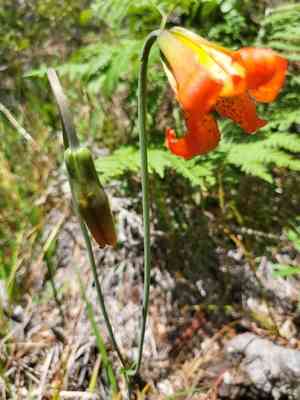
Coast lily is a perennial wildflower known for its striking, funnel-shaped, orange-red flowers adorned with spots. These blooms attract numerous pollinators. The plant features tall, robust stems that emerge from bulbous roots and are topped with slender leaves. It thrives in coastal areas, preferring sandy, well-drained soils and flourishing under the cool, foggy conditions common to its natural habitat.
In This Article
Attributes of Coast lily
Lifespan
Perennial
Plant Type
Herb
Plant Height
1-4 feet
Spread
Typically around 1 foot
Leaf Color
Green
Flower Size
2-3 inches
Flower Color
Red
Images of Coast lily



Quickly Identify Coast lily
1
To identify Lilium maritimum, look for its distinctive trumpet-shaped red flowers that usually bloom in clusters. The plant typically has narrow, lanceolate leaves and a stem that can range from 1 to 4 feet in height.
Scientific Classification of Coast lily
Phylum
Vascular plants
Class
Monocotyledons
Order
Liliales
Family
Lily
Genus
Lilies
Species
Coast lily
Planting and Growing of Coast lily
Care Difficulty
Hard
Watering Schedule
Every 3 days
Sunlight Requirements
Full sun
Sunshine Duration
6-12 hours
Ideal Temperature
60-75℉
Soil Type
Potting Mix, Peat Mix
Soil pH
6.5-7.5
Fertilizer Type
Balanced
Pruning Season
Spring, Summer
Pruning Area
Branches, Leaves
Pruning Frequency
2 times a year
Repotting Season
Spring
Pot Type
Plastic, Ceramic
 How to Water Coast lily?
For Lilium maritimum, provide about 250 ml of water per session. Always ensure the water reaches the root level without causing water to stay on the surface. The amount keeps the soil moist but not waterlogged, mimicking natural conditions.
What are the symptoms of an underwatered Coast lily?
›
What should I do if my Coast lily is not getting enough water?
›
What are the symptoms of an overwatered Coast lily?
›
How to save an overwatered Coast lily?
›
 What Are the Sunlight Requirements for Coast lily?
Lilium maritimum benefits from a light range of full to partial sunlight, supporting vibrant blooms and resilience against environmental stressors.
Lighting Routine
›
Location Selection
›
Supplementary Lighting
›
 What Is the Ideal Temperature Range for Coast lily?
For Lilium maritimum, the ideal temperature range lies between 60°F and 75°F. This range is optimal for growth as it mimics the natural coastal climate where the plant originally thrives. Maintaining soil warmth while avoiding overheating is key to vigorous growth and blooming.
 What Soil is Best for Coast lily?
Lilium maritimum thrives in well-drained soil to prevent waterlogging, which can lead to root rot. Such soil allows for proper aeration and ensures that the roots receive the necessary oxygen, helping the plant remain healthy and vigorous. A nutrient-rich soil composition is essential for Lilium maritimum as it supports robust growth and vibrant blooms. The soil should contain organic matter, which provides essential nutrients and helps retain moisture, promoting healthier plants. This plant prefers a slightly acidic to neutral pH, making nutrients more accessible. Maintaining the soil pH within this range facilitates optimal nutrient uptake and encourages strong structural development in the plant.
 How to Fertilize Coast lily?
Lilium maritimum, commonly known as the Coast Lily, thrives with balanced fertilization. Use a water-soluble fertilizer at half the strength recommended on the package. For solid fertilizers, a small, unassuming handful should suffice each application, ensuring not to overwhelm the plant with nutrients.
 How to Prune Coast lily?
Look for faded flowers after the blooming period. These are the prime targets for pruning as they have completed their flowering cycle. Cut these deadheads back to the main stem to prevent the plant from expending energy trying to set seeds. Trim any dead or damaged stems that you identify during your yearly check. This allows the plant to divert energy to healthier growth. Use sharp and clean pruning shears to make precise cuts, avoiding tearing or damaging the remaining plant structure. Before starting, ensure your pruning tools are clean and sharp. Disinfect them using rubbing alcohol or a suitable solution to prevent the spread of diseases. Clean tools help in making smooth cuts and reduce damage to the plant tissues.
More About Pruning Techniques→
 How to Propagate Coast lily plant?
1
Begin by collecting Lilium maritimum seeds from healthy parent plants. Clean the seeds thoroughly and dry them before storing. When ready to plant, soak the seeds overnight to soften the outer coating.
2
Fill a seed tray with high-quality potting mix. Disperse the seeds evenly across the surface and cover them lightly with soil. Ensure there is adequate space between each seed to prevent overcrowding as they germinate.
3
In early spring, carefully dig around the parent bulb without damaging it. Separate the offsets and ensure each section has its own roots and shoots. Replant immediately to reduce stress on the plant.
 How to Repot Coast lily plant?
1
Observe the plant for signs of outgrowing its current pot, such as roots emerging from the drainage holes or decreased flowering. These are clear indicators that Lilium maritimum needs more space to grow.
2
Choose a pot that is about 2 inches larger in diameter than the current one. This allows room for growth without overwhelming the roots. A pot with good drainage is essential to prevent root rot.
3
Opt for well-draining sandy soil to mimic the natural coastal habitat of Lilium maritimum. Sandy soil ensures excess water can escape easily, preventing fungal diseases and promoting healthy root development.
Toxicity
Ingestion
WARNING
The judgment on toxicity and danger is for reference only. We DO NOT GUARANTEE any accuracy of such judgment. Therefore, you SHALL NOT rely on such judgment. It is IMPORTANT TO SEEK PROFESSIONAL ADVICE in advance when necessary.
Learn More About Coast lily Diseases
Anthracnose
Bacterial Leaf Spot
Bacterial Soft Rot
Bacterial Wilt
Crown Gall
Cyst Nematode
Damping-off
Downy Mildew
Drought Stress
Fusarium Wilt
Gray Mold
Leaf Spot
Mosaic
Nutrient Deficiency
Nutrient Toxicity
Powdery Mildew
Root Rot
Root-knot Nematode
Rusts
Sooty Mold
Spider Mites
Temperature Stress
Thrips Damage
White Mold



