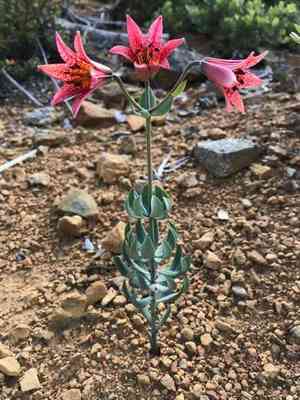
Bolander's lily(Lilium bolanderi)

Bolander's lily (Lilium bolanderi)

Also known as: Bolander's Lily

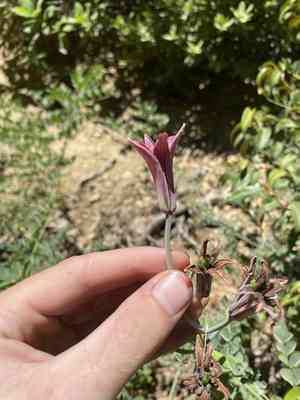
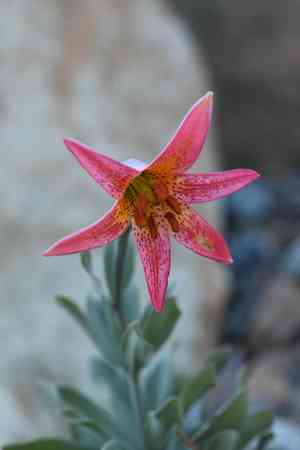
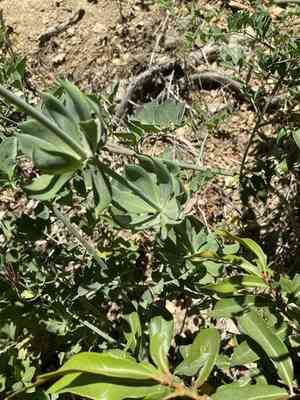
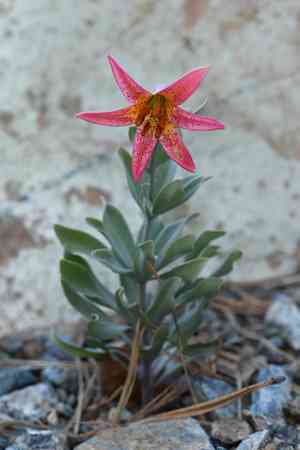
Bolander's lily (Lilium bolanderi) is a unique wildflower endemic to Northern California and southern Oregon, particularly favoring serpentine soils. This perennial herb showcases vibrant red to reddish-orange, trumpet-shaped flowers adorned with maroon spots. The flowers have recurved petals and are supported by upright stems, complemented by narrow, lance-shaped leaves arranged in whorls.

Adapted to thrive in mineral-rich, well-drained soils, Bolander's lily prefers open, sunlit environments, often found in coastal and montane regions. Its striking blooms serve as an attractive source for pollinators, standing out vividly against the dark green foliage in its native mountainous habitats.

Attributes of Bolander's lily

Lifespan
Perennial
Plant Type
Herb
Plant Height
61 cm to 1.2 m
Spread
N/A
Leaf Color
Green
Flower Size
Approximately 2-3 inches (5-7.5 cm)
Flower Color
Reddish with purple spots

ForwardPlant - Identify plants with a snap

Identify and diagnose plants, get toxicity alerts, and explore safety guides for all types of fungi.

Try for Free

Images of Bolander's lily

Bolander's lily(Lilium bolanderi)

Quickly Identify Bolander's lily

1
Lilium bolanderi can be identified by its upright stems, which can reach up to 3 feet in height. The plant has teaspoon-shaped leaves and produces striking, bell-shaped flowers with a reddish hue mottled with purple spots. The flowers typically bloom in early to mid-summer.

Scientific Classification of Bolander's lily

Phylum
Vascular plants
Class
Monocotyledons
Order
Liliales
Family
Lily
Genus
Lilies
Species
Bolander's lily

Planting and Growing of Bolander's lily

Care Difficulty
Hard
Watering Schedule
Every 2 days
Sunlight Requirements
Partial sun
Sunshine Duration
4-8 hours
Ideal Temperature
60-75℉
Soil Type
Potting Mix, Peat Mix
Soil pH
6.5-7.5
Fertilizer Type
Balanced
Pruning Season
Spring, Summer
Pruning Area
Branches, Leaves
Pruning Frequency
2 times a year
Repotting Season
Spring
Pot Type
Plastic, Ceramic

water icon How to Water Bolander's lily?

Lilium bolanderi prefers to have its soil moistened thoroughly but not soaked. Aim to pour approximately 300 milliliters of water slowly to ensure even distribution. This ensures the roots are hydrated without waterlogging the soil.
What are the symptoms of an underwatered Bolander's lily?
What should I do if my Bolander's lily is not getting enough water?
What are the symptoms of an overwatered Bolander's lily?
How to save an overwatered Bolander's lily?

sunlight icon What Are the Sunlight Requirements for Bolander's lily?

Sunlight Requirements: Partial sun
Duration of light: 4 to 6 hours daily
Lilium bolanderi thrives best in partial sun, with ideal conditions of 4 to 6 hours of sunlight daily. This ensures sufficient light for healthy growth and vibrant flowering while protecting it from harsh midday sun.
Why Partial Sun?
How to Achieve Ideal Light?
Benefits of Ideal Lighting?

temperature icon What Is the Ideal Temperature Range for Bolander's lily?

Ideal Temperature: 60 ~ 75℉
The ideal temperature range for Lilium bolanderi is between 60°F and 75°F. This range is necessary for optimal growth and flowering. Within this range, the metabolic processes of the plant function efficiently, leading to healthy foliage and vibrant blooms. Maintaining this temperature range can help ensure maximum growth potential.

soil icon What Soil is Best for Bolander's lily?

Soil type: Loam, Sandy loam
Soil PH: 6.5 ~ 7.5
Lilium bolanderi thrives in well-drained soil, preventing waterlogging and root rot. This allows roots to access the necessary nutrients and oxygen, promoting healthy growth and vibrant blooms. While drainage is crucial, retaining just enough moisture is beneficial. This plant requires a balance to prevent drying out, which helps maintain the structure and function of roots. A soil rich in organic matter is essential for Lilium bolanderi, providing nutrients vital for growth. Organic materials decompose slowly, releasing nutrients over time, which aids in sustained plant development.

fertilize icon How to Fertilize Bolander's lily?

Fertilizer type: Balanced
When fertilizing Lilium bolanderi, use a balanced fertilizer with an N-P-K ratio around 10-10-10. For liquid fertilizers, use about 1 teaspoon per gallon of water. For slow-release granules, apply about 2 tablespoons around the base of each plant, ensuring the granules don’t touch the stems.

prune icon How to Prune Bolander's lily?

Pruning Time: Spring, Autumn
To promote a more prolific blooming cycle, regularly remove faded flowers from the Lilium bolanderi. This process, known as deadheading, helps redirect the plant's energy from developing seeds back into future growth and flowering. Gently cut the spent flowers just above the first set of leaves or nodes. After the flowering season has passed, carefully trim back any withered or damaged stems. This pruning step helps tidy the plant and encourages the Lilies to conserve energy for the next growing season. Ensure the cut is clean and close to the base without damaging the healthy parts of the plant. More About Pruning Techniques

propagate icon How to Propagate Bolander's lily plant?

Propagate Time: Spring, Early summer
1
Collect seeds from mature Lilium bolanderi flowers once they have developed and dried. Ensure the seeds are fully matured to increase germination success rate. Clean the seeds by removing any debris.
2
Prepare a well-draining soil mix consisting of equal parts of sand, peat, and compost. This mixture provides essential nutrients and proper drainage, preventing waterlogging and root rot.
3
To propagate via division, carefully dig up existing plants in the early spring or summer. Separate the bulbs, ensuring each division has healthy roots. Replant them immediately at the same depth.
More About Propagating Techniques

repot icon How to Repot Bolander's lily plant?

Repotting frequency: Every 2-3 years
1
Lilium bolanderi requires repotting when you notice roots growing out of the drainage holes or the plant appears stunted despite proper care. Ideally, this process should occur in spring or autumn to ensure minimal stress during the plant's active growth period.
2
Select a pot that is 1-2 inches larger in diameter than the current one. Ensure it has sufficient drainage holes to prevent waterlogging, which can lead to root rot. A slightly wider pot helps maintain balance for the top-heavy nature of Lilium bolanderi.
3
Opt for a well-draining loamy mix enriched with organic matter. This type of soil ensures good moisture retention while preventing waterlogged conditions, providing an optimal environment for root growth and nutrient uptake.

ForwardPlant - Identify plants with a snap

Find the best spots for them to optimize their health, simply using your phone.

Try for Free