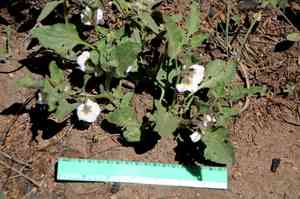
Dwarf chamaesaracha (Leucophysalis nana)
Also known as: Dwarf Ground-cherry
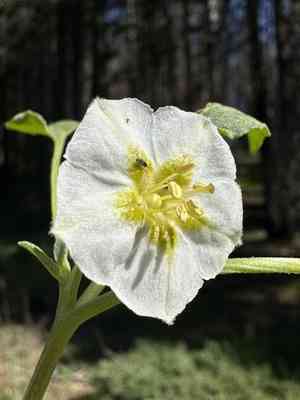
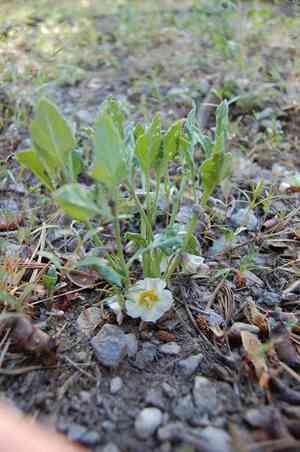
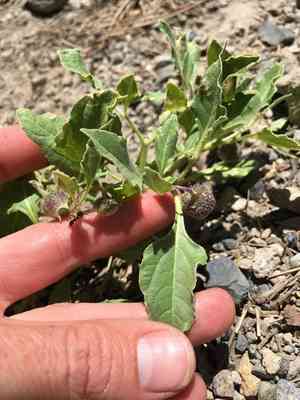
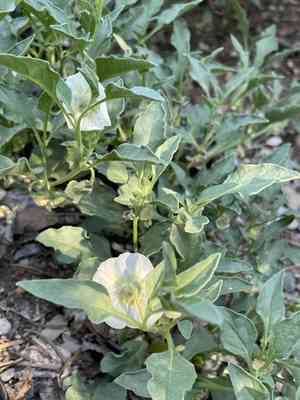
The dwarf chamaesaracha is a small, perennial herb well-suited to dry, arid regions. This plant, often characterized by its greyish-green leaves, produces delicate white or pale-yellow flowers. It thrives in sandy, well-drained soils and spreads modestly to form a resilient ground cover. The plant's small fruit, resembling a mini tomatillo and encased in a paper-like husk, highlights its adaptation to survive in harsh, dry climates.
In This Article
Attributes of Dwarf chamaesaracha
Lifespan
Perennial
Plant Type
Herb
Plant Height
3 to 12 inches (7.5 to 30 cm)
Spread
Not applicable as it is not a tree
Leaf Color
Green
Flower Size
1 inch (2.5 cm)
Flower Color
White to pale yellow
Images of Dwarf chamaesaracha
Quickly Identify Dwarf chamaesaracha
1
Look for a low-growing herb with small, hairy leaves and white or pale yellow bell-shaped flowers. The fruit is enclosed in a papery, lantern-like husk, which is a characteristic feature.
Scientific Classification of Dwarf chamaesaracha
Phylum
Vascular plants
Class
Dicotyledons
Order
Solanales
Family
Nightshade
Genus
Leucophysalis
Species
Dwarf chamaesaracha
Planting and Growing of Dwarf chamaesaracha
Care Difficulty
Moderate
Watering Schedule
Every 3 days
Sunlight Requirements
Partial sun
Sunshine Duration
3-6 hours
Ideal Temperature
65-75℉
Soil Type
Potting Mix, Peat Mix
Soil pH
6.5-7.5
Fertilizer Type
Balanced
Pruning Season
Spring, Summer
Pruning Area
Branches, Leaves
Pruning Frequency
2 times a year
Repotting Season
Spring
Pot Type
Plastic, Ceramic
 How to Water Dwarf chamaesaracha?
Leucophysalis nana prefers a moderate amount of water. Water it until the top 1-2 inches of soil are moist but not soggy. This plant favors well-draining soil to prevent root rot. Ensure excess water is seen draining from the pot to avoid waterlogging.
What are the symptoms of an underwatered Dwarf chamaesaracha?
›
What should I do if my Dwarf chamaesaracha is not getting enough water?
›
What are the symptoms of an overwatered Dwarf chamaesaracha?
›
How to save an overwatered Dwarf chamaesaracha?
›
 What Are the Sunlight Requirements for Dwarf chamaesaracha?
Partial sun exposure ensures balanced growth: receiving full morning sun and partial afternoon shade enhances foliage robustness and flowering potential, maximizing photosynthesis and plant health.
Optimal Sunlight Exposure
›
Solutions for Ideal Light Conditions
›
Benefits of Ideal Lighting
›
 What Is the Ideal Temperature Range for Dwarf chamaesaracha?
Leucophysalis nana thrives best in a temperature range from 65°F to 75°F. This range provides the warmth necessary for optimal biochemical processes, promoting healthy growth and robust flowering. When kept within this temperature range, the plant's metabolism functions efficiently, enhancing nutrient uptake and increased resilience against pests and diseases.
 What Soil is Best for Dwarf chamaesaracha?
Leucophysalis nana thrives in well-drained soil, which helps prevent root rot and other water-related issues. This kind of soil allows excess water to drain away, providing the roots with necessary oxygen. It's important to cultivate Leucophysalis nana in soil rich in organic matter or nutrients. This promotes healthy growth and flowering, as the plant can readily uptake essential minerals for its development. Soil with moderate moisture retention ensures that Leucophysalis nana receives regular hydration while avoiding waterlogging. This balance is crucial for maintaining the plant's health and vitality.
 How to Fertilize Dwarf chamaesaracha?
Leucophysalis nana requires a balanced fertilizer application. Liquid fertilizer should be diluted to half the recommended strength to avoid burning the roots. For slow-release fertilizers, use about one teaspoon per pot for potted plants or sprinkle lightly over the soil in garden settings.
 How to Prune Dwarf chamaesaracha?
Before starting, ensure you have sharp and clean pruning shears to make precise cuts without damaging the plant. Sterilize the blades to prevent the spread of diseases. Gather gloves to protect your hands from any potential irritation while handling the plant. Begin by inspecting the plant for any dead, damaged, or diseased branches. These should be removed first, as they can hinder the plant's overall growth and vitality. Cut these branches back to the point where healthy tissue begins, making the cuts at a slight angle to facilitate better healing. After handling dead growth, focus on shaping the plant to encourage a compact and appealing form. Trim back any overly long or misshapen branches by cutting just above a leaf node or bud. This encourages new growth to fill in the plant, maintaining its aesthetic balance.
More About Pruning Techniques→
 How to Propagate Dwarf chamaesaracha plant?
1
Fill the seed tray with a sterilized potting mix, leaving some space at the top. Lightly moisten the soil using a spray bottle to provide a good environment for seeds to germinate.
2
Evenly disperse the Leucophysalis nana seeds on the surface of the soil, ensuring they are not too crowded. Cover the seeds lightly with a thin layer of soil or vermiculite to protect them during the initial germination phase.
3
Place the seed tray in a warm, bright location, preferably where temperatures are consistently around 20°C. Use a plastic cover or a propagator lid to retain humidity and warmth, which accelerates seed germination.
 How to Repot Dwarf chamaesaracha plant?
1
Leucophysalis nana typically shows signs of needing a repot when you notice roots coming out of the drainage holes, the plant appears to be waterlogged, or growth has significantly slowed down. Spring and early summer are ideal times to repot as the plant is gearing up for its active growth phase.
2
Select a pot that is slightly larger than the current one, ensuring adequate drainage. A pot with drainage holes is crucial to prevent waterlogging and root rot. Material-wise, terracotta is preferred as it allows for better airflow and moisture control which is beneficial for Leucophysalis nana.
3
Opt for a well-draining sandy soil mix. A combination of cactus soil with a bit of perlite is excellent for this plant. This blend ensures the right balance of aeration and moisture retention, preventing overwatering issues.
Toxicity
Ingestion
WARNING
The judgment on toxicity and danger is for reference only. We DO NOT GUARANTEE any accuracy of such judgment. Therefore, you SHALL NOT rely on such judgment. It is IMPORTANT TO SEEK PROFESSIONAL ADVICE in advance when necessary.
Learn More About Dwarf chamaesaracha Diseases
Anthracnose
Bacterial Leaf Spot
Bacterial Wilt
Chemical Injury
Damping-off
Downy Mildew
Drought Stress
Fusarium Wilt
Gray Mold
Late Blight
Leaf Curl
Leaf Spot
Mosaic
Nutrient Deficiency
Nutrient Toxicity
Powdery Mildew
Root Rot
Root-knot Nematode
Rusts
Sooty Mold
Spider Mites
Temperature Stress
Thrips Damage
White Mold



