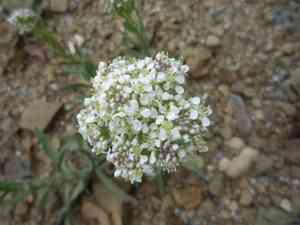
Hairy white-top (Lepidium appelianum)
Also known as: Pepperweed, Peppergrass
Hairy whitetop, known for its thin, spreading stems and central cluster of small white flowers, is an invasive weed prevalent in California and across the United States. Its common name makes it easily identifiable.
In This Article
Attributes of Hairy white-top
Lifespan
Perennial
Plant Type
Herb
Plant Height
30 cm
Spread
5-20 cm
Leaf Color
Green
Flower Size
0.2-0.4 cm
Flower Color
White
Images of Hairy white-top
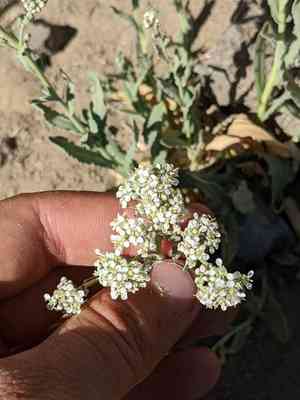
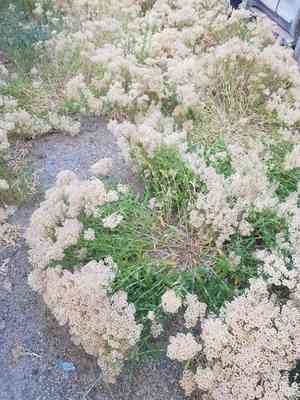
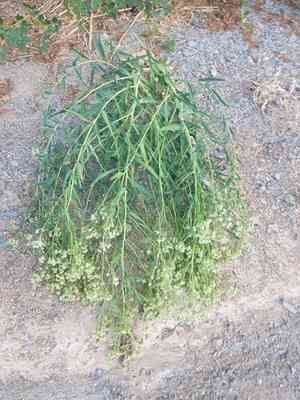
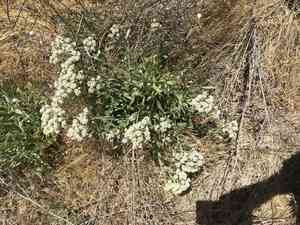
Quickly Identify Hairy white-top
1
This plant can be identified by its small white flowers arranged in clusters on slender stems. The leaves are lance-shaped and can have a slightly peppery taste when chewed.
Scientific Classification of Hairy white-top
Phylum
Vascular plants
Class
Dicotyledons
Order
Brassicales
Family
Cruciferae
Genus
Peppercresses
Species
Hairy white-top
Planting and Growing of Hairy white-top
Care Difficulty
Easy
Watering Schedule
Every 4 days
Sunlight Requirements
Full sun
Sunshine Duration
4-8 hours
Ideal Temperature
60-75℉
Soil Type
Potting Mix, Peat Mix
Soil pH
6.5-7.5
Fertilizer Type
Balanced
Pruning Season
Spring, Summer
Pruning Area
Branches, Leaves
Pruning Frequency
2 times a year
Repotting Season
Spring
Pot Type
Plastic, Ceramic
 How to Water Hairy white-top?
Lepidium appelianum typically needs around 250 milliliters of water per session. The key principle is to ensure the soil is moist but not waterlogged. Proper watering should allow excess water to drain, preventing root rot.
What are the symptoms of an underwatered Hairy white-top?
›
What should I do if my Hairy white-top is not getting enough water?
›
What are the symptoms of an overwatered Hairy white-top?
›
How to save an overwatered Hairy white-top?
›
 What Are the Sunlight Requirements for Hairy white-top?
Lepidium appelianum thrives with full sun and tolerates partial sun. Ideal lighting promotes strong, vibrant growth, maximizing photosynthetic potential and encouraging healthy development.
Solution
›
Specific Measures
›
Realized Effects
›
 What Is the Ideal Temperature Range for Hairy white-top?
The ideal temperature range for growing Lepidium appelianum is between 60°F and 75°F. This range encourages optimal growth and vitality, ensuring that the plant receives enough warmth to facilitate its metabolic processes while avoiding stress from excessive heat.
 What Soil is Best for Hairy white-top?
Lepidium appelianum thrives in soil that drains well, preventing waterlogging which can lead to root rot. Good drainage ensures the roots get necessary oxygen. This plant prefers soils with moderate fertility. Too much richness may cause excessive leaf growth at the expense of flowering, while too little may stunt growth. A preference for calcareous soil suggests it thrives best in slightly alkaline conditions, utilizing the high calcium content for robust growth.
 How to Fertilize Hairy white-top?
For Lepidium appelianum, use a balanced fertilizer at half-strength during the growing season. Use approximately 2 teaspoons per gallon of water if using liquid fertilizer. Ensure not to over-fertilize, as this can harm the plant.
 How to Prune Hairy white-top?
Start by scanning the plant for any dead or damaged stems or leaves. Trim these first to encourage healthy new growth and to enhance the overall appearance of the plant. Focus on areas where the plant is becoming too dense. Trim back overgrown sections to the nearest node or bud to promote a more symmetrical and controlled growth pattern. Shape the plant by cutting back longer stems to maintain a uniform size and shape. Take care not to remove more than one-third of the plant at a time to prevent shock.
More About Pruning Techniques→
 How to Propagate Hairy white-top plant?
1
Before sowing, soak the seeds in water for 12-24 hours to improve germination rates. This softens the seed coat and allows for quicker sprouting.
2
Sow the seeds in a seed tray filled with potting mix. Place seeds on the surface and cover with a thin layer of soil. Gently press down to ensure contact with the soil.
3
Water the sown seeds gently, ensuring the soil is moist but not waterlogged. Cover the trays with a plastic dome to maintain humidity and warmth.
 How to Repot Hairy white-top plant?
1
Lepidium appelianum shows signs of needing repotting when you notice its growth becoming stunted, roots poking through drainage holes, or if the soil dries out very quickly after watering. These are clear indicators that it requires a larger home to continue thriving.
2
Select a pot that is one size larger than the current one, providing enough space for root expansion without overwhelming the plant. A pot with drainage holes is essential to prevent waterlogging, which can lead to root rot and other issues.
3
Use well-draining potting mix enriched with organic matter. This mix ensures improved aeration and prevents water retention, encouraging robust growth and healthier root systems for Lepidium appelianum.
Toxicity
N/A
WARNING
The judgment on toxicity and danger is for reference only. We DO NOT GUARANTEE any accuracy of such judgment. Therefore, you SHALL NOT rely on such judgment. It is IMPORTANT TO SEEK PROFESSIONAL ADVICE in advance when necessary.
Learn More About Hairy white-top Diseases
Anthracnose
Bacterial Leaf Spot
Bacterial Soft Rot
Clubroot
Crown Gall
Cyst Nematode
Damping-off
Downy Mildew
Drought Stress
Fusarium Wilt
Gray Mold
Leaf Spot
Mosaic
Nutrient Deficiency
Nutrient Toxicity
Powdery Mildew
Root Rot
Root-knot Nematode
Rusts
Sooty Mold
Spider Mites
Temperature Stress
Thrips Damage
White Mold



