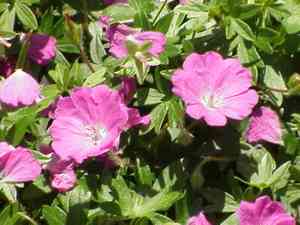
Littleleaf ratany (Krameria erecta)
Also known as: Range ratany, Purple heather
The Desert Willow (Chilopsis linearis) is a flowering shrub native to the southwestern United States and northern Mexico. It blooms early in the year and showcases pink to lavender flowers. Known for its resilience in dry soil, this plant can thrive by tapping into the root systems of neighboring plants to obtain necessary nutrients.
In This Article
Attributes of Littleleaf ratany
Lifespan
Perennial
Plant Type
Shrub
Plant Height
1 m
Spread
60 cm to 90 cm
Leaf Color
Gray-green
Flower Size
1.5 cm to 2 cm
Flower Color
Pink Purple
Images of Littleleaf ratany
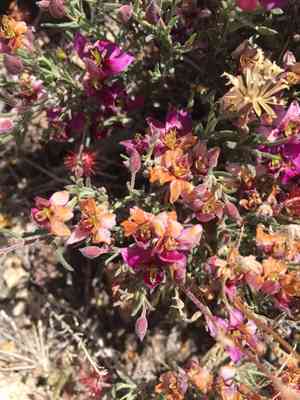
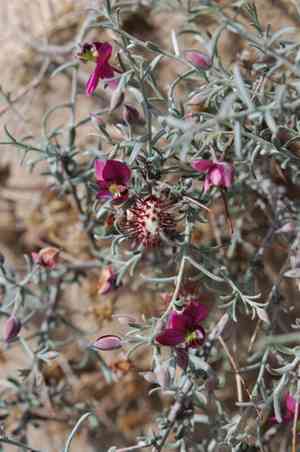
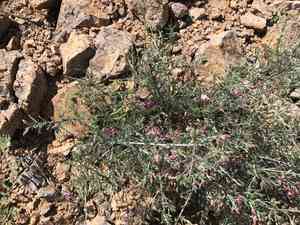
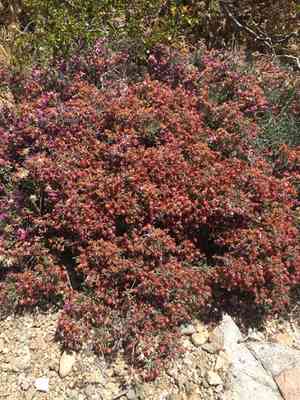
Quickly Identify Littleleaf ratany
1
Krameria erecta can be recognized by its wiry, branching stems and small, five-petaled flowers which range in color from pink to purple. The leaves are small, scale-like, and sparsely distributed along the stems.
Scientific Classification of Littleleaf ratany
Phylum
Vascular plants
Class
Dicotyledons
Order
Zygophyllales
Family
Kramerias
Genus
Rhatany
Species
Littleleaf ratany
Planting and Growing of Littleleaf ratany
Care Difficulty
Easy
Watering Schedule
Every 2 days
Sunlight Requirements
Full sun
Sunshine Duration
6-8 hours
Ideal Temperature
68-77℉
Soil Type
Potting Mix, Peat Mix
Soil pH
6.5-7.5
Fertilizer Type
Balanced
Pruning Season
Spring, Summer
Pruning Area
Branches, Leaves
Pruning Frequency
2 times a year
Repotting Season
Spring
Pot Type
Plastic, Ceramic
 How to Water Littleleaf ratany?
Krameria erecta requires moderate watering. A general rule of thumb is to water until the top 3 inches of soil are moist. Ensure the water does not pool at the base, as this can lead to root rot.
What are the symptoms of an underwatered Littleleaf ratany?
›
What should I do if my Littleleaf ratany is not getting enough water?
›
What are the symptoms of an overwatered Littleleaf ratany?
›
How to save an overwatered Littleleaf ratany?
›
 What Are the Sunlight Requirements for Littleleaf ratany?
Krameria erecta flourishes under full sun exposure, thriving in conditions where it receives constant sunlight throughout the day. Adequate sunlight promotes vigorous growth and enhances its drought resistance.
What is the ideal light condition for Krameria erecta?
›
How can I achieve ideal lighting for Krameria erecta?
›
What are the benefits of Krameria erecta receiving ideal light?
›
 What Is the Ideal Temperature Range for Littleleaf ratany?
Krameria erecta, also known as littleleaf rhatany, thrives best within the temperature range of 68°F to 77°F. This range ensures optimal growth, allowing the plant to balance between photosynthesis and respiration without stress. Maintaining this temperature range provides a conducive environment for enzymatic activities crucial for the plant's development.
 What Soil is Best for Littleleaf ratany?
Krameria erecta thrives in well-drained soils that prevent waterlogging. This quality is essential as it ensures the roots have access to necessary oxygen, reducing the risk of root rot and promoting healthy growth. This plant is adapted to nutrient-poor soils where other vegetation might struggle. The advantage is less competition and reliance on symbiotic relationships to procure nutrients, which showcases its resilience. Krameria erecta is well-suited for dry soil conditions typical of its native arid environments. This requirement reduces the need for frequent watering, making it an ideal plant for xeriscaping and conservation efforts in dry climates.
 How to Fertilize Littleleaf ratany?
For Krameria erecta, a modest amount of fertilizer is key to prevent overfeeding. Use approximately half the recommended dose on the fertilizer package suited for desert plants. This ensures the plant receives enough nutrients without risking overfertilization.
 How to Prune Littleleaf ratany?
While pruning is beneficial, excessive removal of live wood can stress Krameria erecta, impacting its overall health. It's important to make precise cuts just above a healthy bud or branch junction to encourage new growth without causing undue harm to the plant.
More About Pruning Techniques→
 How to Propagate Littleleaf ratany plant?
1
Before sowing, Krameria erecta seeds should be soaked in water for 24 hours to soften the seed coat. This aids germination by promoting moisture absorption, which is necessary for the seed to sprout effectively.
2
Select a healthy branch from the Krameria erecta plant and make a cut just below a node. Each cutting should be approximately 4-6 inches long. Remove the leaves from the lower half to reduce moisture loss during root development.
3
Plant seeds or cuttings in well-draining soil, either in pots or prepared garden beds. Water lightly to moisten the soil, ensuring it stays damp but does not become waterlogged, as excess moisture can lead to rot.
 How to Repot Littleleaf ratany plant?
1
Repot Krameria erecta in the spring or summer when you notice its roots filling up the pot. A clear sign is slowed growth or roots emerging from the drainage holes. Repotting during these seasons takes advantage of the growing season to help it recover quickly.
2
Select a pot that is only slightly larger than the current one, with good drainage holes. Terracotta pots are ideal as they are porous, allowing excess moisture to escape and preventing root rot. Ensure it's wide enough to accommodate its growing root system.
3
Opt for a sandy, well-draining soil mix. This ensures proper aeration and prevents waterlogging, a common issue leading to root rot in desert-adapted plants like Krameria erecta. Adding perlite can improve drainage and mimic its natural dry habitat.
Toxicity
Ingestion
WARNING
The judgment on toxicity and danger is for reference only. We DO NOT GUARANTEE any accuracy of such judgment. Therefore, you SHALL NOT rely on such judgment. It is IMPORTANT TO SEEK PROFESSIONAL ADVICE in advance when necessary.



