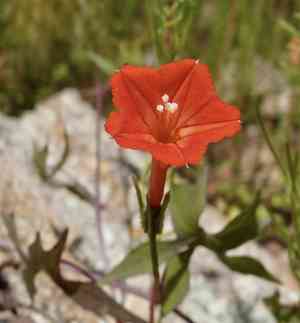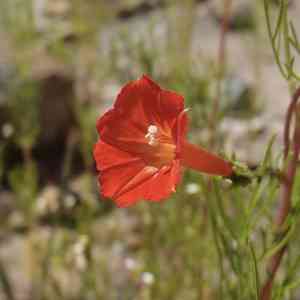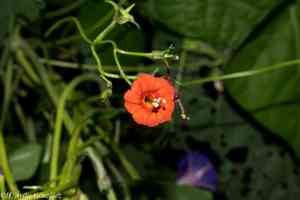
Trans-pecos morning-glory(Ipomoea cristulata)

Trans-pecos morning-glory (Ipomoea cristulata)

Also known as: Scarlet creeper

The Trans-Pecos morning-glory (Ipomoea cristulata) is notable for its striking, trumpet-shaped flowers, typically in vivid red or orange shades. These eye-catching blooms contrast beautifully with its heart-shaped green leaves. The plant features slender, twining stems that enable it to climb on nearby structures, optimizing its access to sunlight even in dense habitats. This perennial vine thrives in well-drained soils and prefers full sun to partial shade, making it adaptable to arid environments. Its resilience and drought tolerance make it an excellent choice for xeriscaping. The blooming season extends from late summer to early fall, and propagation is usually done through seeds, which benefit from scarification to enhance germination.

Attributes of Trans-pecos morning-glory

Lifespan
Annual
Plant Type
Vine, Herb
Plant Height
1-3 meters
Spread
Not applicable, as it is a vine
Leaf Color
Green
Flower Size
2-4 centimeters
Flower Color
Red

ForwardPlant - Identify plants with a snap

Identify and diagnose plants, get toxicity alerts, and explore safety guides for all types of fungi.

Try for Free

Images of Trans-pecos morning-glory
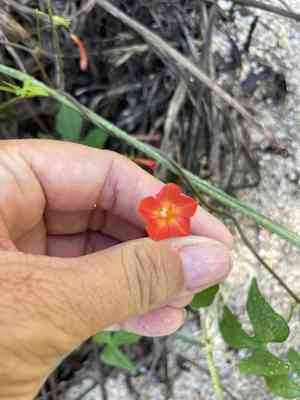
Trans-pecos morning-glory(Ipomoea cristulata)

Quickly Identify Trans-pecos morning-glory

1
This plant can be identified by its bright red, tubular flowers and heart-shaped leaves. The flowers usually bloom in clusters and the stems are slender and twining, allowing it to climb on nearby structures.

Scientific Classification of Trans-pecos morning-glory

Phylum
Vascular plants
Class
Dicotyledons
Order
Solanales
Family
Morning-glory
Genus
Morning glories
Species
Trans-pecos morning-glory

Planting and Growing of Trans-pecos morning-glory

Care Difficulty
Moderate
Watering Schedule
Every 6 days
Sunlight Requirements
Full sun
Sunshine Duration
4-8 hours
Ideal Temperature
70-85℉
Soil Type
Potting Mix, Peat Mix
Soil pH
6.5-7.5
Fertilizer Type
Balanced
Pruning Season
Spring, Summer
Pruning Area
Branches, Leaves
Pruning Frequency
2 times a year
Repotting Season
Spring
Pot Type
Plastic, Ceramic

water icon How to Water Trans-pecos morning-glory?

Ipomoea cristulata thrives best when its soil is kept consistently moist but not waterlogged. Aim to water the plant with approximately 250 milliliters per session, ensuring even distribution throughout the potting mix. You know it's perfect when the water starts to seep out of the drainage holes, indicating the roots have received adequate moisture to thrive without drowning in soggy soil.
What are the symptoms of an underwatered Trans-pecos morning-glory? ›
What should I do if my Trans-pecos morning-glory is not getting enough water? ›
What are the symptoms of an overwatered Trans-pecos morning-glory? ›
How to save an overwatered Trans-pecos morning-glory? ›

sunlight icon What Are the Sunlight Requirements for Trans-pecos morning-glory?

Sunlight Requirements: Full sun, Partial sun
Duration of light: 6 to 8 hours daily
Ipomoea cristulata performs best under full sun exposure. This mode of lighting promotes peak photosynthesis, resulting in vigorous growth, abundant flowering, and enhanced plant morphology.
Optimal Sun Exposure ›
Solution for Ideal Conditions ›
Effects of Receiving Ideal Light ›

temperature icon What Is the Ideal Temperature Range for Trans-pecos morning-glory?

Ideal Temperature: 70 ~ 85℉
The ideal temperature range for Ipomoea cristulata is between 70°F and 85°F. This range allows the plant to efficiently photosynthesize, absorb nutrients, and thrive. Maintaining appropriate temperatures ensures vigorous growth and optimal flowering.

soil icon What Soil is Best for Trans-pecos morning-glory?

Soil type: Sandy loam, Loam
Soil PH: 6.5 ~ 7.5
Ipomoea cristulata thrives in well-draining soil, such as sandy loam, that prevents waterlogging, ensuring its roots receive adequate oxygen. This type of soil helps the plant to avoid root rot and encourages healthy growth. A nutrient-rich soil, with organic matter from compost or well-rotted manure, supports robust growth of Ipomoea cristulata. The additional nutrients promote vigorous flowering and foliage lushness, vital for the plant's ornamental appeal. While it needs well-draining soil, Ipomoea cristulata also requires a moderately moist environment. This balance ensures the roots stay hydrated, particularly during the growth season, aiding in sustained growth and bloom production.

fertilize icon How to Fertilize Trans-pecos morning-glory?

Fertilizer type: Balanced
For Ipomoea cristulata, it is advisable to apply a balanced liquid fertilizer at half the recommended strength. Use approximately 1/2 tablespoon per gallon of water during the growing season. Solid fertilizers, like granular or slow-release formulas, should be used sparingly, around 1/4 cup per plant annually.

prune icon How to Prune Trans-pecos morning-glory?

Pruning Time: Spring, Summer
Begin by inspecting the plant for any dead, damaged, or diseased branches. These should be removed first by cutting them back to the base. Removing these branches prevents the spread of disease and opens up the plant to more sunlight and air circulation, encouraging healthy growth. Once unhealthy branches are removed, focus on shaping the plant. Trim back any overgrown or leggy stems to maintain a desired size and shape. This not only keeps the plant looking tidy but also helps in managing its vigorous growth during the blooming season, encouraging more flowers. Prune back flowering stems by a third after a flush of blooms to encourage the plant to produce more flowers. This step is crucial for enhancing the plant's blooming capacity as it diverts energy from seed production back to flower development. Regular pruning thus results in a longer flowering season. More About Pruning Techniques→

propagate icon How to Propagate Trans-pecos morning-glory plant?

Propagate Time: Spring, Early summer
1
Begin by collecting seeds from mature pods of Ipomoea cristulata. Ensure they are thoroughly dry before sowing. Scarify if necessary to improve germination rates by gently rubbing the seeds with sandpaper.
2
Fill seed trays with a well-draining potting mix. Sow the seeds evenly, covering them lightly with soil. Water gently to keep the soil moist. Maintain a warm temperature to enhance germination rates, making sure to keep the soil always slightly damp.
3
Select healthy stems from a parent plant, approximately 4-6 inches long. Remove the lower leaves, leaving about 2-3 leaves at the top. Dip the cut end in rooting hormone to stimulate root development before planting it in potting mix.
More About Propagating Techniques→

repot icon How to Repot Trans-pecos morning-glory plant?

Repotting frequency: Every 1-2 years
1
Ipomoea cristulata thrives best when its roots have ample space. Look for signs like roots protruding from the drainage holes, slowed growth, or soil drying out rapidly. These indicators suggest it’s time for a new pot to maintain a healthy growth cycle.
2
When selecting a pot, opt for one that is 1-2 inches larger in diameter than the current one. Ensuring the new pot has adequate drainage holes is crucial as it helps prevent waterlogging, which can lead to root rot. A terracotta pot is ideal as it allows the soil to dry out between waterings, keeping the roots healthy.
3
A well-draining potting mix is essential for Ipomoea cristulata. Choose soil that is rich in organic matter and provides good aeration. The right soil mix ensures that the roots are not suffocated and helps retain necessary moisture without waterlogging, promoting vigorous plant health.

ForwardPlant - Identify plants with a snap

Find the best spots for them to optimize their health, simply using your phone.

Try for Free

Toxicity

ingestion

Identify toxic plants for your safety

Learn which plants are harmful to you and your pets, and make informed choices for a safer home!

Try for Free
WARNING
The judgment on toxicity and danger is for reference only. We DO NOT GUARANTEE any accuracy of such judgment. Therefore, you SHALL NOT rely on such judgment. It is IMPORTANT TO SEEK PROFESSIONAL ADVICE in advance when necessary.